The auto industry has decided that SUVs are the right product to market to the largest generation in U.S. history.


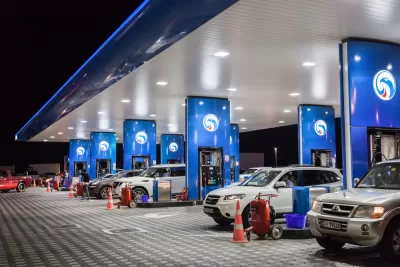
Phoebe Wall Howard reports for the Detroit Free Press on a renewed focus on large SUVs among American automakers as they look to market to Millennials with families.
In total, "sales of large SUVs spiked 22% between 2015 and 2016, which means 340,530 drove off dealership lots last year alone," according to Wall Howard. And, "[a]bout 35% of the consumers who purchase large SUVs are 35 to 44, which means a huge demographic shift into a new vehicle category." The offers insight into the reasoning behind the choices of Americans who recently bought large SUVs.
For more background and data on the trend, an August article by Keith Naughton picked up on the demographic trends of Millennials adopting the modes and lifestyle choices of previous generations. Planetizen correspondent Irvin Dawid has been tracking the data as SUVs have regained popularity, even declaring 2016 the "year of the sports utility vehicle." There is some reason for optimism that the new batch of SUVs aren't like the old batch: it's possible fuel consumption could still drop despite all these new large vehicles on the road.
FULL STORY: Families are shifting to large SUVs for more space, big perks


Generation Z Is Driving Less, But History Indicates It Won’t Last
Think Generation Z will usher in the long-awaited post-car future of transit advocates’ dreams? Think again (about the example set by the Millennials).
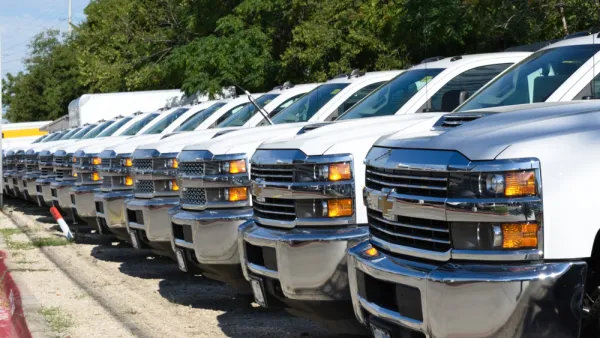
Want to Drive a Big Pickup Truck in D.C.? It’s About to Get (Even More) Expensive
D.C. is considering a $500 vehicle license fee for private vehicles over 6,000 pounds.
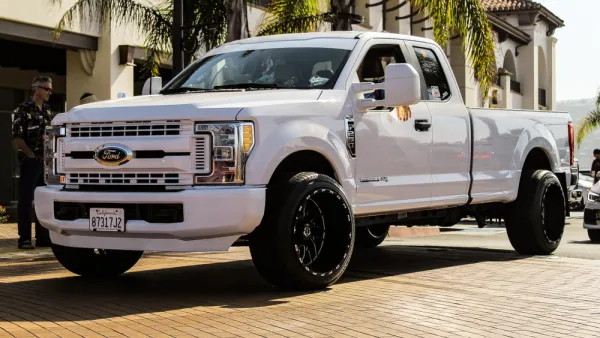
As Trucks Grow in Size, So Do the Safety Risks
Consumer Reports might be a surprising media outlet for an expose on the dangers of large personal vehicles—the kinds of trucks and SUVs growing in popularity and filling up U.S. roads.

Planetizen Federal Action Tracker
A weekly monitor of how Trump’s orders and actions are impacting planners and planning in America.

The state-sanctioned urbicide of Austin
People don’t kill cities. Freeways do.

US to reduce Colorado River water deliveries to Mexico
A new Colorado Treaty amendment reduces Mexico’s Colorado River water allocation by 250,000 acre feet.

Baltimore to break ground on $50 million Transit Priority Project
The project will bring faster bus trips, safer streets and better bike connections to Baltimore.

Airbnb launches $250 million 'last-dollar financing' housing accelerator, makes first investment in Austin
The company will put $6.4 million towards affordable housing development in Texas’ capital.

Guerilla urbanists are building DIY bus stop benches in Chicago
A before-and-after of one of the bus stops with a new bench. The new benches are not officially sanctioned or permitted, but the residents who placed them hope they will be the start of a network of DIY benches across the city.

FREE Course: Walkable City 1: Why Walkability?
After describing his path towards focusing on walkability as the essence of good planning, Jeff Speck marches through his five principal reasons for making more walkable places.
Reinventing Malls: Planning Alchemy—Turning Gray Fields Into Gold
The course focuses on the opportunities and imperatives that shape reinvention of mall sites.

Eagle County Government
Harvard University Graduate School of Design
Nashville Planning Department
The Architects Foundation
University of Cincinnati Online
The Pocatello Development Authority
The Urban Renewal Agency of the City of Pocatello
Journal of the American Planning Association