When it comes to "smart city" plans, there might not be a bigger blockbuster than the partnership between Waterfront Toronto and Sidewalk Labs, a unit of Google's parent company, Alphabet.


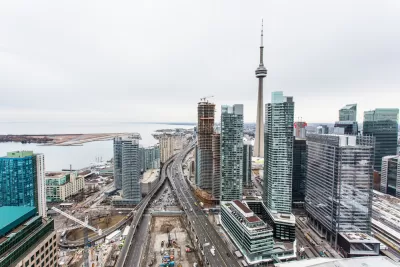
Randy Rieland provides a measured interrogation of the plans for a partnership between Waterfront Toronto and Sidewalk Labs to build "the world’s first neighborhood built from the internet up" in the waterfront neighborhood of Quayside.
Rieland organizes the article around six questions posed to Rohit Aggarwala, head of Urban Systems at Sidewalk Labs and Kristina Verner, Waterfront Toronto's vice president of innovation, sustainability and prosperity. The questions are reasonably skeptical, and push for more details. A sample of the questions includes:
- How can Sidewalk ensure that Quayside feels like a real city instead of an over-engineered environment?
- With so much data being gathered on people and places in Quayside, how will privacy be protected?
The article includes links to previous media coverage of the proposal.


Waterfront Toronto Greenlights Most of Sidewalk Labs' Quayside Master Plan
An evaluation committee made up of Waterfront Toronto staff has given a green light for the Sidewalk Labs master plan for Toronto to proceed to the next stages of planning.
Master Plan for Quayside 'Smart City' Released by Sidewalk Labs and Waterfront Toronto
The long-awaited master plan for Quayside in Toronto was released to the public today.

A Closer Look at the Ideas for the 'Smart City' of Toronto's Future
Sidewalk Labs' proposals for the Toronto neighborhood of Quayside reveals a preference for ride hailing over public transit.

Planetizen Federal Action Tracker
A weekly monitor of how Trump’s orders and actions are impacting planners and planning in America.

The state-sanctioned urbicide of Austin
People don’t kill cities. Freeways do.

US to reduce Colorado River water deliveries to Mexico
A new Colorado Treaty amendment reduces Mexico’s Colorado River water allocation by 250,000 acre feet.

5 New England states march closer to 800 megawatt wind energy project
Securing federal approval for the project may be complicated under the Trump administration, which has historically been hostile towards domestic wind power.

Baltimore to break ground on $50 million Transit Priority Project
The project will bring faster bus trips, safer streets and better bike connections to Baltimore.

Airbnb launches $250 million 'last-dollar financing' housing accelerator, makes first investment in Austin
The company will put $6.4 million towards affordable housing development in Texas’ capital.

FREE Course: Walkable City 1: Why Walkability?
After describing his path towards focusing on walkability as the essence of good planning, Jeff Speck marches through his five principal reasons for making more walkable places.
Reinventing Malls: Planning Alchemy—Turning Gray Fields Into Gold
The course focuses on the opportunities and imperatives that shape reinvention of mall sites.

Eagle County Government
Harvard University Graduate School of Design
Nashville Planning Department
The Architects Foundation
University of Cincinnati Online
The Pocatello Development Authority
The Urban Renewal Agency of the City of Pocatello
Journal of the American Planning Association