Chicago-land bikers and walkers are facing increased danger outside the city's center.



The Chicagoland area boasts 400 miles of bike trails, but for many, getting where you need to go means taking streets, a prospect that's getting more dangerous in the city's suburbs. "Instead of declining, in 2015 suburban collisions rose 3 percent and fatal collisions spiked by nearly 13 percent, according to the most recent Illinois Department of Transportation data." Marni Pyke reports for the Daily Herald.
The costs of bike infrastructure strike some suburban officials as too much to bear, but that puts their constituents in danger. "Many bikers and pedestrians feel like endangered species, at odds with the car culture of the suburbs," Pyke writes. Even more walkable suburban downtowns like Arlington Heights can be dangerous, because they contain high-volume, high-speed arterial streets. Pyke reports and the speed of traffic can be the difference between a crash and a deadly crash.
Read the full story: Special report: As crashes rise, suburbs push to build in safety for walkers, cyclists

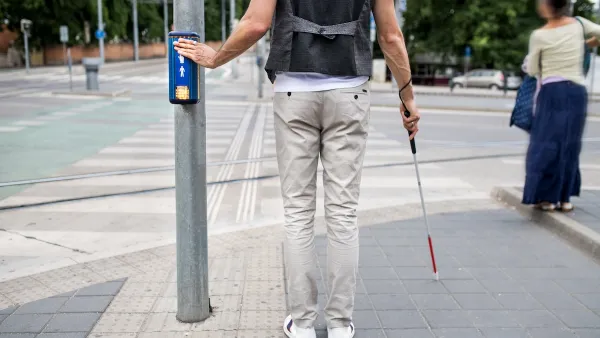
Chicago Judge Orders Thousands of Accessible Ped Signals
Only 3% of the city's crossing signals are currently accessible to blind pedestrians.
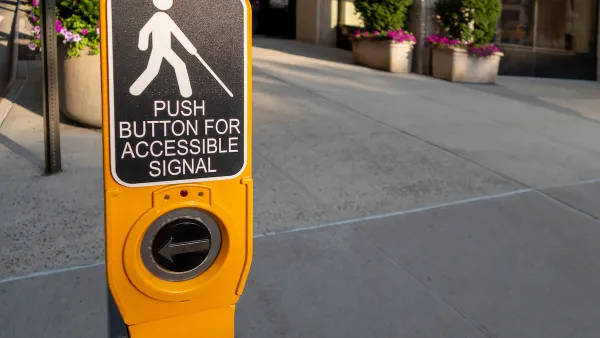
Chicago Made Hundreds of Accessibility Upgrades in 2024
The city has improved over 200 bus stops and 400 of its nearly 3,000 intersections to make them safer for people with disabilities.

Chicago Could Join Other Cities in Lowering Speed Limits
Lowering speed limits by just 10 miles per hour can have a major impact on traffic safety.

Planetizen Federal Action Tracker
A weekly monitor of how Trump’s orders and actions are impacting planners and planning in America.

Amtrak, CN end decades-long dispute with eight-year agreement
The new operating agreement establishes an updated framework for the companies to work together, including processes to resolve disputes.

Northwest rail fans eager for Sept. 30 debut of Amtrak’s Airo fleet
Get ready for that new train smell and more seats. But they won’t go faster or run more frequently on the Cascades route in Washington and Oregon.

Brightline Florida files for bankruptcy
The transit company is over $5 billion in debt.

St. Louis Metro to test if single-car trains can reduce operating costs, maintain rider satisfaction
The pilot program will run from October to spring 2027, and begin with one single-car train operating on Metrolink’s Red and Blue lines.

Pennsylvania is building data centers in abandoned mines
Housing data centers in mines provides an alternative to destroying local forests and may spare residents from data centers’ noise and air pollution.

FREE Course: Walkable City 1: Why Walkability?
After describing his path towards focusing on walkability as the essence of good planning, Jeff Speck marches through his five principal reasons for making more walkable places.
Reinventing Malls: Planning Alchemy—Turning Gray Fields Into Gold
The course focuses on the opportunities and imperatives that shape reinvention of mall sites.

City of Thousand Oaks
City of Wisconsin Rapids
Harvard University Graduate School of Design
The Architects Foundation
University of Cincinnati Online
The Pocatello Development Authority
The Urban Renewal Agency of the City of Pocatello