It's much easier to talk the parking talk than to walk the parking walk. Philadelphia, however, is showing how to actually replace overabundant parking with walkable housing developments.


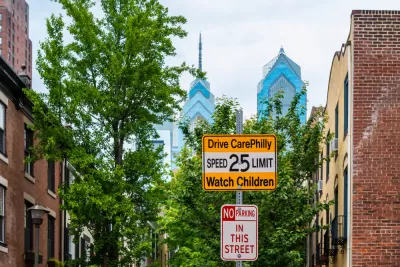
Angie Schmitt shares "some great news out of Center City Philadelphia: Housing is replacing parking."
"The number of off-street parking spaces in downtown Philly and nearby neighborhoods declined 7 percent between 2000 and 2015, from about 50,000 to 46,400," according to Schmitt. At the same time, parking occupancy rates have also fallen.
"What’s happening in Philadelphia is evidence of the 'virtuous cycle' that results from reducing dependence on cars," explains Schmitt. "Making parking less convenient is leading to greater walkability."
Schmitt then goes on to details the policies that helped Philadelphia achieve that virtuous cycle, including details on the city's approach to its parking tax, parking minimums, tax abatements, and property tax assessments.
Read the full story: How Philadelphia Fixed Parking Craters Using Tax Policy
The True Cost of Parking in Philadelphia
What will people really pay for parking? This study measures the value of garages or dedicated spaces to properties on the market in Philadelphia.
How Cities Are Slimming Down on Parking
Cities around the world are finding ways to go on a parking diet, freeing up unused space. San Francisco and Philadelphia are two U.S. leaders, while cities like Paris, Copenhagen, and Zurich pursue even more aggressive measures.
More Disincentives for Driving Required for Philadelphia to Achieve 'Greenest' Status
Philadelphia's Mayor Michael Nutter has set a policy goal of becoming the "Greenest City in America," but the city's lack of progress in reducing automobile use is a troubling obstacle to such a lofty goal.

Planetizen Federal Action Tracker
A weekly monitor of how Trump’s orders and actions are impacting planners and planning in America.

California plans to bury El Niño’s downpour
If the state plays its cards right, it may be able to store a billion acre-feet of El Niño’s water in aquifers.

Desperate measures: Advocates weigh draining Lake Powell to fill Colorado River
Draining the reservoir could reduce evaporation losses by a couple hundred thousand acre-feet.

US buildings threatened, destroyed by fires set to triple by 2060
Researchers found a high fire risk for socioeconomically vulnerable neighborhoods in the American West.

LA residents may be allowed to paint their own crosswalks
Councilwoman Katy Yaroslavsky put out a motion instructing the Los Angeles Department of Public Transportation to study the feasibility of allowing volunteers to paint crosswalks.

Dallas moves to overhaul its zoning code
The city's zoning reform will allow more multi-family and mixed-use developments.

FREE Course: Walkable City 1: Why Walkability?
After describing his path towards focusing on walkability as the essence of good planning, Jeff Speck marches through his five principal reasons for making more walkable places.
Reinventing Malls: Planning Alchemy—Turning Gray Fields Into Gold
The course focuses on the opportunities and imperatives that shape reinvention of mall sites.

City of Rosemead
Rutgers University, Edward J. Bloustein School of Planning and Public Policy
One Hundred Miles
Hunter College, City University of New York (CUNY)
The Architects Foundation
University of Cincinnati Online
City of Cambridge
Montrose County
The Pocatello Development Authority