One step forward, and maybe two steps back, for a 12.3-mile extension of the Gold Line light rail in the San Gabriel Valley.


A planned 12.3-mile extension of the Metro Gold Line through the San Gabriel Valley passed a major milestone this week, after the Gold Line Construction Authority board approved the first contract for the project.
Steve Scauzillo reports that "W.A. Rasic Construction Co. will relocate the underground utilities along the route for an amount not to exceed $2.7 million."
The contract is approved while an ongoing dispute between the Authority and Metrolink, the regional commuter rail that shares the extension's right of way, threatens the project. "Metrolink requested four to six additional train bridges that would separate the light-rail train from the street level, something that would cost hundreds of millions of dollars and would take another two years of study, design and engineering, stretching a nine-year project to 11 years," explains Scuazillo. A separate article, written by Scauzillo before the approval of the new contract, reports more of the details of that dispute.
A recent report presented to the Gold Line Construction Authority board does not mince words in criticizing Metrolink's cooperation on the extension project. This conflict will require close observation moving forward.
FULL STORY: Gold Line takes first step in approving construction for Glendora-to-Montclair extension

Rail Redundancy Shouldn't Be Self-Destructive
Los Angeles Metro's new Gold Line light rail extension is attracting riders from the regional Metrolink commuter rail line that serves San Bernardino. The editorial board of the Daily Bulletin suggests that's not necessarily a problem.
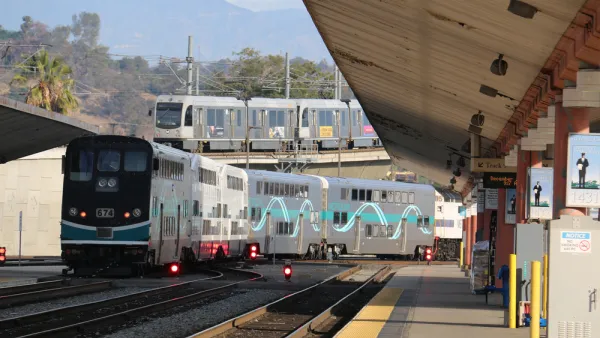
Light Rail Cannibalizing Commuter Rail in Southern California
New transit lines are usually intended to provide an alternative to driving. But what happens when a new train line provides an alternative to an older train line?
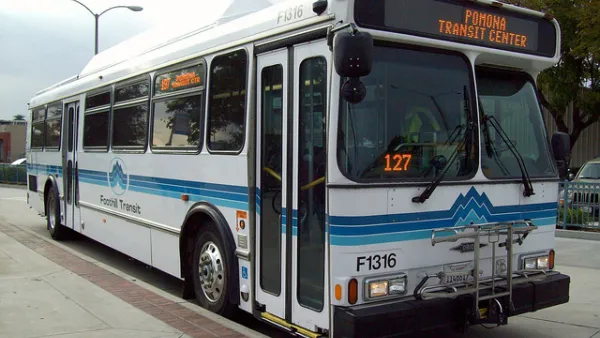
Southern California Bus System Cuts Costs to Compete with L.A. Metro Light Rail
Bus riders can expect two rounds of fare increases, plus service cuts along the light rail route.

Planetizen Federal Action Tracker
A weekly monitor of how Trump’s orders and actions are impacting planners and planning in America.

The state-sanctioned urbicide of Austin
People don’t kill cities. Freeways do.

US to reduce Colorado River water deliveries to Mexico
A new Colorado Treaty amendment reduces Mexico’s Colorado River water allocation by 250,000 acre feet.

5 New England states march closer to 800 megawatt wind energy project
Securing federal approval for the project may be complicated under the Trump administration, which has historically been hostile towards domestic wind power.

Baltimore to break ground on $50 million Transit Priority Project
The project will bring faster bus trips, safer streets and better bike connections to Baltimore.

Airbnb launches $250 million 'last-dollar financing' housing accelerator, makes first investment in Austin
The company will put $6.4 million towards affordable housing development in Texas’ capital.

FREE Course: Walkable City 1: Why Walkability?
After describing his path towards focusing on walkability as the essence of good planning, Jeff Speck marches through his five principal reasons for making more walkable places.
Reinventing Malls: Planning Alchemy—Turning Gray Fields Into Gold
The course focuses on the opportunities and imperatives that shape reinvention of mall sites.

Eagle County Government
Harvard University Graduate School of Design
Nashville Planning Department
The Architects Foundation
University of Cincinnati Online
The Pocatello Development Authority
The Urban Renewal Agency of the City of Pocatello
Journal of the American Planning Association