Philadelphia Mayor Jim Kinney is discovering on the job that planning is much easier than delivering when it comes to protected bike lanes—as is the case in many cities around the country.


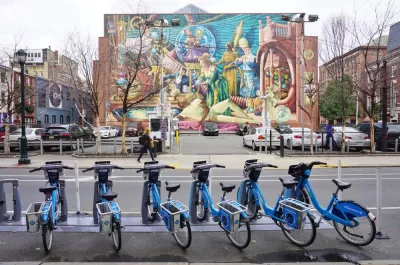
Two years after the election of Philadelphia Mayor Jim Kenney, PlanPhilly contributor Patrick Kerr is ready to evaluate the city's successes in delivering on one of the mayor's key campaign promises: the addition of 30 miles of protected bicycle lanes.
"Last April, the city won funds for thirteen protected bicycle lane projects, which would fulfill the thirty miles pledge," writes Kerr. "But actual construction on those projects has lagged since, frustrating many bicyclists who voted for the Mayor."
The article includes a lot more detail about the status of the city's protected bike lane projects, including details about the challenges of implementation. According to Kerr, many Phildelphia neighborhoods have opposed the creation of protected bike lanes out of concern for lost parking, as exemplified in an example on Lonbard Street, "when neighbors along Lombard Street successfully appealed to Councilman Kenyatta Johnson to oppose the proposal."

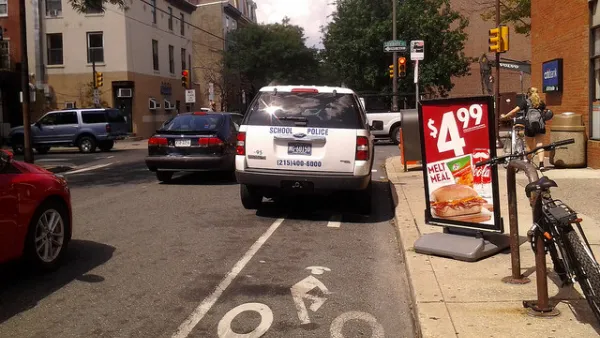
Op-Ed: Philadelphia City Council Shouldn't Be Able to Block Bike Lanes
The Philadelphia Inquirer Editorial Board pushes against a proposed bill that increases City Council oversight of new bike lanes. Traffic calming, the Inquirer argues, requires a citywide approach.
Political Support Coalesces Around Protected Bike Lanes in Philadelphia
Bike advocates have high hopes for the leadership of newly elected Philadelphia Mayor Jim Kenney. Among Mayor Kenney's campaign promises: to add 30 miles of protected bike lanes.
Wanted: Six Cities Yearning to be Bike Friendlier!
For cities that want protected bike lanes but lack the expertise to implement them, the Green Lane Project is soliciting applications to offer technical help (sorry, no funding) now that the initial six recipient cities have implemented cycle tracks.

Planetizen Federal Action Tracker
A weekly monitor of how Trump’s orders and actions are impacting planners and planning in America.

The state-sanctioned urbicide of Austin
People don’t kill cities. Freeways do.

US to reduce Colorado River water deliveries to Mexico
A new Colorado Treaty amendment reduces Mexico’s Colorado River water allocation by 250,000 acre feet.

5 New England states march closer to 800 megawatt wind energy project
Securing federal approval for the project may be complicated under the Trump administration, which has historically been hostile towards domestic wind power.

Baltimore to break ground on $50 million Transit Priority Project
The project will bring faster bus trips, safer streets and better bike connections to Baltimore.

Airbnb launches $250 million 'last-dollar financing' housing accelerator, makes first investment in Austin
The company will put $6.4 million towards affordable housing development in Texas’ capital.

FREE Course: Walkable City 1: Why Walkability?
After describing his path towards focusing on walkability as the essence of good planning, Jeff Speck marches through his five principal reasons for making more walkable places.
Reinventing Malls: Planning Alchemy—Turning Gray Fields Into Gold
The course focuses on the opportunities and imperatives that shape reinvention of mall sites.

Eagle County Government
Harvard University Graduate School of Design
Nashville Planning Department
The Architects Foundation
University of Cincinnati Online
The Pocatello Development Authority
The Urban Renewal Agency of the City of Pocatello
Journal of the American Planning Association