Environment
France Rethinks Its Diesel Fuel Addiction
Unlike the U.S., most passenger vehicles in Europe run on diesel fuel, not gasoline, and from a public health perspective, diesel emissions can severely exacerbate particle pollution during weather inversions like the one Paris is now experiencing.
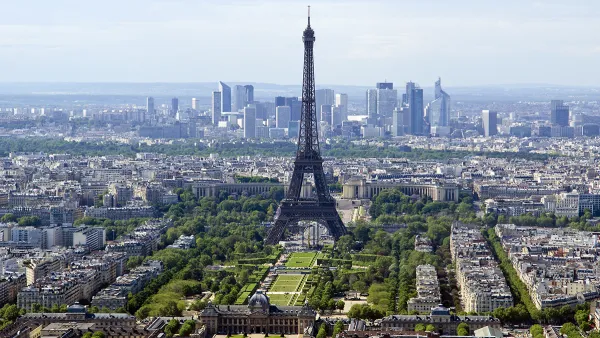
Cleaner Air In Paris? There Will Be an App for That
Cars, smartphones, and Paris’ air quality crisis.

High Pollutions Levels in an Unexpected City
We've come to expect hight air pollution levels in Beijing and other Asian cities with high traffic levels and surrounded by dirty coal plants, but not in cities using emission-free nuclear energy and lots of bikes and mass transit. So why Paris?
New Report Examines Higher Social Cost of Carbon
In the "Cost of Carbon Pollution" report, the Environmental Defense Fund, New York University's Institute for Policy Integrity, and the Natural Resources Defense Council claim the Obama Administration underscored the social cost of carbon pollution.
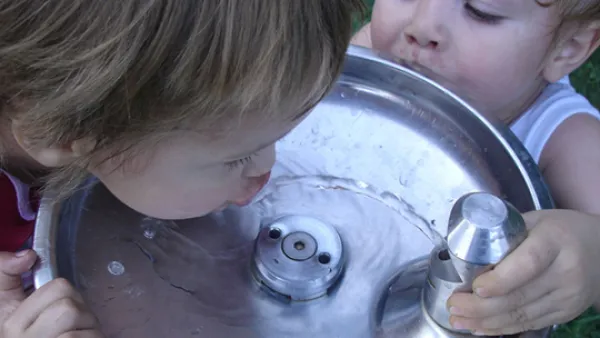
Silicon Valley Cities Drought-Proofing Water Supply with 'Direct Potable Reuse'
Recycled wastewater, or "direct potable reuse," proved successful in Orange County, and following the driest year on record in California, more cities are looking to implement water purification facilities.
Trump Golf Courses Seek Environmental Certification
Donald Trump has committed to working with the environmental nonprofit Audubon International to improve the environmental practices on the 20 Trump Golf courses around the world.
Pop Quiz: What's the Difference Between Aerobic Decomposition and Anaerobic Digestion?
Yes, one is with and the other without oxygen, and both divert waste from the landfill—but in terms of the end products, what is the advantage of anaerobic digestion? Simply put, does society face a shortage of compost or renewable energy?
Friday Eye Candy: Google Documents the Colorado River in the Grand Canyon
If you fancy yourself a modern-day John Wesley Powell, but to this point haven’t climbed on a raft headed Grand Canyon way, Google recently released a series of “Street View” style photos from the very bottom of that most famous natural landmark.
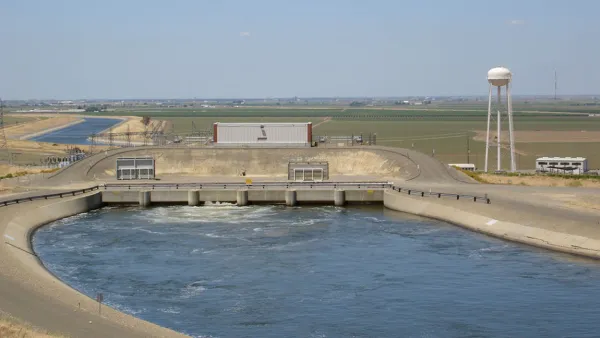
Where the Water Really Goes in California
Golf courses and Los Angeles are the most frequently cited public enemies when droughts hit California, but it isn’t that simple. Recent articles have debunked myths about water use in the Golden State by providing a more accurate portrait of use.
Healing Rivers By (Voluntarily) Limiting Development
A voluntary program of incentives for land owners along the two rivers in Oregon, the Mckenzie River east of Eugene and the Rogue River near Medford, provides incentives for maintaining natural conditions along the river bed.
Questioning the National Flood Insurance Program’s Repeat Payouts
The National Flood Insurance Program is unable to keep up with the pace of storms and sea level rise since Hurricane Katrina in 2005 and is now $24 billion in debt. Why then, do the same houses receive repeated payouts?
Report: Low Income, Rural Drivers are Disproportionate Polluters
A new report points to the 10-15% of vehicles in California that cause half the smog caused by light duty vehicles. Rather than urban strategies such as transit or TOD, the authors support improving the vehicle retirement and replacement program.
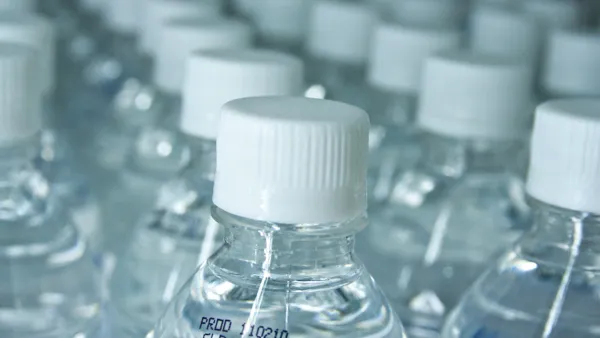
San Francisco Enacts Plastic Water Bottle Ban
First came plastic bags, then styrofoam cups, and now, plastic water bottles—though the ban is not as far-reaching as the former two in that it is restricted to sales on city property, including street fairs.
Record Fine for Coal Company
The largest ever fine for polluting waterways, $27.5 million plus $200 million in clean-up costs was assigned to a coal company. NewsHour co-anchor Gwen Ifill interviews Dina Cappiello of The Associated Press to discuss water pollution from coal.
EPA's New Rules for Clean Cars and Gasoline
In EPA’s leadership blog, Administrator Gina McCarthy announces the agency's new standards to reduce the sulfur content in gasoline by 60% in 2017 and new Tier 3 emission standards for cars and light trucks to reduce criteria and toxic air pollutants
Regulators Told Not To Do Their Job
A New York Times investigation into the Feb. 2 North Carolina coal ash spill by Duke Energy is turning up startling information into the role, or lack of, played by the Department of Environment and Natural Resources in safeguarding the environment.
States Reinvest in Once-Abandoned Freight Lines
Take 260 trucks off the road for every train, avoid costs for maintaining highways maintenance cost, and create multiple other environmental and economic development advantages—states are reinvesting in their rail lines.
Ambitious Open Space Proposal for Silicon Valley
The board of the Midpeninsula Regional Open Space District, based in Los Altos, CA, is considering a $300 million bond measure for the June ballot that would expand access to 62,167 acres of open space.
Two Energy States Take Opposite Approaches Toward Regulation
PBS NewsHour reports on a new study that shows a lack of air quality regulations on fracking in the Texas Eagle Ford Shale play. NPR looks at new rules developed by regulators in Colorado, the first in the nation to restrict methane emissions.
Successor Bill to California's Landmark Climate Change Legislation Introduced
AB 32, California's landmark climate change legislation, expires in 2020. Senator Fran Pavley (D-Calabasas), co-author of AB 32 in 2006, has teamed-up with Senator Ricardo Laro (D-Long Beach) to write a bill to continue emission reductions to 2030.

FREE Course: Walkable City 1: Why Walkability?
After describing his path towards focusing on walkability as the essence of good planning, Jeff Speck marches through his five principal reasons for making more walkable places.
Reinventing Malls: Planning Alchemy—Turning Gray Fields Into Gold
The course focuses on the opportunities and imperatives that shape reinvention of mall sites.

City of Rosemead
Rutgers University, Edward J. Bloustein School of Planning and Public Policy
One Hundred Miles
University of Michigan School for Environment and Sustainability (SEAS)
Hunter College, City University of New York (CUNY)
The Architects Foundation
City of Cambridge
The Pocatello Development Authority
The Urban Renewal Agency of the City of Pocatello









