Mark Landler reviews the recent efforts of the Obama administration to make headway on climate change through executive order, diplomacy and economic incentive.


The next chance the U.S. gets to save the day during global climate changed talks, as Obama did in Copenhagen in 2009, will be in France in 2015.
Mark Landler writes that climate change has taken a backseat in both domestic and foreign U.S. policy until recently, with Obama's speech at Georgetown University, announcing cuts in power plant emissions and reiterating the 17 percent reduction in greenhouse gas emissions by 2020; his California meeting with Xi Jinping of China, resulting in an agreement to reduce the use of hydroflourocarbons; and John Kerry's visit to India, calling for a reduction in emissions in the residential sector through measures like improved air conditioning and announcing a loan-guarantee program to fund the development of clean technologies.
China and India are the world's first and third largest carbon emitters. The U.S. is second and serves as a barometer for the emissions of the other two both in its policy and actual greenhouse effect.
Despite the previous lull and Europe and Australia's independent advances on the issue, during his speech at Georgetown, Obama reiterated that the world looks to the U.S. to lead on climate change, positioning himself to be an actor for change on this front, with Kerry at his side, whether through the U.N. or side deals.
Read the full story: Obama seeks new US role on climate change

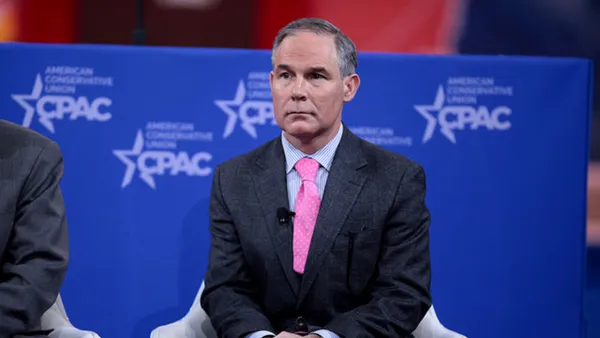
Scott Pruitt and the 'Paradigm Shift' at Trump's EPA
In just his first year, the high-profile and controversial cabinet member “has begun to dismantle former president Barack Obama’s environmental legacy.”
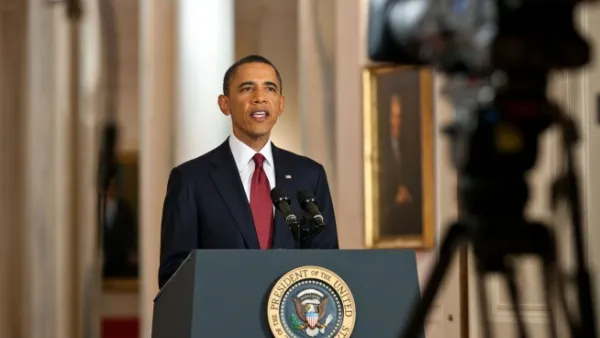
Op-Ed: Obama's Weak Climate Change Legacy
David Bookbinder argues that the Obama Administration dragged its feet on climate change, only implementing last-minute actions that will be easy to reverse.
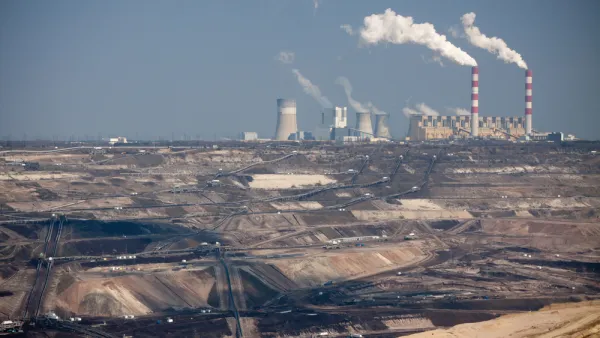
Climate Change: a Global Commons Problem
A quick city planner's guide to the voluminous Intergovernmental Panel on Climate Change report out earlier this month.

Planetizen Federal Action Tracker
A weekly monitor of how Trump’s orders and actions are impacting planners and planning in America.

Northwest rail fans eager for Sept. 30 debut of Amtrak’s Airo fleet
Get ready for that new train smell and more seats. But they won’t go faster or run more frequently on the Cascades route in Washington and Oregon.
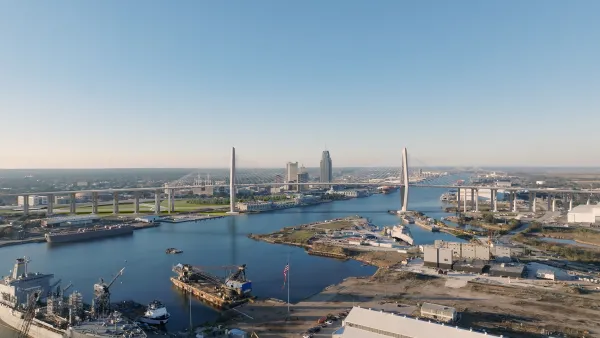
Alabama scores up to $2.5 billion federal loan for largest infrastructure project in state’s history
The Mobile River Bridge and Bayway Project aims to ease congestion at Alabama’s worst bottleneck.

Novel study finds extreme state-by-state disparity in housing construction timelines
The first comprehensive working paper on U.S. construction timelines also found that the permitting process for multi-family projects has slowed nationwide.

California may destroy its beaches trying to save homes from El Niño
Boulders and seawalls can protect homes from waves, but ultimately destroy sandy beaches.

California high-speed rail accomplishes only one legislative goal in 2026
The majority of the agency's failed pitches were never developed into written proposals.

FREE Course: Walkable City 1: Why Walkability?
After describing his path towards focusing on walkability as the essence of good planning, Jeff Speck marches through his five principal reasons for making more walkable places.
Reinventing Malls: Planning Alchemy—Turning Gray Fields Into Gold
The course focuses on the opportunities and imperatives that shape reinvention of mall sites.

City of Thousand Oaks
City of Wisconsin Rapids
Harvard University Graduate School of Design
The Architects Foundation
University of Cincinnati Online
Northern Illinois Transit Authority (NITA)
The Pocatello Development Authority
The Urban Renewal Agency of the City of Pocatello