Environment
Harvard Report: Fracking Yields Equity Gains for American Workforce
A new Harvard Business School report lays the economic and equity case for fracking—through direct and indirect job creation, America's middle class is reaping substantial wage gains and reduced energy costs. Renewables are also discussed.
Meet the Woman Inspiring Climate Resilience in Miami Beach
If the Miami region manages to weather the climate change storm, it will be thanks to effective collaboration between government, the public, and private interests. Meet the woman tasked with starting that process in Miami Beach.
What's in a Name? Bill Would Officially Rename Tallest Mountain in the U.S.
It looks like the pieces are in place in Congress to change the name of Mount McKinley to Mount Denali. Though the mountain is located in Alaska, Ohioans are expected to put up the biggest fight over the name change.

What is Urban Decay? (And Why the Answer Matters)
The ambiguous definition of 'urban decay' dilutes the argument for requiring this less-well-known environmental study.
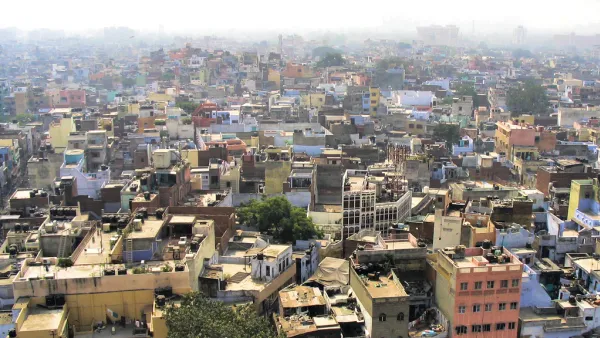
Confronting India's Urban Disaster
Contrary to popular belief, Beijing's air pollution is not nearly the worst in the world. The air of Delhi, India, is twice as polluted. For expats, this disaster raises important questions: is it ethical to live, and raise children, in India?
EPA Study: Fracking No Threat to Groundwater
According to a new EPA draft assessment, fracking has not caused pollution of drinking water, though concerns are raised. The report has yet to be reviewed by the Science Advisory Board and is now receiving public comment.
Québec Institutionalizes Its 'Fight Against Climate Change'
For Québec, climate action is a top priority that transcends party agendas—so the province is partnering with other sub-national entities to bypass national politics in building a cap-and-trade market.
Breathe Easier: Six Ways to Improve Air Quality for People on Bicycles
On the Plan.Place blog, planner Jenny Koch describes how planners and bicyclists can make it easier to breathe on a bicycle, by reducing the risks posed by traffic-related air pollutants.
The Supply Side of California's Historic Drought
As General Manager of the Metropolitan Water District of Southern California, Jeff Kightlinger is a veteran of the states' wet and dry cycles.
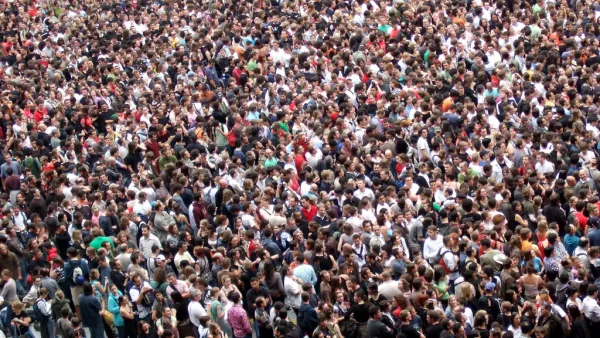
Whatever Happened to the Population Bomb?
Biology Professor Paul Ehrlich's 1968 book, "The Population Bomb," took America and the world by storm. The apocalyptic vision based of population outgrowing its resources appeared to make inherent sense.
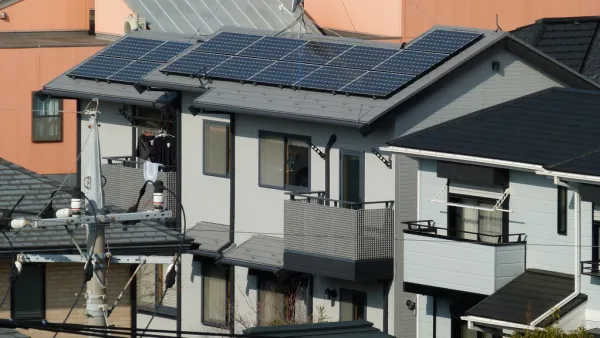
U.S. Cities Ranked By Energy Efficiency
According to an ACEEE report, Boston currently leads the way, with New York, Washington, DC, and San Francisco not far behind. Los Angeles, Washington, and Chicago show the most improvement since 2013.
Op-Ed: Regulation Has Urban Progressives Confused
According to Aaron M. Renn, left-leaning urbanists chafe against a regulatory culture their ideology supports. Favoring "regulation for thee but not for me," they want to bend the rules, but only for enterprises they like.
Cities Relearning Their Relationships with Rivers
As the country's industrial past fades, cities are finding new meaning in their rivers—from the meandering to the mighty.
Geospatial Technologies for a Healthier, Sustainable, and Increasingly Urban Earth
Penn IUR Co-Directors Genie Birch and Susan Wachter write about the promise of geospatial technologies in promoting sustainable urbanization.
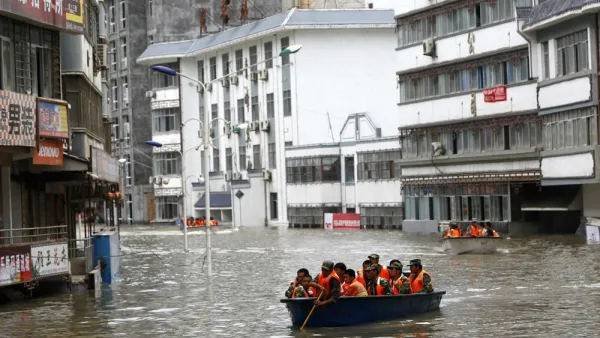
China Submerged: Mapping Nightmare Sea Levels
Cartographer Jeffrey Linn has compiled maps of how coastal China would look under risen seas. Over 40 percent of the country's population lives in potentially affected regions.
Texas Flooding a Reminder of Lack of Climate Change Preparation
Houston headlined the news of flooding this week, but swollen rivers rushed over their banks and onto roads and into homes all over the state of Texas this week. Is the state's infrastructure resilient enough for the effects of a changing climate?
Grant Program Announced for Coastal Community Resilience
The National Oceanic and Atmospheric Administration has announced two new grant programs that focus on helping coastal communities and regions develop effective strategies to prepare for, and recover from, the effects of climate change.
Clean Water Rule Finalized—Clarifies Protection of Streams and Waterways
The Obama Administration has moved forward with "one of the most controversial environmental regulations in recent years."
Report: Carbon Rule Would Double Shutdowns of Coal Plants
The federal Energy Information Administration predicts the effects of the Obama Administration's new rules for carbon emissions at coal plants—it doesn’t look good for the coal industry.
Fracking Permits Temporarily Halted in North Carolina
Natural gas drilling was recently approved in North Carolina, but new operations are now on hold until the state Supreme Court resolves an issue about the process for appointing environmental review positions.

FREE Course: Walkable City 1: Why Walkability?
After describing his path towards focusing on walkability as the essence of good planning, Jeff Speck marches through his five principal reasons for making more walkable places.
Reinventing Malls: Planning Alchemy—Turning Gray Fields Into Gold
The course focuses on the opportunities and imperatives that shape reinvention of mall sites.

City of Rosemead
Rutgers University, Edward J. Bloustein School of Planning and Public Policy
One Hundred Miles
University of Michigan School for Environment and Sustainability (SEAS)
Hunter College, City University of New York (CUNY)
The Architects Foundation
City of Cambridge
The Pocatello Development Authority
The Urban Renewal Agency of the City of Pocatello









