From “car accidents” to “traffic violence,” language shapes perception — and policy. When it comes to the words we use, let’s put the power with the people.


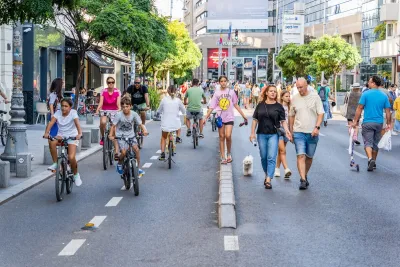
In December 2022, Maria, a bright 7-year-old refugee from Ukraine, was killed by a hit-and-run driver while walking to school in Montréal. The driver, a parent rushing home from an overnight shift, fled the scene. Months earlier, elsewhere in the city, an elderly driver ran a stop sign and struck a mother pushing a baby carriage. The infant was launched into the air — miraculously unharmed — as the driver disappeared, likely out of fear or confusion.
These are not isolated tragedies. They are symptoms of a deeper systemic failure: motornormativity — the car-centric mindset that embeds automobile dominance into our infrastructure, policies, and language. As Peter Norton and Ian Walker describe and Tara Goddard expands, this worldview normalizes harm and marginalizes non-drivers. And it starts with the words we use.
To build safer, more equitable communities, we must move beyond punitive responses and adopt prosocial narrative framing — language that centers empathy, shared responsibility, and systemic change.
Our words become our world
Language shapes perception — and policy. In the Netherlands, the term “traffic violence” galvanized the Stop de Kindermoord (stop child murder) movement. In the U.S. the same term often evokes racialized connections with “street violence,” reinforcing carceral responses like Stop-and-Frisk and urban displacement. This framing individualizes blame and obscures systemic design failures.
As Marco te Brömmelstroet states, media coverage often dehumanizes crashes, implying they are “glitches” in traffic flow rather than human tragedies. The burden of safety is shifted onto vulnerable road users, often elderly, disabled, and visibly racialized, casting them as interlopers in a system built for cars.
But urban planning tools often reinforce motornormativity, too. Transportation studies prioritize vehicle speed and congestion over human experience. Even transit planning often neglects pedestrian needs — think of bus stops placed without sidewalks or shade.
Policy examples abound: In Québec, for example, newborns must leave the hospital in a car. Many U.S. schools require vehicle pickup, turning “safety zones” into chaotic, dangerous spaces. These rules don’t just reflect car dominance — they instill fear in alternatives.
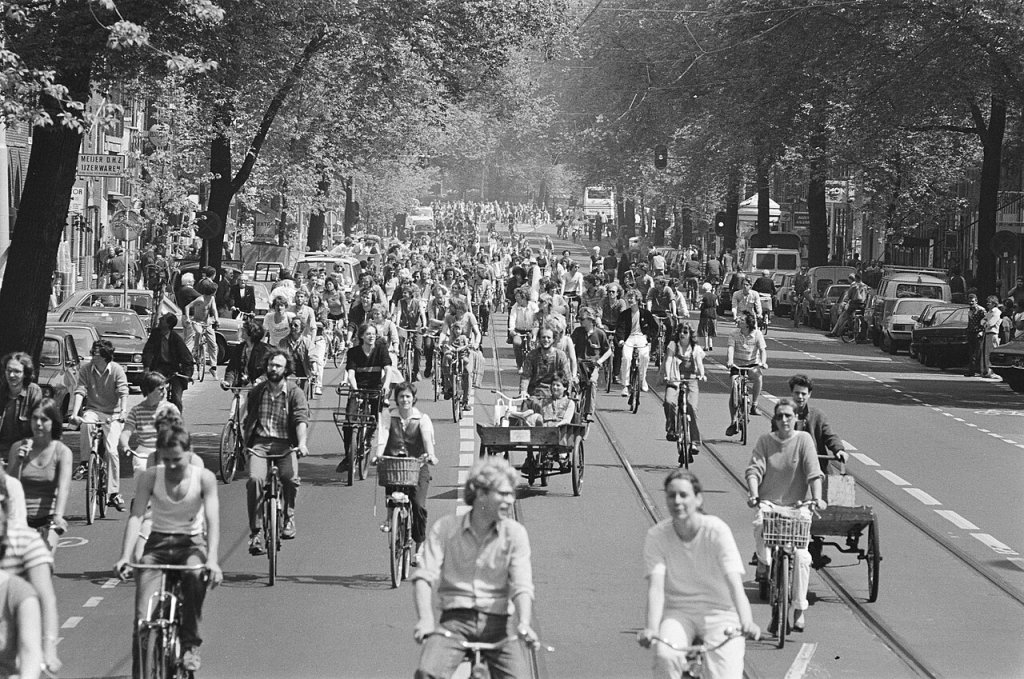
Efforts to challenge motornormativity in the U.S. face a unique and deeply entrenched obstacle: structural racism. U.S. urbanism is shaped by a legacy of racial segregation, gendered isolation, exclusionary zoning, and car-centric development designed for the explicit purpose of isolationism and control. In the U.S., car ownership has long been framed as a symbol of freedom and upward mobility—yet access to safe, walkable environments remains stratified by race and class.
Black and Latine communities in the U.S. are disproportionately exposed to traffic danger. They are also more likely to be criminalized when walking, biking, or using transit. Owing to this in the U.S. in particular it makes prosocial framing especially urgent: without it, calls for “traffic violence” risk reinforcing punitive systems that already target marginalized groups.
Fear, language, and the power of narrative
From evolutionary theory, we know that fear is a powerful emotion — and those in power often weaponize it. Fear is a potent force in shaping public space. It influences not only how we move through cities, but also how policies are justified and who is deemed “out of place.”
In the U.S., fear has long been weaponized to control movement. Sensationalist framing — whether calling a crash “an accident” or invoking “violence” — can obscure the real issue: systemic design failure. It also risks reinforcing punitive responses, especially against marginalized and historically excluded communities who walk, bike, or use transit.
Consider the case of Legend Jenkins, an African American boy killed while crossing the street in North Carolina. Instead of investigating the unsafe conditions that led to his death, prosecutors charged his parents with felony child abuse. As The New York Times reported, this response pathologized the family, framing them as pre-guilty. Narratives in the U.S. are often racialized with dog whistles to deflect attention from infrastructural harm.
This is not just about semantics — it’s about power. When media coverage uses passive language (“Child struck by vehicle”) or centers on driver inconvenience, it shifts accountability and reinforces the idea that streets are for cars, not people.
To build inclusive cities, we must reframe how we discuss mobility. "Design failure" is much more useful than “traffic violence.” Our language needs to shift from individual blame to systemic responsibility. It invites us to see streets not as battlegrounds, but as shared spaces — where safety, dignity, and belonging are possible for everyone.
Reclaiming streets for people
We have to reframe the narrative to dismantle motornormativity. Streets cannot not be battlegrounds — they must be spaces of connection, safety, and community. Urbanists like Peter Norton and Gia Biagi call for a shift in power from cars to people. That shift begins with language.
Let’s move beyond punitive, car-aligned terms. Replace “traffic violence" with “accessible systems,” and “crash accountability.” These terms emphasize design flaws and policy choices — not individual blame.
Better streets are possible. But achieving them requires inclusive, people-centered discourse. The view from behind the windshield encourages us to prioritize our own personal comfort and needs, which leaves little space for empathy for the outside environment. A prosocial lens invites us to see the street from a “people first” perspective —and to build a world where everyone belongs.
Zvi Leve is a transportation modelling expert whose interests focus on the linkages between transportation, land use, and sustainable development. His professional experience has been principally in the field of transportation modelling, but his passion is ‘streets as public space’ and creating a more equitable allocation of street space. He is involved with numerous community groups dedicated to rethinking the role of transportation and the built environment in our lives.
Lo Sontag is feminist urban critic, a 2025 Next City Vanguard Fellow and the director of Sprawlism, a feminist urbanism criticism media project centering the climate crisis and the New Jersey and New York power dynamic.

Study highlights links between land use and road safety
New research suggests that shifting 'household-supporting' retail away from dangerous arterial streets can reduce pedestrian deaths and injuries.

Ted Cruz Blames Safety Features for the Rising Cost of Cars; Senate Could Roll Back Regulations
A Senate committee will hear testimony by automakers in a hearing that could determine whether autonomous emergency braking and other safety features will be mandatory on new cars.

Blinded by the Light: When Brighter Headlights Decrease Safety
Bright LED headlights can create glare and reduce visibility for other drivers and pedestrians.

The state-sanctioned urbicide of Austin
People don’t kill cities. Freeways do.

US to reduce Colorado River water deliveries to Mexico
A new Colorado Treaty amendment reduces Mexico’s Colorado River water allocation by 250,000 acre feet.

New Jersey’s second-largest city bans standalone data centers
Jersey City will continue to allow co-location facilities, such as those meant for research institutions that store their own data.

Amtrak not solely to blame for New Jersey commuter rail's unreliability, report finds
A new study from the Garden State Initiative found that NJ Transit’s budget grew 20% across a 4 year period, but reliability declined significantly over the same period.

EPA erases limits on planet-warming pollution from power plants
Under Monday’s plan, power plants would still have some limits on how much mercury, arsenic and other contaminants they can emit.

Phoenix announces new on-demand transit service, more frequent RAPID buses
Both new services will launch in October, and are part of Phoenix's Project Effective Access Solutions for Easing Congestion.

FREE Course: Walkable City 1: Why Walkability?
After describing his path towards focusing on walkability as the essence of good planning, Jeff Speck marches through his five principal reasons for making more walkable places.
Reinventing Malls: Planning Alchemy—Turning Gray Fields Into Gold
The course focuses on the opportunities and imperatives that shape reinvention of mall sites.

Eagle County Government
Harvard University Graduate School of Design
Nashville Planning Department
The Architects Foundation
University of Cincinnati Online
The Pocatello Development Authority
The Urban Renewal Agency of the City of Pocatello
Journal of the American Planning Association


