New research suggests that shifting 'household-supporting' retail away from dangerous arterial streets can reduce pedestrian deaths and injuries.


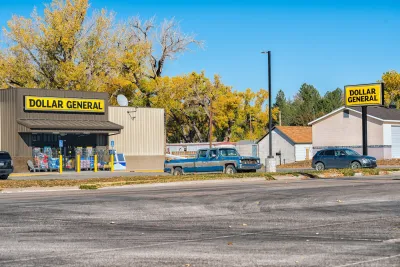
A new study from Florida Atlantic and Columbia universities affirms the relationship between land use, urban design and traffic safety, writes Robert Steuteville in Public Square.
The study examined hundreds of miles of arterial roads, where most pedestrian and bicyclist deaths occur. To assess the impact of land use, the researchers correlated the location of "household-supporting retail and commercial uses" with high levels of fatal and injury accidents. "The research shows a very strong correlation between the location of household-supporting businesses on urban arterials and the devastating crashes."
The researchers say in light of their findings, planners should take an active role in relocating these types of businesses away from hazardous locations. "Addressing this risk demands a shift in planning practice: revising zoning and site-planning standards to explicitly account for safety, redirecting high-risk uses away from arterial corridors, and applying analytic tools that identify and mitigate latent land use hazards during the planning and project development process."
According to the study authors, cities can work to change the location of stores through updated zoning codes while also upgrading roadways with crosswalks and other safety interventions.
FULL STORY: Study calls for land use changes to improve road safety

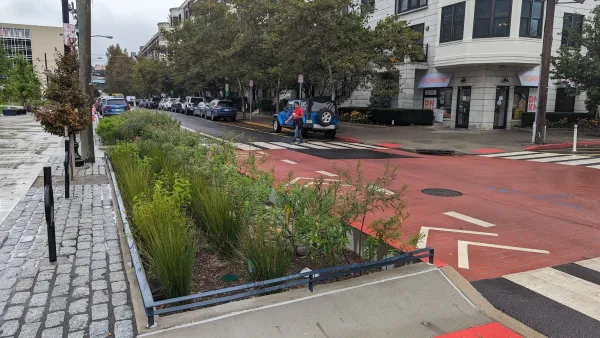
Hoboken's $20 Vision Zero fix
The New Jersey city eliminated traffic deaths for the last nine years in a row.
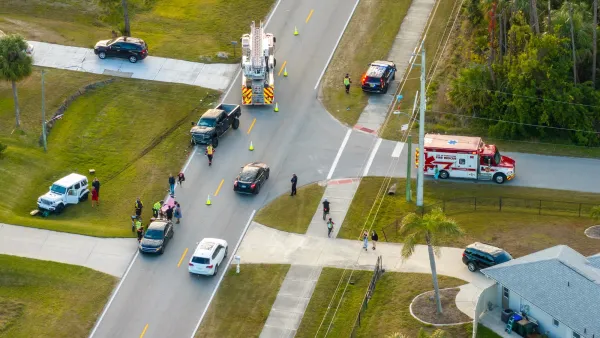
Pedestrian Deaths Fell by Largest Percentage in 15 Years, but Remain Above Pre-Pandemic Levels
After a spike in deaths during the Covid-19 years, road deaths fell to 3,024 in the first half of 2025.
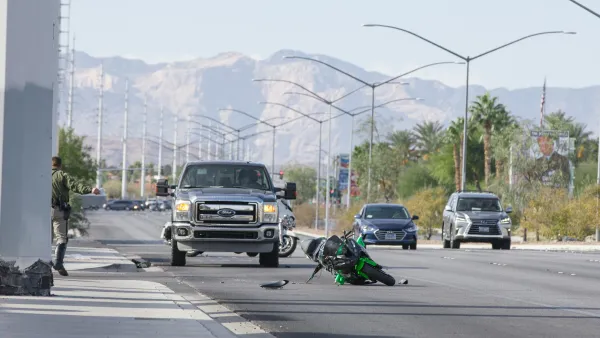
Nevada’s Highway Safety Plan Targets 35% Drop in Traffic Deaths by 2035
The 2026-2030 plan aims to reduce deaths and serious injuries with a long-term goal of eliminating traffic deaths by 2050.

The state-sanctioned urbicide of Austin
People don’t kill cities. Freeways do.

US to reduce Colorado River water deliveries to Mexico
A new Colorado Treaty amendment reduces Mexico’s Colorado River water allocation by 250,000 acre feet.

New Jersey’s second-largest city bans standalone data centers
Jersey City will continue to allow co-location facilities, such as those meant for research institutions that store their own data.

Amtrak not solely to blame for New Jersey commuter rail's unreliability, report finds
A new study from the Garden State Initiative found that NJ Transit’s budget grew 20% across a 4 year period, but reliability declined significantly over the same period.

EPA erases limits on planet-warming pollution from power plants
Under Monday’s plan, power plants would still have some limits on how much mercury, arsenic and other contaminants they can emit.

Phoenix announces new on-demand transit service, more frequent RAPID buses
Both new services will launch in October, and are part of Phoenix's Project Effective Access Solutions for Easing Congestion.

FREE Course: Walkable City 1: Why Walkability?
After describing his path towards focusing on walkability as the essence of good planning, Jeff Speck marches through his five principal reasons for making more walkable places.
Reinventing Malls: Planning Alchemy—Turning Gray Fields Into Gold
The course focuses on the opportunities and imperatives that shape reinvention of mall sites.

Eagle County Government
Harvard University Graduate School of Design
Nashville Planning Department
The Architects Foundation
University of Cincinnati Online
The Pocatello Development Authority
The Urban Renewal Agency of the City of Pocatello
Journal of the American Planning Association