Level of Service and the gas tax have served our transportation needs for a long time. Now, it’s time for a change.



In the world of traffic engineering and transportation planning, there are a few terms practitioners use quite often. One of the most common is “Level of Service,” also known as LOS. It is used to describe how congested a road is from the user's perspective, expressed on a scale of A to F — like a grade school class. A means free flow, while F means gridlock. It is mostly used for motor vehicles, but it can also be used for pedestrians (I am not lying; look it up).
Why is this important, you ask? Well, these concepts form the foundation of how we make transportation-related decisions. The best examples of this are Traffic Impact Studies (TIS), also known as Traffic Impact Assessments (TIAs). These studies evaluate the impacts of new developments on the surrounding transportation system.
For instance, if an apartment complex was developed in a busy downtown, a LOS-based TIA would probably conclude that adding an apartment complex would add significant traffic, giving it an E or F result. In this case, the developer or responsible entity would need to provide relief. This is done via impact fees, one-time charges levied by local governments on new development to rectify growth-related impacts.
This could mean anything from road widening to new traffic light programming, all of which are expensive. That means that developers try to avoid impact fees by developing in distant, less dense locations to obtain a better LOS grade. This promotes unnecessary sprawl, something we definitely do not need more of in the United States. Studies have shown that LOS-based TIAs contribute to slowed economic growth by limiting mobility to important destinations with inefficient development patterns.

So what happens when developers do choose to pay impact fees in high-density environments? In many cases, they overpay. According to a policy brief by the University of California, Los Angeles (UCLA) Institute of Transportation Studies, “Conventional trip- and parking-generation analyses, central to LOS-based TIA, tend to overestimate the traffic impacts of all types of developments, though the bias is largest for higher-density developments in more urban areas. Overestimated traffic impacts result in higher traffic impact fees, which tend to raise housing prices of both new and existing homes of all types and qualities.”
An interesting parallel here is parking minimums: just like they increase housing costs, LOS-based TIAs tend to pass the cost to consumers. No one notices it, but it slowly adds extra costs to an already expensive housing market and makes the goal of affordable housing in dense areas harder to achieve.
The metric matters
For a long time, Level of Service was the undisputed metric for measuring traffic impact. But in the last decade, a new paradigm started to become popular: TIAs based instead on Vehicle Miles Traveled, or VMT.
When you replace LOS with VMT, a few fundamental changes occur. Most importantly, the metric is no longer how much congestion a development produces but how much driving (or VMT) it induces. Changing this metric affects everything about how a development is evaluated.
Let’s use the same example as before: a downtown apartment complex. Having apartments downtown means people are closer to their destinations, which means people will either drive less or not drive at all. This would mean low VMT, which translates to good results for the neighborhood and the city as a whole. If we stayed with the LOS route, which would only show the impact to local streets within a few blocks, the developer would either have to pay expensive impact fees and/or move to the outskirts of town to have less of an impact. This would then induce high VMT, as people would be farther away from their needs downtown.
This is a simplification, but it explains the concept. Hence, proponents of VMT-based TIA argue that it will increase safety, improve environmental quality, and increase community cohesion. Additionally, studies have found that using VMT instead of LOS as a metric would save time and money in development projects.

Don’t get me wrong, LOS is still useful today. As the senior managing Director from Reason Foundation writes, “Using LOS on arterials — designed to transport commuters-far distances — makes sense because the goal is to move large volumes of traffic relatively far distances.” But for some collectors and local roads, LOS might not be the best criteria. Local roads and collectors are, in many cases, streets where commercial activities happen, yet in most American communities, these places are also used for heavy vehicle travel.
This resulted in a hybrid that Charles Marohn from Strong Towns famously calls a “stroad.” A stroad is a mix between a road and a street. A road’s function is to connect places (preferably quickly), while a street’s function is to create wealth; as Mr. Marohn mentions “in a street, we're attempting to grow the complex ecosystem that produces community wealth. In these environments, people (outside of their automobiles) are the indicator species of success.” With this in mind, evaluating a street on its ability to provide free-flowing traffic (LOS) does not make sense, in this case. VMT is a more appropriate metric.
‘A metric that could save the transportation world’
The metric matters, especially in car-dependent America. LOS-based TIAs come from the 1950s, a time when motor vehicle proliferation and the destruction of American communities through highways were at all-time highs.
Opponents of VMT-based TIAs argue that decreased driving might be detrimental to the economy or productivity of the region. But a report from the Victoria Transport Policy Institute that explores this issue argues that “research indicates that vehicle travel can be reduced in ways that achieve economic, social and environmental goals, provide financial savings, benefit most travellers, and enhance freedom overall.”
It is also important to note that while decreasing VMT now might mean decreased carbon emissions, this will not always be the case. As more electric and hybrid vehicles enter the market, the link between miles traveled and lower carbon emissions will not be as significant. But this does not mean VMT as a metric will become obsolete. For instance, finding new sources for transportation funding will become more pressing as the proliferation of EVs leads to the collapse of gas tax revenue.

Here VMT is once again a metric that could save the transportation world, as mileage-based user fees or VMT tax could replace the financial hole left by fuel tax. The logic is simple: the more miles you drive, the more you pay. In part, this is the same as the gas tax, as the more you drive, the more gas you need (and hence, pay). As Adrian Moore from the Reason Foundation writes:
There are five major advantages to user mileage-based user fees:
- Fairness. Mileage-based user fees (MBUF) ensure that those who pay the user fees are the ones who receive the benefits.
- Choice. MBUFs give users more control of what, when, and how often they pay.
- Flexibility. MBUFs give state departments of transportation (DOTs) the ability to adjust revenues and expenditures, as economic conditions, consumer demand, and technology change.
- Better incentives. Mileage-based user fees create incentives for drivers and DOTs to think seriously about the efficiency, quality, and costs of transportation.
- Constraint. MBUFs can help prevent overconsumption and negative externalities, such as traffic congestion and air pollution.
Piloting the future
Various U.S. states are already incorporating VMT as a metric. Not surprisingly, California was one of the pioneers on this matter. In 2013, the California Senate Bill 743 (SB 743) was passed, and later implemented in 2018. With it, traffic congestion was no longer considered as a potential environmental impact under the California Environmental Quality Act (CEQA), and instead, the amount of driving (VMT) became the new metric for assessing transportation impacts for new developments (under CEQA review). Other states such as Colorado, Minnesota, and Washington, have also started experimenting with VMT as a metric to reach environmental-related goals.
Regarding VMT as a new source of transportation funding, states such as New Jersey have started developing their own mileage-based user fees pilot programs. In 2024, this program was born out of a partnership between the Eastern Transportation Coalition (the Coalition) and the New Jersey Department of Transportation and has as its main purpose to experiment with the new idea. The program was targeted specifically at EV drivers and required participants to contribute to the transportation system based on the miles they had driven. Additionally, according to the Bipartisan Policy Center data, states such as Oregon and Utah already operate active mileage fee systems to obtain transportation funding.
VMT is set to play a significant role in the future of transportation. Of course, no single metric is perfect, and VMT has its own limitations. But as more states and communities start using this new metric, a better model will inevitably develop, one that creates more equitable, sustainable, and efficient transportation systems.

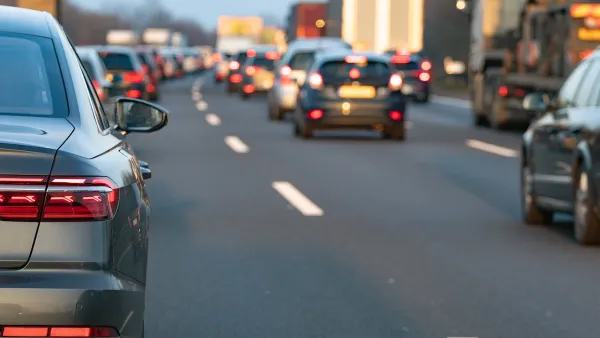
Research Shows More Roads = More Driving
A national study shows, once again, that increasing road supply induces additional vehicle travel, particularly over the long run.
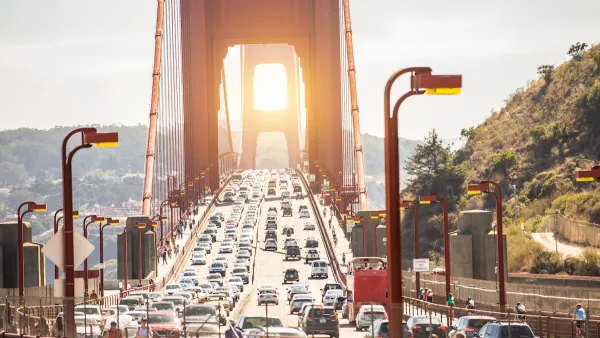
San Francisco ‘Best-Performing Metro’ for VMT, Traffic Reduction
The city saw a 13 percent drop in miles driven per capita in the last five years.
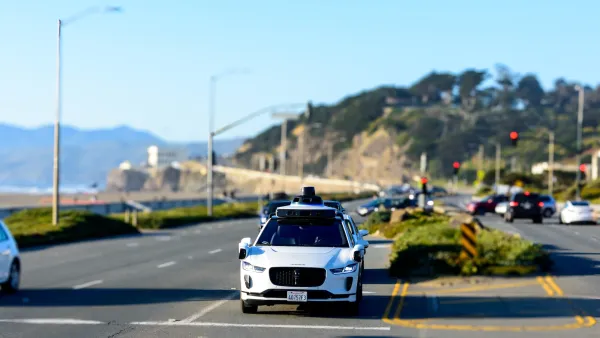
Study: Self-driving Cars Could Raise VMT by 6%, Increasing Congestion
The study contradicts early predictions that AVs would reduce driving miles.

The state-sanctioned urbicide of Austin
People don’t kill cities. Freeways do.

US to reduce Colorado River water deliveries to Mexico
A new Colorado Treaty amendment reduces Mexico’s Colorado River water allocation by 250,000 acre feet.

New Jersey’s second-largest city bans standalone data centers
Jersey City will continue to allow co-location facilities, such as those meant for research institutions that store their own data.

Amtrak not solely to blame for New Jersey commuter rail's unreliability, report finds
A new study from the Garden State Initiative found that NJ Transit’s budget grew 20% across a 4 year period, but reliability declined significantly over the same period.

EPA erases limits on planet-warming pollution from power plants
Under Monday’s plan, power plants would still have some limits on how much mercury, arsenic and other contaminants they can emit.

Phoenix announces new on-demand transit service, more frequent RAPID buses
Both new services will launch in October, and are part of Phoenix's Project Effective Access Solutions for Easing Congestion.

FREE Course: Walkable City 1: Why Walkability?
After describing his path towards focusing on walkability as the essence of good planning, Jeff Speck marches through his five principal reasons for making more walkable places.
Reinventing Malls: Planning Alchemy—Turning Gray Fields Into Gold
The course focuses on the opportunities and imperatives that shape reinvention of mall sites.

Eagle County Government
Harvard University Graduate School of Design
Nashville Planning Department
The Architects Foundation
University of Cincinnati Online
The Pocatello Development Authority
The Urban Renewal Agency of the City of Pocatello
Journal of the American Planning Association

