The study contradicts early predictions that AVs would reduce driving miles.


An analysis from the University of Texas-Arlington found that if U.S. cities made a “major shift” toward autonomous cars, vehicle miles driven would rise by roughly 6 percent. “Worse, they’d still increase more than 5% if people shifted away from personally owned cars towards shared autonomous taxis instead.”
As Kea Wilson explains in a Streetsblog USA article republished in Greater Greater Washington, that modest increase could be “completely sufficient to break the road” and cause major congestion, according to the study’s author. “And it contradicts Silicon Valley’s early narrative that AVs would reduce vehicle miles traveled, because they’ll be more efficient at plotting routes than human beings, especially if those cars are communicating with one another and anticipating each other’s moves.” With more shared autonomous taxis deadheading while empty, cities could see double the number of miles driven in a day.
On the flip side, studies do show that AVs could improve road safety, as well as access for seniors, children, and other people who can’t drive and don’t have access to reliable transit. They could also help decarbonize the transportation sector as more carmakers switch to electric vehicles.
But because AVs “essentially combine all the benefits of driving a private, on-demand vehicle that goes directly to your destination via a computer-optimized route with the benefits of guilt-free relaxing on the bus with a good book or your smartphone,” all those benefits would likely be offset by the rise in VMT and car dependency. “That could result not just in increased congestion, but also in bankrupt transit agencies, empty city coffers as fuel taxes and other driving-related revenues dip, and sprawling development patterns that leave us even more isolated from opportunity and each other than we are now.”
FULL STORY: Study: AVs will super-charge vehicle miles traveled

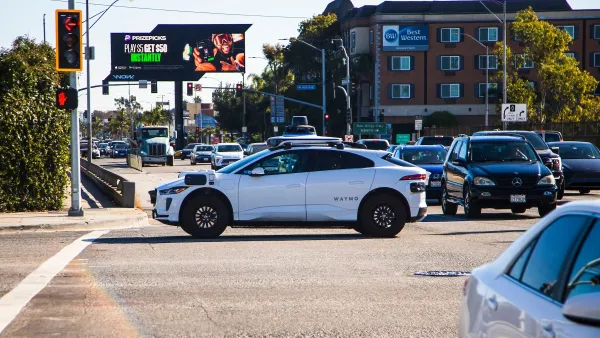
MIT study confirms robotaxis don't reduce traffic
Waymo data reveals that the cars spend close to half of their time 'deadheading' — driving around with no passengers.
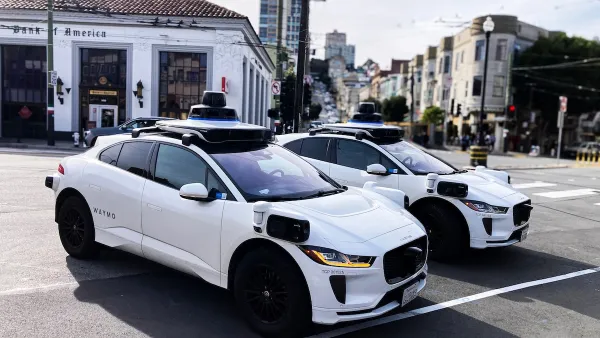
How Autonomous Cars Can Induce Sprawl and Sabotage Climate Goals
Robotaxis can lead to longer, more frequent trips and are projected to increase VMT by as much as 83 percent.
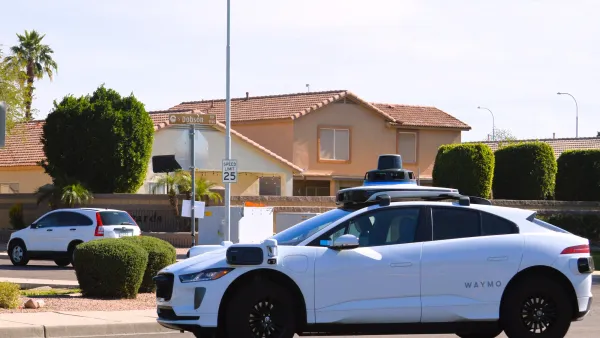
Uber and Waymo part ways in Phoenix
The companies ended a three-year pilot program, with Waymo saying it plans to keep its Phoenix robotaxi fleet available through its own app.

The state-sanctioned urbicide of Austin
People don’t kill cities. Freeways do.

US to reduce Colorado River water deliveries to Mexico
A new Colorado Treaty amendment reduces Mexico’s Colorado River water allocation by 250,000 acre feet.

New Jersey’s second-largest city bans standalone data centers
Jersey City will continue to allow co-location facilities, such as those meant for research institutions that store their own data.

Amtrak not solely to blame for New Jersey commuter rail's unreliability, report finds
A new study from the Garden State Initiative found that NJ Transit’s budget grew 20% across a 4 year period, but reliability declined significantly over the same period.

EPA erases limits on planet-warming pollution from power plants
Under Monday’s plan, power plants would still have some limits on how much mercury, arsenic and other contaminants they can emit.

Phoenix announces new on-demand transit service, more frequent RAPID buses
Both new services will launch in October, and are part of Phoenix's Project Effective Access Solutions for Easing Congestion.

FREE Course: Walkable City 1: Why Walkability?
After describing his path towards focusing on walkability as the essence of good planning, Jeff Speck marches through his five principal reasons for making more walkable places.
Reinventing Malls: Planning Alchemy—Turning Gray Fields Into Gold
The course focuses on the opportunities and imperatives that shape reinvention of mall sites.

Eagle County Government
Harvard University Graduate School of Design
Nashville Planning Department
The Architects Foundation
University of Cincinnati Online
The Pocatello Development Authority
The Urban Renewal Agency of the City of Pocatello
Journal of the American Planning Association