World
Global issues, U.N., etc.
Neighborhood Units Matter
This just in: Neighborhood Units missing in action as cities continue to attempt 3D governance using 2D laws. Howard Blackson argues why Neighborhood Units are the key element to placemaking.
The Great Repurposing: Envisioning the City of Driverless Cars
With driverless cars poised to appear in the not-too-distant future, planners and engineers are beginning to envision the effect on the urban landscape and the spaces within cars themselves. Nick Bilton shares some of the predictions.
What Makes a City 'Global'?
In an era of mobile people and capital, the most ambitious cities position themselves as international players. By examining the 10 key traits of successful "global" cities, Brookings hopes to help local leaders "gauge their global starting point."
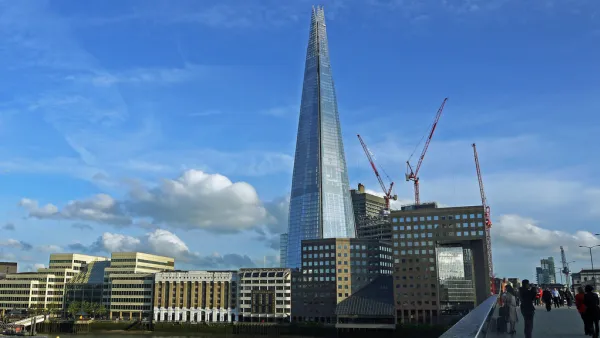
The Year's Best Skyscrapers
The Council on Tall Buildings and Urban Habitat has recognized the best tall buildings of 2013. The regional winners include The Bow in Calgary, CCTV in Beijing, The Shard in London, and Sowwah Square in Abu Dhabi.
A No-Brainer: Taichung Recognized as Intelligent Community of the Year
Taichung, Taiwan (pop 2.7 million) has beaten out six other finalists to claim the Intelligent Community Forum’s (ICF) designation as "intelligent community of the year". Robert Bell and Sylvie Albert describe what makes the city an intelligent icon.

Mapping Interest in All Things Zombie
The three geographers behind the Floating Sheep blog have created a world map of Internet references to zombies.
The Top Architecture Instagrammers
Looking for some design inspiration? The editors of ArchDaily have put together a list if the 25 top feeds to follow on Instagram.
Should the World Follow America's Lead and Raise Property Taxes?
Unlike the United Sates, Canada, and Great Britain, few countries raise substantial revenues from property taxes. The Economist argues that property taxes are among the most efficient, stable, and progressive forms of taxation and should be embraced.
Infrastructural Tourism Takes Off
Shannon Mattern examines how media scholars and environmental artists are working to reveal the material and immaterial infrastructures that shape our lives, from the Interstate to the Internet.
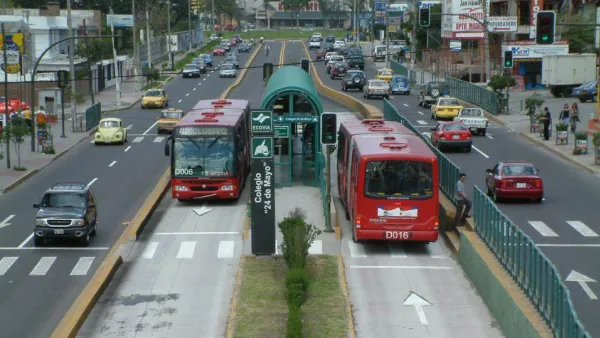
BRT: Cities Get on Board with Better, Reliable Transportation
With Millennials leading America’s historic decline in driving, cities are exploring ways to attract young professionals through reliable mass transit. Benjamin de la Pena and Nicholas Turner argue that Bus Rapid Transit is the optimal solution.
Is Bjarke Ingels Architecture's Sarah Palin?
Bjarke Ingels, founding partner of hot architecture firm BIG, is a media savvy populist who's scorned by the establishment, yet adept at "bringing his message directly to the people". Justin Fowler dissects his strategy for success.
What Grade Would You Give Obama's Climate Action Plan?
Two very different grades are assigned, one from David Hawkins, Director of Climate Programs at NRDC; the other from a college senior working on a fossil fuel divestment campaign. Michael Brune of the Sierra Club differs with Hawkins on natural gas.

An App to Map Free Urban Snacks
A map and website developed by PhD student Ethan Welty and friend Caleb Philip catalogs the cornucopia of edible trees found in the "urban orchards" of two-dozen cities around the world.
Ikea Unleashes its Flat Pack Expertise on Emergency Shelters
A cheap, solar-powered hut designed by Ikea, in partnership with the United Nations High Commissioner for Refugees, promises to revolutionize emergency housing for displaced persons.
UNESCO World Heritage List Welcomes New Destinations
Japan's Mt. Fuji, Italy's Medici Villas and Gardens, and a historical port town in Fiji are among the 19 new additions to UNESCO's vaunted World Heritage List; bringing to 981 the number of cultural, natural, and mixed sites comprising the list.
Urban Design in the New Soft City
Carl Skelton argues that the public needs new tools of citizenship to participate fully in the digital cities of the near future.
Why We'll Likely See a Lot More Urban-Oriented Protests in the Future
If there's one common thread uniting the recent protests in Brazil and Turkey, it's the growing inequality evident in cities, and the inability (or disinterest) of the public sector in bridging that gap through public services.
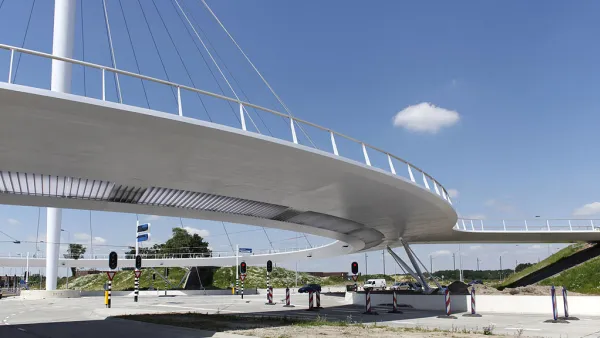
The World's Best in Progressive Bike Infrastructure
From car-shaped shelters for cargo bikes in Copenhagen to a bike path that runs through the middle of one of Amsterdam's most visited museums, Sarah Goodyear surveys some of the most innovative bicycle infrastructure projects in the world.
Climate Adaptation: Is Miami Indefensible?
In advance of President Obama's long-awaited speech on climate change, NPR looked at climate adaptation - preparing for the environmental changes it will cause. Rising sea level is the topic. In the U.S., two cities stand out: New York and Miami.
How the Internet is Helping Cities in the Western World to Loosen Up
While cities in the developing world embrace the chaos and risk inherent in their informal landscapes, the Western world excels at regulation. But this dynamic is starting to change, to the dismay of incumbent industries and establishment regulators.

FREE Course: Walkable City 1: Why Walkability?
After describing his path towards focusing on walkability as the essence of good planning, Jeff Speck marches through his five principal reasons for making more walkable places.
Reinventing Malls: Planning Alchemy—Turning Gray Fields Into Gold
The course focuses on the opportunities and imperatives that shape reinvention of mall sites.

City of Rosemead
Rutgers University, Edward J. Bloustein School of Planning and Public Policy
One Hundred Miles
University of Michigan School for Environment and Sustainability (SEAS)
Hunter College, City University of New York (CUNY)
The Architects Foundation
City of Cambridge
Montrose County
The Pocatello Development Authority









