United States
The Life and Death of the Suburban Paradigm
A new article by city historian Graeme Davison traces the rise and fall of the suburban paradigm from its ideological roots in Victorian England to its current backlash.
Bike-Share Spreads Across Sprawling Midwest
Bike-share is continuing its march towards world domination, with seemingly every large Midwestern American city now jumping on the bike lending bandwagon, reports Angie Schmitt.
South and West are Hot Destinations as Migration Resumes
New Census data shows that after a recession induced respite, "Americans have resumed moving from the Northeast and Midwest to the West and South," reports Neil Shah. Four of the nation's fastest growing large metro areas are located in Texas.
New Tool Improves the Search for Food Deserts
The USDA's new Food Access Research Atlas provides a handy guide for assisting policymakers and planners in finding the urban and rural areas with the most formidable obstacles to accessing fresh healthy food, reports Nancy Shute.
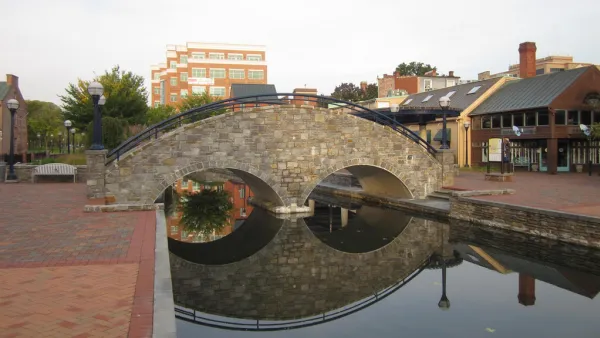
America's Biggest Small Town Comebacks
Jordan Rane profiles 8 historic towns from across the country that have overcome significant challenges to become desirable destinations once again.
New Push for a Federal Carbon Tax Takes Shape
Democrats in Congress have returned to long-stalled efforts to craft a federal carbon-pricing scheme. With Obama having indicated in his State of the Union that climate change would be a focus of his administration, is there hope for progress?
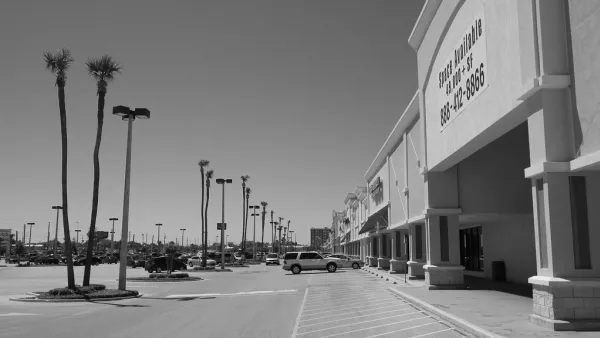
Driven into Poverty: Walkable Urbanism and the Suburbanization of Poverty
David Moser pens a compelling essay that examines the ways in which sprawling auto-dependent land use patterns exacerbate poverty. As more low-income individuals and families are pushed to the suburbs, "this problem is gaining urgency."
Urban Innovation Award Winners Announced
Providence, Rhode Island's vision for improving early childhood literacy has been selected as the winner of the Bloomberg Philanthropies' Mayor's Challenge, a nationwide contest seeking innovative and replicable ideas for improving cities.
Can Rail Fill the Gap if Keystone XL Isn't Approved?
"Yes it can", at least to some extent appears to be the answer according to the WSJ. While the Keystone XL pipeline can move 830,000 barrels of oil a day, rail shipments are set to double this year to 200,000 barrels. Not so, according to the NRDC.
A Plea for Stronger Architectural Ethics
Should architects recuse themselves from designing buildings that violate human rights? Raphael Sperry says yes, especially when it comes to two building types that are ethically troublesome: execution chambers and supermax prisons.
The Surprising Demographics of Gun Ownership
You've seen the news reports of skyrocketing gun sales due to the possibility of tightened gun restrictions in the wake of the Newtown, CT tragedy; yet the headlines of vocal opposition to gun control belie America's declining gun ownership rate.
U.S. Experiences Second-Highest Transit Ridership Since 1957
According to a new report, U.S. transit ridership increased to 10.5 billion rides in 2012 - a 1.5% increase over 2011, despite transit shutdowns and reductions caused by Superstorm Sandy. High gas prices, and their volatility, was a major cause.
Should the Feds Fund Transportation Projects?
The impending bankruptcy of the Highway Trust Fund a lack of clear purpose for national transport investment has Eric Jaffe asking if, after 120 years, we might be witnessing the end of federal transportation funding as we know it.
Sustainability's Latest Tool: Gamification
Already popular in several sectors, 'gamification' is increasingly being used to educate and engage the public around sustainability issues. Can "using fun and games for serious purposes" bring about environmental improvements?
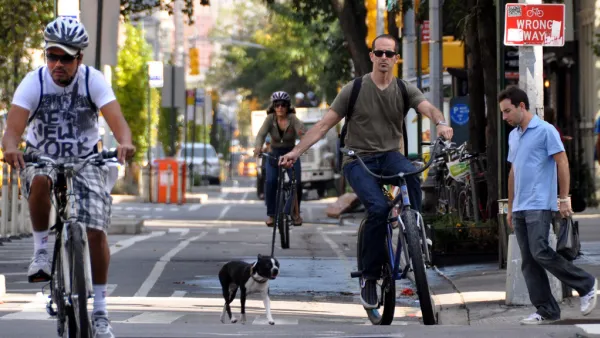
The Do's and Don'ts of Urban Cycling
Taking the important first step in becoming an urban cyclist is often the most daunting. But with some pieces of advice and knowledge, anyone can become a confident urban cyclist.
Bipartisan Bill Aims to Boost Brownfield Redevelopment
This week, a bipartisan group of U.S. Senators introduced the Brownfields Utilization, Investment and Local Development Act of 2013 (BUILD Act), a bill aimed at assisting local communities in remediating and redeveloping contaminated sites.
Is Good Transit Necessary for Parking Reform?
Paul Barter answers with an unequivocal no. He outlines the reasons why debates over the elimination of parking minimums should be decoupled from transit, and identifies other reforms that can make parking changes palatable.
'First They Tried to Make Moons': The Fascinating History of Electric Streetlights
When electricity was still in its infancy, municipal leaders turned to "moonlight towers" to provide mass illumination for their cities. Megan Garber explores the "brief and literally shining moment" in the history of electric streetlights.
America's Happiest States
Gallup and Healthways have released their annual state-by-state assessment of America's well being. For the fourth consecutive year, Hawaii tops the list.
How Would Free Transit Fare in the U.S.?
Jake Blumgart compares free transit in Europe with case studies in the U.S.

FREE Course: Walkable City 1: Why Walkability?
After describing his path towards focusing on walkability as the essence of good planning, Jeff Speck marches through his five principal reasons for making more walkable places.
Reinventing Malls: Planning Alchemy—Turning Gray Fields Into Gold
The course focuses on the opportunities and imperatives that shape reinvention of mall sites.

One Hundred Miles
County of Mendocino
planning NEXT
The Architects Foundation
University of Cincinnati Online
Montrose County
Northern Illinois Transit Authority (NITA)
The Pocatello Development Authority









