Your boss might be interested in this article, which makes the case for working extra long on Fridays to avoid what, in nearly three-quarters of metros across America, is the worst time of the week to drive. Mike Maciag looks at the worst offenders.


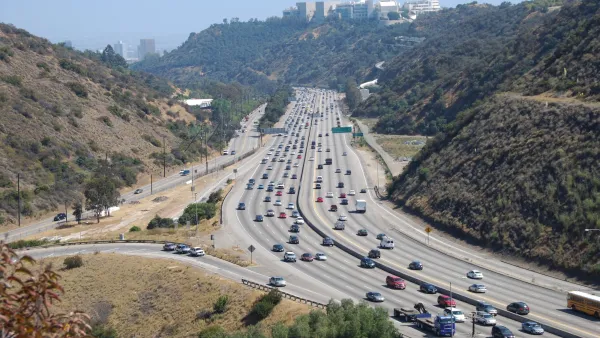
Anyone who's been frustrated trying to make the 15-mile drive from Santa Monica to central Los Angeles on a Friday afternoon in under 90 minutes can rest assured they have good reason to complain. According to Data compiled for Governing by traffic research firm Inrix, "The Los Angeles metro area, notorious for its backups, recorded the longest Friday afternoon delays of the 100 areas measured."
"Drivers leaving town after work account for some of the additional
traffic, and this is compounded by other individuals taking care of
errands before the weekend, said David Schrank, an associate research
scientist with the Texas Transportation Institute."
San Francisco, Honolulu, Austin, and Bridgeport, Connecticut rounded out the top five worst Friday commutes.
Read the full story: Ranking the Nation’s Worst Friday Afternoon Commutes


First responders use electric motorcycles to split lanes in LA traffic
The bike fleet will help LAFD firefighters reach emergency situations faster.
LA Metro Board Approves New Subway for One of Nation’s Busiest Freeway Corridors
The new subway could cut the hour-long trip between west Los Angeles and the San Fernando Valley to 20 minutes.
Can LA Achieve a ‘No-Car’ Olympics?
The city’s mayor promises all Olympic venues will be reachable by transit, but the city’s ability to finish its transit projects on time is coming into question.

Planetizen Federal Action Tracker
A weekly monitor of how Trump’s orders and actions are impacting planners and planning in America.

Amtrak, CN end decades-long dispute with eight-year agreement
The new operating agreement establishes an updated framework for the companies to work together, including processes to resolve disputes.

Northwest rail fans eager for Sept. 30 debut of Amtrak’s Airo fleet
Get ready for that new train smell and more seats. But they won’t go faster or run more frequently on the Cascades route in Washington and Oregon.

Brightline Florida files for bankruptcy
The transit company is over $5 billion in debt.

St. Louis Metro to test if single-car trains can reduce operating costs, maintain rider satisfaction
The pilot program will run from October to spring 2027, and begin with one single-car train operating on Metrolink’s Red and Blue lines.

Pennsylvania is building data centers in abandoned mines
Housing data centers in mines provides an alternative to destroying local forests and may spare residents from data centers’ noise and air pollution.

FREE Course: Walkable City 1: Why Walkability?
After describing his path towards focusing on walkability as the essence of good planning, Jeff Speck marches through his five principal reasons for making more walkable places.
Reinventing Malls: Planning Alchemy—Turning Gray Fields Into Gold
The course focuses on the opportunities and imperatives that shape reinvention of mall sites.

City of Thousand Oaks
City of Wisconsin Rapids
Harvard University Graduate School of Design
The Architects Foundation
University of Cincinnati Online
The Pocatello Development Authority
The Urban Renewal Agency of the City of Pocatello