The new subway could cut the hour-long trip between west Los Angeles and the San Fernando Valley to 20 minutes.


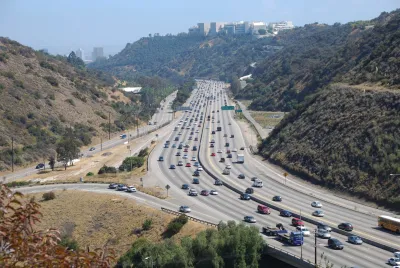
The Los Angeles Metro board of directors approved a new underground heavy rail line in the Sepulveda Corridor, one of several proposed options for improving traffic flow on the 405 freeway between west Los Angeles and the San Fernando Valley.
According to a Los Angeles Times article by Kevinisha Walker, “The option, which was pushed forward by Metro’s planning and programming committee last week, would go from Van Nuys to Sherman Oaks, pass under the mountains and Bel-Air, stop at UCLA and ultimately end at the E Line’s Expo/Sepulveda Station.”
An article by Sofia Delpueche in Secret Los Angeles adds, “Spanning 13 miles with tunnels plunging at least 500 feet under the mountains, this subway could take a trip that normally takes 40 to 80 minutes by car and shrink it to less than 20 minutes.”
The project’s funding sources remain an open question. “The project was slated as $6 billion, then grew to an estimated $9.4 billion to $13.8 billion with a completion goal of 2033. Metro does not have an estimate for the current modified proposal.”
Read the full story: A transit project connecting L.A.’s Westside to the San Fernando Valley finally gets approval

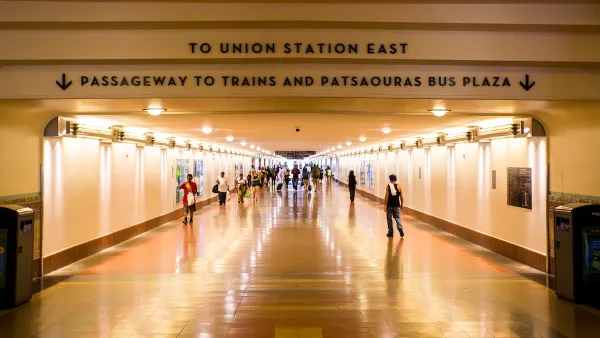
Can LA Achieve a ‘No-Car’ Olympics?
The city’s mayor promises all Olympic venues will be reachable by transit, but the city’s ability to finish its transit projects on time is coming into question.
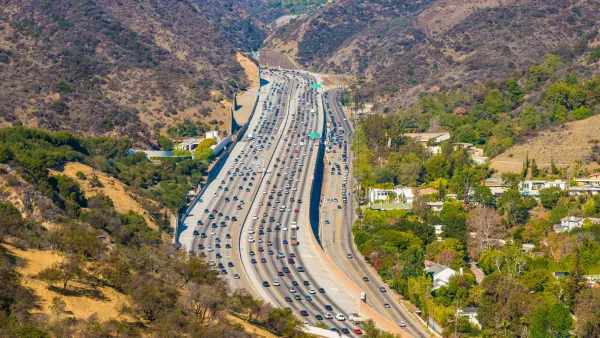
Congestion Pricing Could Be Coming to L.A.
The infamously car-centric city is weighing a proposed congestion pricing pilot program to reduce traffic and encourage public transit use.

Los Angeles Subway Work Halted Amid Serious Safety Lapses
A string of unaddressed worker injuries prompted the county transit agency to suspend work on a subway line that will connect downtown Los Angeles to the westside.

Planetizen Federal Action Tracker
A weekly monitor of how Trump’s orders and actions are impacting planners and planning in America.

California plans to bury El Niño’s downpour
If the state plays its cards right, it may be able to store a billion acre-feet of El Niño’s water in aquifers.

Chicago breaks ground on $3 billion megadevelopment
The new neighborhood, titled Foundry Park, will one day host 3,700 residences.

Satanic Place Names
From streams and lakes to valleys and canyons, I mapped more than 1,000 places named after the Devil.

California High-Speed Rail Authority CEO resigns after $600,000 scandal
Under Ian Choudri, the authority used taxpayer dollars to fund first class flights and trips to nightclubs.

Want to study the Missouri River? Soon, you may need unanimous approval from 10 states
Legislation would require 10 governors’ permission to study or build projects moving water outside the basin.

FREE Course: Walkable City 1: Why Walkability?
After describing his path towards focusing on walkability as the essence of good planning, Jeff Speck marches through his five principal reasons for making more walkable places.
Reinventing Malls: Planning Alchemy—Turning Gray Fields Into Gold
The course focuses on the opportunities and imperatives that shape reinvention of mall sites.

City of Rosemead
Rutgers University, Edward J. Bloustein School of Planning and Public Policy
One Hundred Miles
Hunter College, City University of New York (CUNY)
The Architects Foundation
University of Cincinnati Online
City of Cambridge
Montrose County
The Pocatello Development Authority