Earlier this week we brought you stunning images of global urban growth as captured by Landsat, NASA's longest running satellite imagery program. These images capture the dramatic changes to some of America's natural landscapes.


In 1972, NASA was gearing up to launch the Landstat satellite, and Americans were waking up to the fact that the landscape was changing really, really fast. To celebrate the 40th anniversary of the Landstat launch, NASA took nominations for areas that have undergone great change over the last four decades, and released customized images of their transformation, as seen from space.
The images include both urban and natural areas, the latter of which are no less transformed than the former. Although the greatest change in Lee County, Florida, came from development, the transformation of Trinity County, California was driven by logging. In North Central Colorado, the images focus on the impact of fire suppression and pine beetle outbreaks on forest lands.
NASA has also released a tutorial to allow data geeks to run their own queries, as well as imagery of dramatically transformed regions around the globe. These include Dubai and the Pearl River Delta in China, whose transformation from from an agricultural backwater to an industrial (and pollution) powerhouse of 36 million residents is captured in eerily beautiful swirls of reds and blues.
Thanks to Rachel Proctor May
Read the full story: Watch the American Landscape Change as Seen from Space
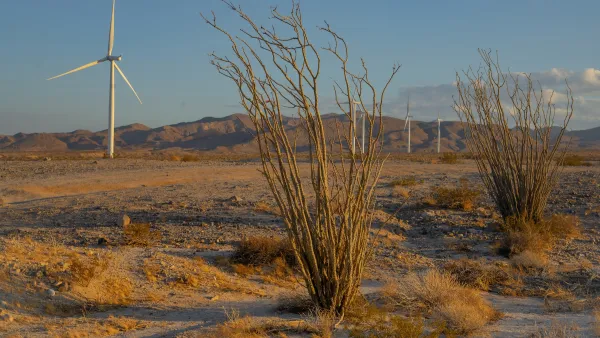
NASA tests lunar rover in California desert
The Plaster City Open Area offers a fitting simulacrum of the Mars landscape.

What Does Sustainability Mean in Space?
NASA is developing a sustainability strategy to clean up space debris and plan for the future as near-earth orbit becomes more cluttered.
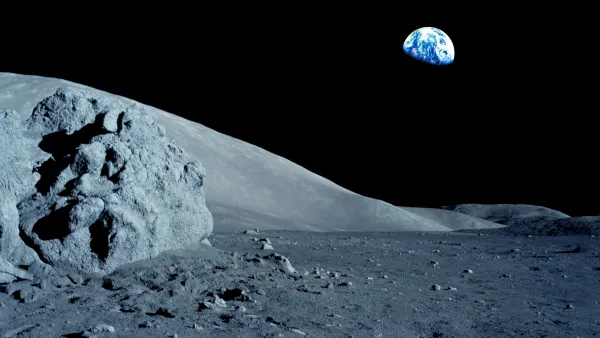
Train on the Moon? US to Explore Lunar Railway
Program proponents say this “visionary” endeavor “heralds a new era of human presence and economic activity beyond Earth.”

Desperate measures: Advocates weigh draining Lake Powell to fill Colorado River
Draining the reservoir could reduce evaporation losses by a couple hundred thousand acre-feet.

Eastern Nebraska is running out of electricity
Data centers and electrification are straining eastern Nebraska’s grid, throttling economic development.
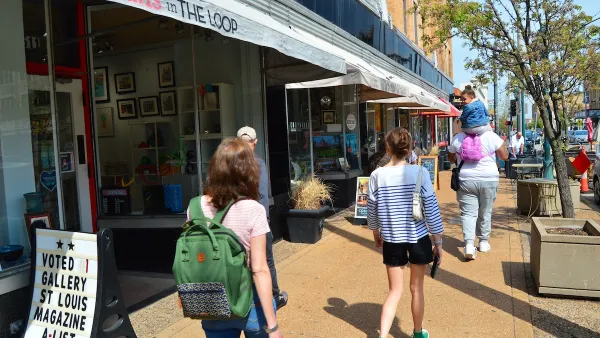
Move over, LA: St. Louis gears up for Olympics, invests millions in downtown redevelopment
The Missouri city will host the 2028 Olympic soccer group stage and knockout matches.

Officials claim feds 'rushed' Amtrak environmental review
Amtrak plans to move their Chicago maintenance facility from an industrial area to a residential one.

NYC breaks ground on anti-flooding infrastructure project
New York City's new system will reduce stormwater flows to local sewers by 90%.

One Kentucky town’s secret to affordable housing
The Smoketown Community Land Trust has already built seven affordable homes for community members.

FREE Course: Walkable City 1: Why Walkability?
After describing his path towards focusing on walkability as the essence of good planning, Jeff Speck marches through his five principal reasons for making more walkable places.
Reinventing Malls: Planning Alchemy—Turning Gray Fields Into Gold
The course focuses on the opportunities and imperatives that shape reinvention of mall sites.

City of Rosemead
Rutgers University, Edward J. Bloustein School of Planning and Public Policy
One Hundred Miles
University of Michigan School for Environment and Sustainability (SEAS)
Hunter College, City University of New York (CUNY)
The Architects Foundation
City of Cambridge
Montrose County
The Pocatello Development Authority