United States
New AARP Study Finds Older Americans Redefining 'Livable'
"People in the United States are getting older. But increasingly, they don't want to live in some old folks' community," writes Sarah Goodyear. As the number of Americans over 65 grows, concepts like aging in place are gaining new pertinence.
Secretary Foxx Talks Funding (and Possibly Tolling)
A recent article by Yonah Freemark details the policy agenda of Transportation Secretary Anthony Foxx, the former mayor of Charlotte and successor of well-regarded Transportation Secretary Ray La Hood.
How the Sharing Economy Brings Strangers Together
Sharing economy companies encourage personal interactions to improve customer satisfaction and trust among users.
Policy First; Then Technology
Civic leaders chime in on how policy should guide technology and smart cities initiatives.
NOAA Launching Storm Surge Mapping System
Americans tend to pay more attention to wind strength than storm surge when evaluating whether or not to evacuate before a hurricane. A new NOAA mapping project is designed to change perceptions about the multiple risks of storm events.
Explaining the National Economy's Real Estate Doldrums
Despite the housing boom in certain markets (such as New York, Los Angeles, and San Francisco), the real estate market is nowhere near the economic driver it once was.
Canada Acts while U.S. Lags on Rail Oil Tank Car Safety
Transport Canada jumped past U.S. DOT on April 23 by taking decisive action on "exploding" oil tank cars that are traveling throughout North America due largely to an insufficient oil pipeline network. Within three years, the older cars must go.
Renewables Account for 92 Percent of New Power in the United States
Although the United States built less new energy capacity than in the same time period last year, renewable energy dominated the capacity to come online so far in 2014.
'Sticks' and 'Carrots' Required to Build a Mature Transportation System
Gabe Klein says cities can do a better job providing mobility by focusing on the sticks and carrots of transportation—improving transportation options and creating disincentives to driving, respectively.
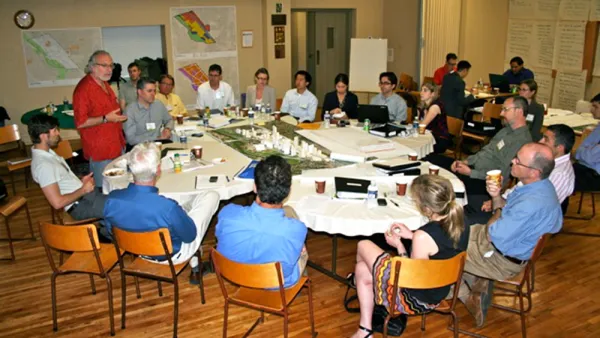
Engage; Don’t Rage: Use a Design Charrette to Negotiate Your Next Development Proposal
Despite the investments required of a design charrette, Robert Freedman makes the case that the process can save time and money on complex projects by way of three primary benefits.
Transportation Considerations for Aging Populations
An article on PlannersWeb details the considerations relevant to the needs of people over 65, who are growing more multi-modal and car-independent every year.
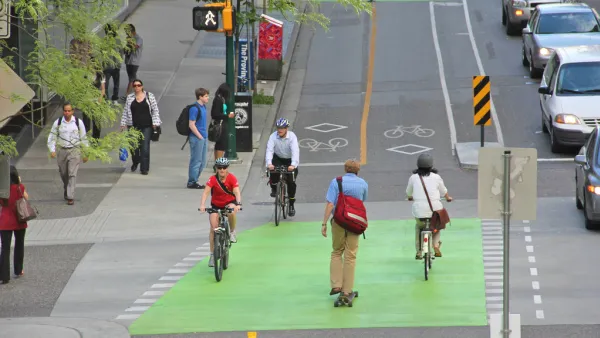
What Millennials Want: A Multi-Modal City
A recent study finds evidence of an overwhelming desire by Millennials to live multi-modal, car-lite lifestyles. They're even prepared to move to find what they want.

Big Data’s Victory Over Anonymity
A writer laments the advances made by data collection in cities—once a location where people could maintain or seek anonymity.
Senator Elizabeth Warren’s Candid Take on the Foreclosure Crisis
The Boston Globe provides an excerpt from the new book by Senator Elizabeth Warren, wherein she recounts her troubled reaction to a conversation with then Treasury Secretary Timothy Geithner.
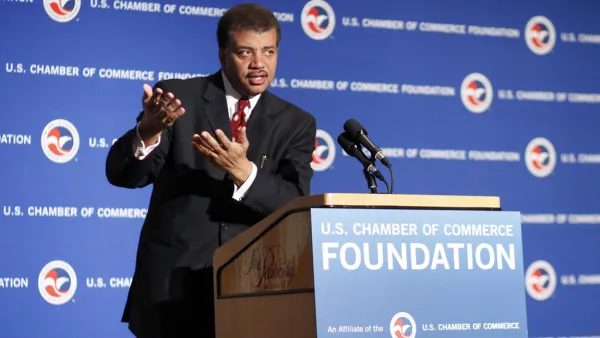
Will the Neil deGrasse Tyson of Planning Please Stand Up?
Do you have to be a “plannerd” to think planning is cool? Is there a planner alive who can bridge the divide between the mysteries of planning and general public interest? One writer dares to hope.
A Brief History of Your Neighborhood
While some contend that our communities are sculpted by an unfettered free market, there are a variety of programs and policies that underwrite the costs of poorly planned development. "A Brief History of Your Neighborhood" examines a few.
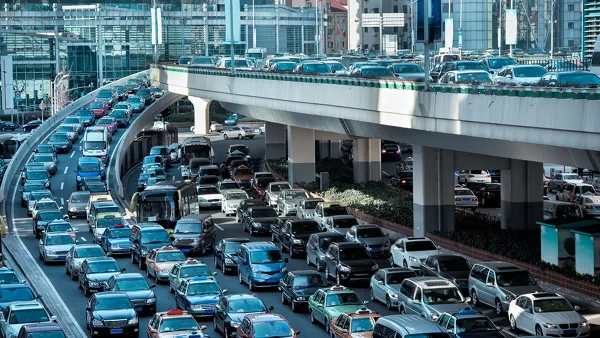
Which Cities Get to Work Early (or Late)?
According to new analysis by Nate Silver, New York City might be more aptly described as the city that sleeps in.
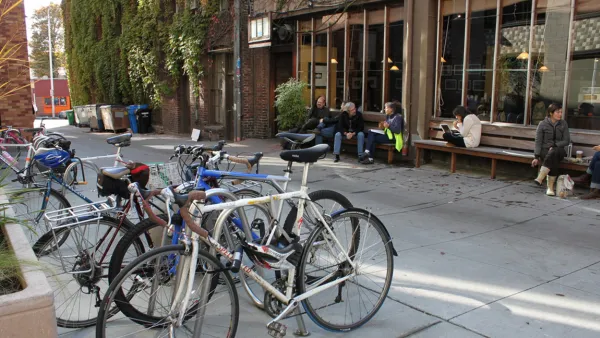
Alleyways as Pathways to Urban Revitalization
From D.C. to Seattle, alleys are being reinvented as people-friendly spaces. Often perceived as dirty and dangerous, alleys are moving beyond garbage and garages to become havens for pedestrians, public art, and small business.
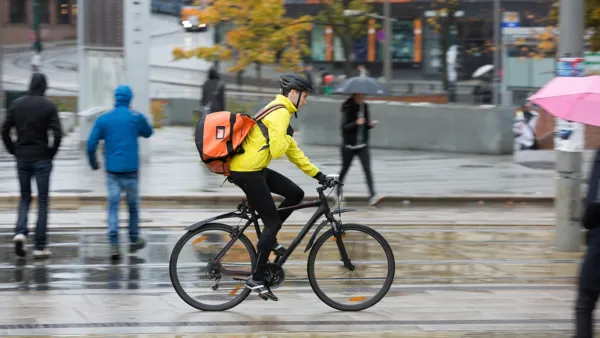
Which States Best Prioritize Walking and Biking?
The most recent coverage of the Alliance for Biking and Walking’s 2014 Benchmark report compares each of the states for how much federal transportation funding they devote to active transportation.
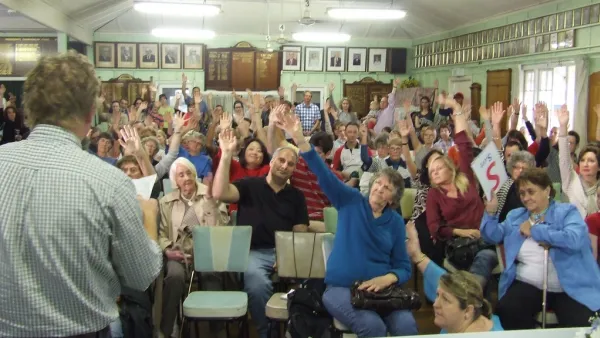
Strengthening the Bond between People and Placemaking
A research team at MIT Urban Studies and Planning, led by Susan Silberberg, released a paper examining “the interactions between placemaking, community participation, and the expanding ways communities are collaborating to make great public places.”

FREE Course: Walkable City 1: Why Walkability?
After describing his path towards focusing on walkability as the essence of good planning, Jeff Speck marches through his five principal reasons for making more walkable places.
Reinventing Malls: Planning Alchemy—Turning Gray Fields Into Gold
The course focuses on the opportunities and imperatives that shape reinvention of mall sites.

One Hundred Miles
County of Mendocino
planning NEXT
The Architects Foundation
University of Cincinnati Online
Montrose County
Northern Illinois Transit Authority (NITA)
The Pocatello Development Authority









