An unprecedented study is tracking the behavior of drivers in the U.S. using cameras and sensors to observe how they interact with their vehicle and the road. Researchers hope to better understand the causes for collisions, and how to prevent them.


"Researchers have equipped more than 3,100 cars nationwide with a slew of sensors and tools designed to capture a bounty of data about driving and behavior," writes Ryan Holeywell. "The data will capture everything happening inside a car prior to a collision and help explain how and why people get into accidents -- and just as important, how they can be avoided."
The Naturalistic Driving Study, which is being administered by the Transportation Research Board and led by Virginia Tech University, couldn't come at a more opportune time, as auto fatalities rose last year after seven consecutive years of declines.
"Researchers are also collecting detailed roadway data in the six communities where driver data is being gathered: Bloomington, Ind.; Buffalo, N.Y.; Raleigh-Durham, N.C.; Tampa, Fla.; Central Pennsylvania; and Seattle," adds Holeywell. "The idea is to marry the two sets of data to get information not just on how humans interact with vehicles, but on how the condition and shape of roadways influence their behavior."
Read the full story: A New Study Could Help Make Driving Vastly Safer
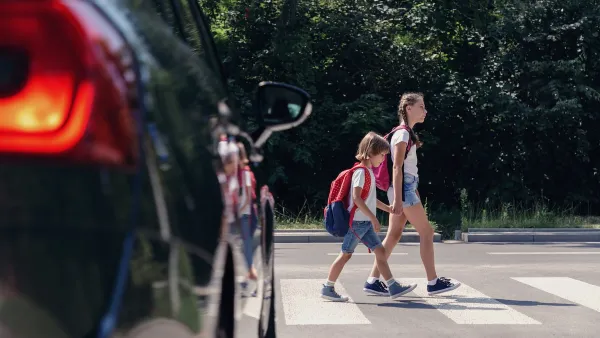
Regulatory Agency Delays Pedestrian-Oriented Car Safety Rating Updates
Under pressure from automakers, the National Highway Traffic Safety Administration is delaying the implementation of new vehicle ratings based on safety features that reduce risks to people outside the car.
Trump Prompts Restructuring of Transportation Research Board in “Unprecedented Overreach”
The TRB has eliminated more than half of its committees including those focused on climate, equity, and cities.
Has Progress on Travel Safety Run Off the Road?
Changing technology and rebuilding infrastructure to improve road safety are long-term strategies. How can enforcement and interventions that influence driver behavior make a difference in reducing traffic deaths sooner?

Planetizen Federal Action Tracker
A weekly monitor of how Trump’s orders and actions are impacting planners and planning in America.

California plans to bury El Niño’s downpour
If the state plays its cards right, it may be able to store a billion acre-feet of El Niño’s water in aquifers.

Desperate measures: Advocates weigh draining Lake Powell to fill Colorado River
Draining the reservoir could reduce evaporation losses by a couple hundred thousand acre-feet.

Mamdani’s pied-à-terre tax survives legal challenge
A panel of judges found that the plaintiffs failed to demonstrate injury as a result of New York City's implementation of the tax.

Eastern Nebraska is running out of electricity
Data centers and electrification are straining eastern Nebraska’s grid, throttling economic development.

Seattle passes record-breaking transit services expansion
Proposition 1 will double the city’s transit tax to add 95,000 more bus trips and preserve 180,000 bus trips annually.

FREE Course: Walkable City 1: Why Walkability?
After describing his path towards focusing on walkability as the essence of good planning, Jeff Speck marches through his five principal reasons for making more walkable places.
Reinventing Malls: Planning Alchemy—Turning Gray Fields Into Gold
The course focuses on the opportunities and imperatives that shape reinvention of mall sites.

City of Rosemead
Rutgers University, Edward J. Bloustein School of Planning and Public Policy
One Hundred Miles
University of Michigan School for Environment and Sustainability (SEAS)
Hunter College, City University of New York (CUNY)
The Architects Foundation
City of Cambridge
Montrose County
The Pocatello Development Authority