In addition to some interesting findings regarding the relative benefits of investment in bus rapid transit, a new report from ITDP reached some fascinating conclusions concerning the factors most important to maximizing transit investment.


Perhaps the most surprising item in the Institute for Transportation and Development Policy's (ITDP) new report on maximizing transit investment, says Eric Jaffe, is the fact that transit quality has "a limited role in predicting transit-oriented development".
"So what mattered most to TOD success? Government intervention, says ITDP. When local government did almost nothing to promote TOD, a new transit line generated only a nominal amount of economic investment," notes Jaffe. "Only when strong government intervention occurred was a transit line assured of generating a great deal of TOD success."
"Rezoning a corridor to encourage mixed-use development, creating a comprehensive plan for the area, actively reaching out to investors, marketing the program, offering financial incentives — these elements of a strong official involvement directly predicted TOD success."
Read the full story: The Surprising Key to Making Transit-Oriented Development Work

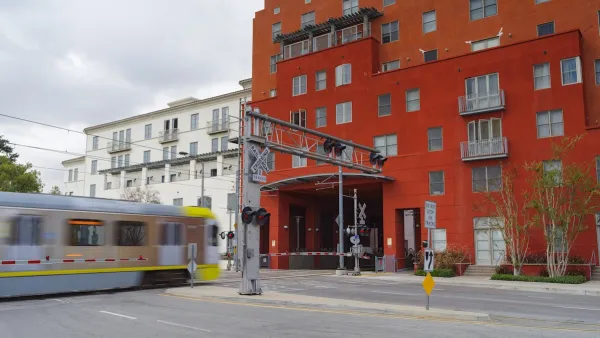
New California Law Allows 9-Story Buildings Near Transit
Gov. Newsom signed a low that overrides local zoning laws in the state’s biggest counties to allow for larger buildings near rail or rapid bus stations.

Double First: The First Station on Tampa Bay's First BRT Line Complete
The first of 15 bus rapid transit stations in St. Petersburg was unveiled last week.
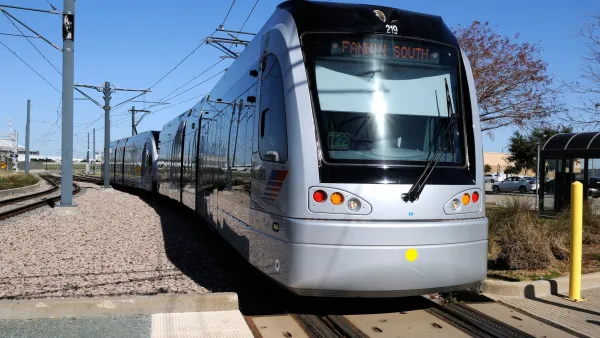
What Makes a Transit System Great in the U.S.
Transit should make people's lives better, with density a key component of successful systems.

Planetizen Federal Action Tracker
A weekly monitor of how Trump’s orders and actions are impacting planners and planning in America.

‘Going backwards:’ Baltimore mayor, students rally against state's transit funding plan
Maryland's proposed six-year plan provides no funding for Baltimore’s BMORE bus program and reduces its road maintenance funding.

Detroit to transform waterfront with $2.2 billion investment
Developers will convert about 18 acres of unused parking lot space into civic spaces.

U.S.-Iran war may have ‘devastating’ impact on cost to warm homes
Vermont and Maine residents may see a 76% increase in the cost of warming their homes this winter.

Senate bill would ‘overhaul’ environmental permitting laws
Under the proposed act, government agencies would also not be able to suspend or rescind permits after granting them.

Exemption applications for NYC’s pied-à-terre tax see 55% success rate
The city sent nearly 40% of its initial pied-à-terre tax warnings erroneously.

FREE Course: Walkable City 1: Why Walkability?
After describing his path towards focusing on walkability as the essence of good planning, Jeff Speck marches through his five principal reasons for making more walkable places.
Reinventing Malls: Planning Alchemy—Turning Gray Fields Into Gold
The course focuses on the opportunities and imperatives that shape reinvention of mall sites.

One Hundred Miles
County of Mendocino
planning NEXT
The Architects Foundation
University of Cincinnati Online
Montrose County
Northern Illinois Transit Authority (NITA)
The Pocatello Development Authority