While the successes, and travails, of bike share systems in cities like New York, Washington D.C., and Chicago get most of the attention, several smaller cities across the U.S. have managed to establish such systems without much fanfare.


"While many of the United States’ largest cities have just started to adopt bike share, several of the country’s smaller cities have been at it for years," writes Matt Christensen. "These nimble cities were among America’s bike share pioneers, and they’ve proven that bike share can succeed with little more than community support, good leadership, and effective partnerships."
The three systems that Christensen profiles show that a nearby college community can help provide a ready population of users. In addition, "Madison, Boulder, and Chattanooga were able to quickly harness community support, build strong ties with city officials and local institutions, and launch successful programs," he explains.
FULL STORY: Bike Share Finds Success in Small Cities

Despite Woes, Bike Share Programs Continue to Spread
Bike share programs are spreading throughout the United States, now in 36 urban areas, up from six four years ago. However, half the programs have encountered technical or financial difficulties, according to a tally by The Wall Street Journal.
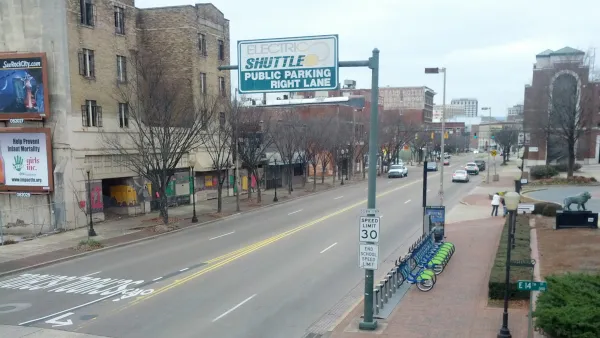
The Little Bike-Share That Could
Chattanooga didn't let its small population, sprawling environment, and weak cycling culture prevent the city from implementing a small-scale bike-share system. Their experience could hold lessons for other small cities that want jump in the saddle.
Madison approves hundreds of affordable apartments as deadline for federal funding looms
A recently approved project will bring 163 affordable units to the north side.

Planetizen Federal Action Tracker
A weekly monitor of how Trump’s orders and actions are impacting planners and planning in America.

The state-sanctioned urbicide of Austin
People don’t kill cities. Freeways do.

US to reduce Colorado River water deliveries to Mexico
A new Colorado Treaty amendment reduces Mexico’s Colorado River water allocation by 250,000 acre feet.

5 New England states march closer to 800 megawatt wind energy project
Securing federal approval for the project may be complicated under the Trump administration, which has historically been hostile towards domestic wind power.

Baltimore to break ground on $50 million Transit Priority Project
The project will bring faster bus trips, safer streets and better bike connections to Baltimore.

Airbnb launches $250 million 'last-dollar financing' housing accelerator, makes first investment in Austin
The company will put $6.4 million towards affordable housing development in Texas’ capital.

FREE Course: Walkable City 1: Why Walkability?
After describing his path towards focusing on walkability as the essence of good planning, Jeff Speck marches through his five principal reasons for making more walkable places.
Reinventing Malls: Planning Alchemy—Turning Gray Fields Into Gold
The course focuses on the opportunities and imperatives that shape reinvention of mall sites.

Eagle County Government
Harvard University Graduate School of Design
Nashville Planning Department
The Architects Foundation
University of Cincinnati Online
The Pocatello Development Authority
The Urban Renewal Agency of the City of Pocatello
Journal of the American Planning Association