United States

10 of the Best Adaptive Reuse Projects
A list of adaptive reuse projects completed in the last five years includes a diverse collection of breweries turned hotels, a dry dock turned into a museum, and much more.
The Influence of Public Works on Gentrification
New research examines the role of public investments in gentrification.
How the 'Internet of Things' Is Changing City Operations
The potential of "Smart Cities" is still very much under negotiation. Data-Smart City Solutions at Harvard University surveyed what cities are doing so far to take advantage of the Internet of things.
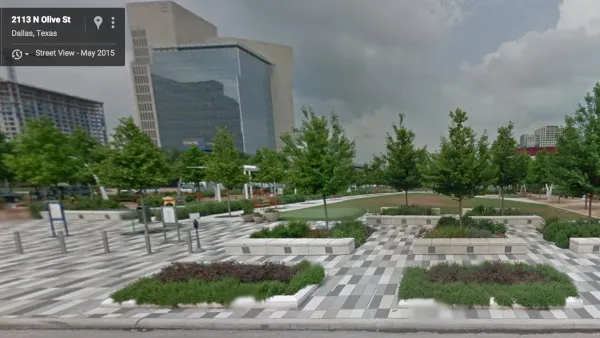
The Google Street View Perspective on Public Space Transformations
A recent trend in returning the use of streets and other public space to the use of humans and other modes of transportation other than the car is more striking with some historical perspective.
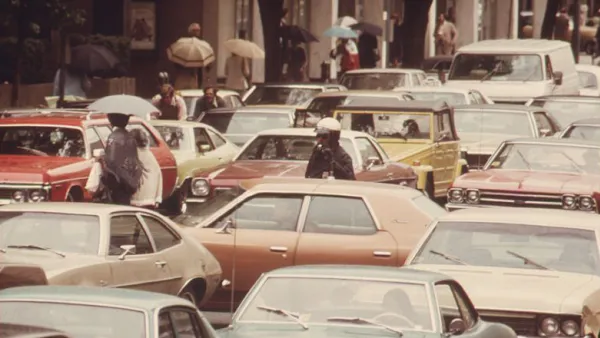
If Congestion Is Getting Worse, Why Are We Spending Less Time Traveling?
The University of Michigan Transportation Research Institute released its eighth report on peak motorization in the U.S., an evaluation of time spent traveling for a broad category of purposes, not just work. From 2004 to 2014, total time decreased.
The Road Safety Upgrade the World Desperately Needs: Self-Driving Cars
The headline chosen here summarizes the argument put forward by Vox's Joseph Stromberg, who believes that self-driving cars will be a serious upgrade over the average human driver.
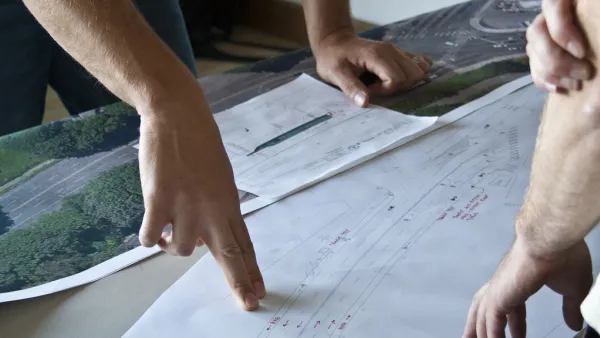
4 Examples of Road Diets
Jeff Speck and Spencer Boomhower created a video to illustrate how road diets work.

Is 'Brain Drain' a Legitimate Problem?
According to analysts like Aaron Renn, the exodus of educated Millennials from what some perceive to be less-glamorous cities shouldn't signal impending doom. For one thing, brain drain might not be happening at all.
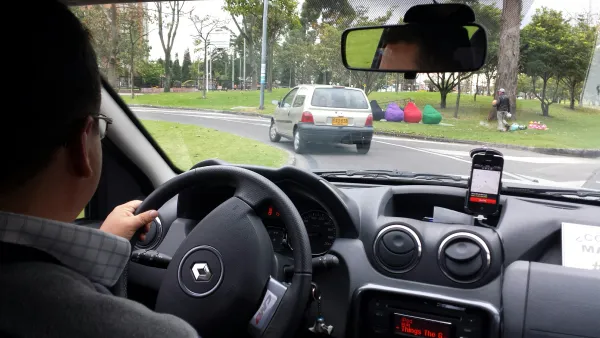
Uber Looking More and More Like Transit: Is that Good or Bad for Transit?
A spate of media coverage responded to the news that Uber had released a new feature called "Smart Routes."
How Planning Can Contribute to Municipal Fiscal Health
The Lincoln Institute of Land Policy has launched a new campaign "to help cities confront an epidemic of insolvency and restore the capacity for local governments to provide basic services and plan for the future."
World's Newest Form of Marine Renewable Energy Launched in Hawaii
It's called Ocean Thermal Energy Conversion, or OTEC, and the world's largest plant was dedicated in Hawaii on August 21. It produces renewable energy by using the temperature difference between the ocean's deep cold water and warm surface water.
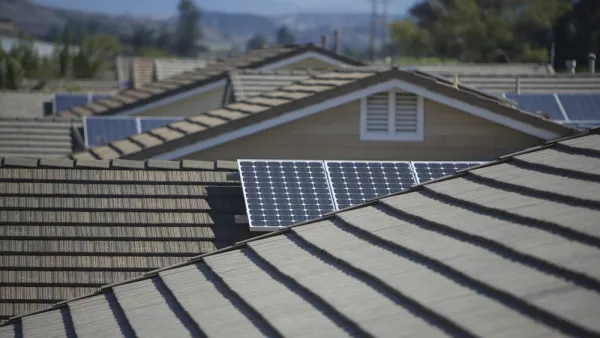
Google Debuts Rooftop Solar Mapping Tool
Currently in its early stages, Project Sunroof tracks how much sun every roof receives. Then it estimates the costs and savings if rooftop solar were installed. Right now, the tool only covers the Bay Area, Fresno, and Boston.
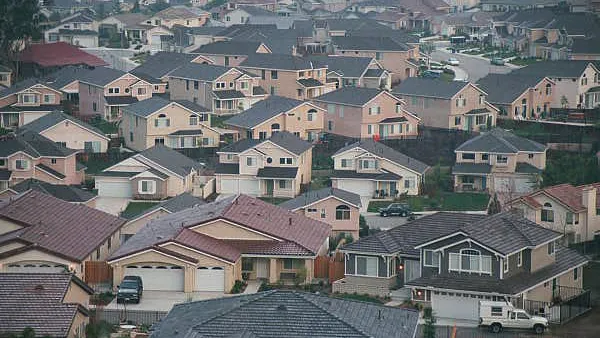
Aging Boomer Suburbanites: The Coming Transit Disaster
The suburbs are not conducive to the aging baby boomers that populate them. How do we prepare?
How Growth and Neighborhood Protection Coexist in Pasadena
Pasadena recently elected its first new mayor in 16 years, and the city is completing a 20-year General Plan Update that aims to continue animating downtown Pasadena by addressing growth and mobility simultaneously.
Rotterdam Development Makes Energy Efficiency History
A 72-unit development in Rotterdam—the town in upstate New York, that is, not its namesake in The Netherlands, is one of the first in the United States to be called net-zero: it consumes as much energy as it produces.
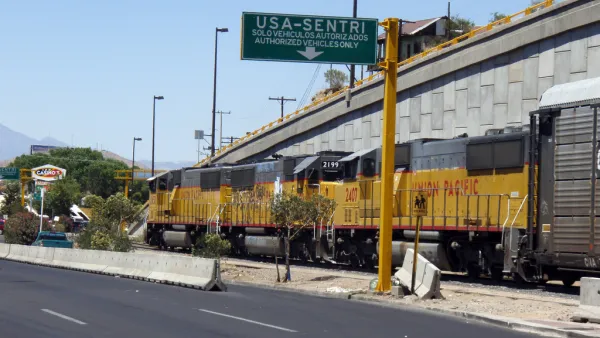
First Rail Link in a Over a Century Now Connects U.S., Mexico
Instead of building a wall separating the United States and Mexico, officials from both countries celebrated the opening on Tuesday of the West Rail Bypass International Bridge.
Using Vacant Property Registration Fee Ordinances to Fix Blight
Planners get involved with foreclosure by assisting residents threatened with foreclosure or addressing community impacts such as blight, vacancy, and property disinvestment. A look at vacant property fees as a tool for dealing with foreclosure.
On the Sudden Rise to Prominence of the Word 'Infrastructure'
At some point in the past 35 years, the word infrastructure became common in policy discussions and even in the common tongue. But why did we suddenly prefer the word "infrastructure" to other terms like "public works"?
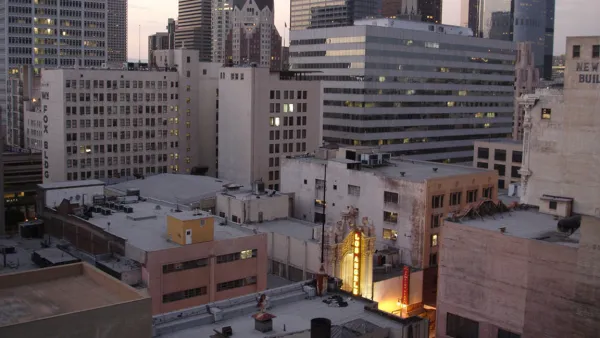
Study Reveals a 'Bull Market for City Centers'
If housing prices were tracked like the stock market, urban cores would be soaring to new highs.

What Is a 'Great' Neighborhood? An Analysis of APA's Top-Rated Places
A study recently published in the Journal of the American Planning Association finds that the APA's definition of "great neighborhoods" might be leaving low-income and minority populations behind.

FREE Course: Walkable City 1: Why Walkability?
After describing his path towards focusing on walkability as the essence of good planning, Jeff Speck marches through his five principal reasons for making more walkable places.
Reinventing Malls: Planning Alchemy—Turning Gray Fields Into Gold
The course focuses on the opportunities and imperatives that shape reinvention of mall sites.

One Hundred Miles
County of Mendocino
planning NEXT
The Architects Foundation
University of Cincinnati Online
Montrose County
Northern Illinois Transit Authority (NITA)
The Pocatello Development Authority









