Transportation
New Transit Plan in Juneau, Alaska—TOD to Follow
The Planning Commission of the Alaskan capital city recently approved a transit plan that expands service and increases pedestrian access. As next steps, city leaders are talking about providing incentives for development along the transit routes.
How Would the Movie Speed Look in Today's Los Angeles?
Twenty years after the movie Speed, which took place on the Big Blue Bus, Metro rail system, and other transit facilities, Keanu Reeves and crew might not recognize L.A.'s current transit system. L.A. County planner Clement Lau surveys the changes.
From Google Buses to Google Youth Muni Passes
Turns out all those protests against the ubiquitous Google (and other tech) luxury buses that often crowd out S.F. Muni (public) buses have contributed to a show of good will to public transit in the form of a $6.8 million gift to fund youth passes.
Taxis v. Uber: A Regulatory Update
Are rideshare companies like Uber here to stay? The answer likely hinges on a series of legal battles taking place nationwide.
How the Ashland BRT Would Change Chicago
The proposed Ashland Bus Rapid Transit line in Chicago, the latest effort in an ambitious multi-modal transportation investment plan by Mayor Rahm Emanuel and former Chicago DOT Commissioner Gabe Klein, is a game changer for an already unique city.
Questioning Private Investment in HOT Lanes
The 495 Express Lanes opened in Virginia in November 2012 and have yet to meet ridership projections. That might not be a problem when built by the public sector, but the road is a $1.4 billion investment by the Australian firm Transurban.
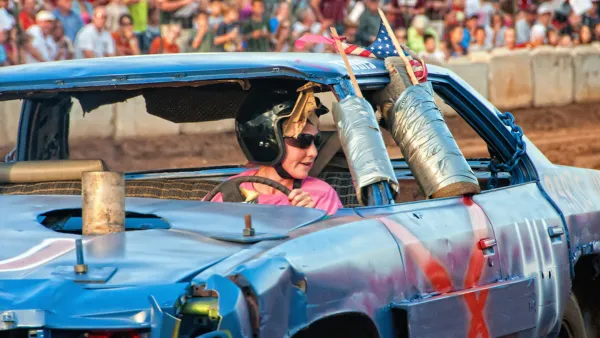
Yet Another Driver Subsidy: Inadequate Car Insurance Minimums
Insurance coverage hasn’t kept up with the cost of medical care and property damage caused by crashes. And whether we drive or not, when someone can’t pay for the damage they’ve done, we all have to pick up the tab.
Crude by Rail Declared 'Imminent Hazard' by Federal Regulators
The full declaration on CBR by DOT regulators was “an imminent hazard to public health and safety and the environment." An immediate safety order was issued requiring vigorous testing of crude and prohibition of use of some tanker cars.
Georgia Cracking Down on Fast-Lane 'Slow-Pokes'
A new bill approved by the state of Georgia's House of Representatives makes it illegal to remain in the fast lane when a faster vehicle approaches from behind.
Obama Pitching $300 Billion Plan to Fix Nation’s Roads, Bridges
The White House announced its intentions to propose a $300 billion plan to “address the funding crisis facing our surface transportation programs and to increase infrastructure investment.”
Why 'Google Buses' Are Bad for Cities
Tech buses deployed by companies like Google and Apple bring the benefit of more collective transportation. But there's an underlying dark side to these services that must be discussed.
The Case for Bus Rapid Transit
Bus rapid transit (BRT) is well known among planners as a cheap method to improve bus service and provide an alternative to rail, but BRT projects around the country have met resistance from an array of status quo interests.
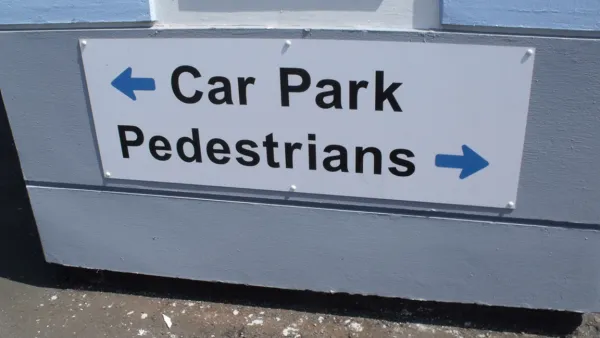
How Useful is Walkability: Are You Oriented to Walk?
The physical requirements for walkability—like narrow streets and wide sidewalks—aren't always enough to compel the activity of walking. How can we reorient toward the primal activity of walking?
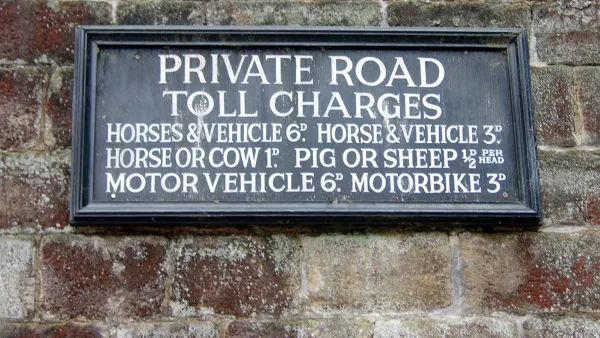
Road Tolls Are Fair and Benefit the Poor
Many people assume incorrectly that road tolls and parking fees harm poor people. In fact, they are usually less regressive than other funding options, and benefit poor people overall, particularly if some revenues are invested in alternative modes.
California High Speed Rail Authority Gets Funding Break
The break really isn't that large—only an extra three month before the state must start paying for costs on July 1 (as opposed to April 1) to match federal funding, according to a new state funding contribution plan.
Music to the Subway Rider’s Ears
James Murphy has composed a “Subway Symphony”—a unique set of notes for each station in NYC’s Metro system that would sound when users swipe their fare cards. “The busier a station becomes, the richer the harmonies would be.”
Why Privatizing Transit Won’t Get Toronto Anywhere
Full or partial privatization of the Toronto Transit Commission (TTC) would likely result in diminished service and a less expansive transit network.
U.S. Energy Secretary on CBR: 'Switch to Pipelines'
Ernest Moniz weighs-in on the exponential, and at times, explosive (literally) growth of moving crude oil by rail (CBR). His main point: pipelines are safer than rail. Science magazine editor Marcia McNutt points to pipelines' environmental benefits.
Dallas Needs $900 Million in Street Repairs (Or Lower Standards)
A recent report to Dallas’ Transportation and Trinity River Project Committee estimated the cost of bringing its streets to its minimum standards at $900 million.
Driverless Cars: A Boon to the Federal Budget?
The federal government is notorious for putting off road improvements. The good news? If driverless cars become a reality, they can keep putting them off—forever.

FREE Course: Walkable City 1: Why Walkability?
After describing his path towards focusing on walkability as the essence of good planning, Jeff Speck marches through his five principal reasons for making more walkable places.
Reinventing Malls: Planning Alchemy—Turning Gray Fields Into Gold
The course focuses on the opportunities and imperatives that shape reinvention of mall sites.

Greater Baltimore Committee
Eagle County Government
Harvard University Graduate School of Design
The Architects Foundation
University of Cincinnati Online
The Pocatello Development Authority
The Urban Renewal Agency of the City of Pocatello
Journal of the American Planning Association