Transportation
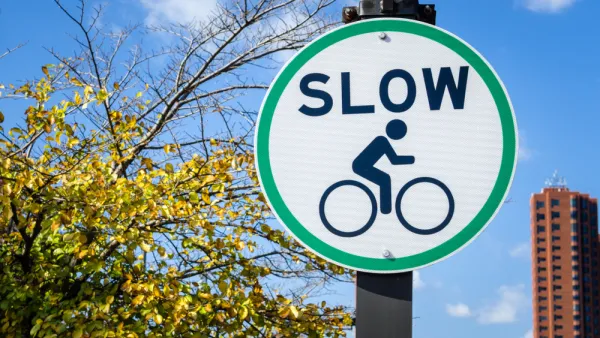
One Less Protected Bike Lane in Baltimore
A bike lane on Roland Avenue in Baltimore had been separated from vehicle traffic by vehicle parking, but no longer.
How Not to Do Growth
The state of Florida is moving forward with the Multi-use Corridors of Regional Economic Significance (M-Cores) plan to build several new toll expressways in rural parts of the state.
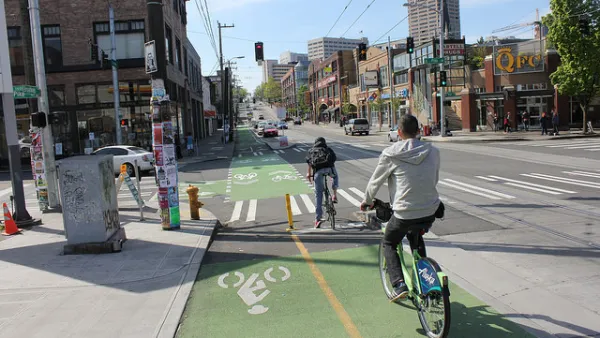
If You Build It, They Will Ride (400% More)
A more than 400 percent increase in bike ridership following the opening of a protected bike lane on Second Avenue proves that Seattleites are more inclined to ride with safe facilities.
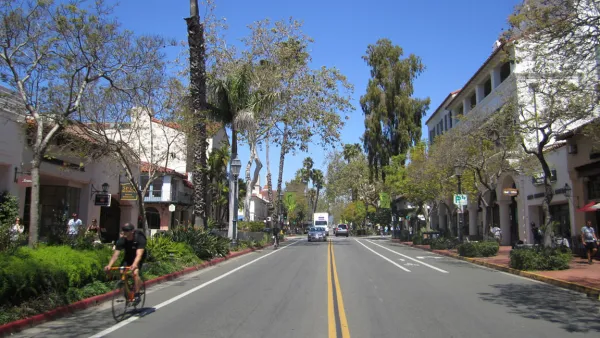
Street Design Principles by Sidewalk Labs
Sidewalk Labs, a smart cities shop within the Alphabet corporate structure, is working to revolutionize technology's role in city planning. Sidewalk Labs recently released the street design principles it's using to guide that effort.

New Developments Must Be EV Ready in Seattle
It's not the same as requiring that all new development have charging facilities and parking spots for electric vehicles, but it's close.
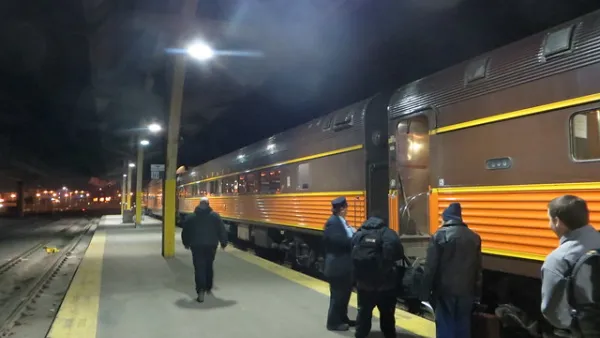
Amtrak Connection Between Indianapolis and Chicago Cut by State Budget
The state of Indiana didn't have $3 million to spare to keep the Hoosier State Amtrak passenger rail line operational.

Fighting for the Right to Drive in an Autonomous Future
There is a growing movement of humans who don't like the idea of being forced to hand the wheel over to robot drivers.
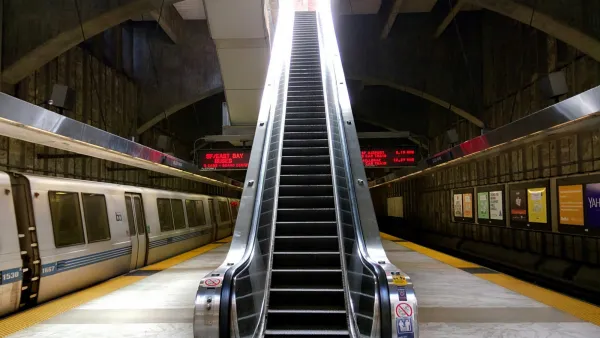
Who Most Needs Access to Core Neighborhoods?
We have a limited number of dense core neighborhoods in which getting around without a car is possible; such neighborhoods may appeal to many people, but having access to them affects people differently depending on work type and income level.
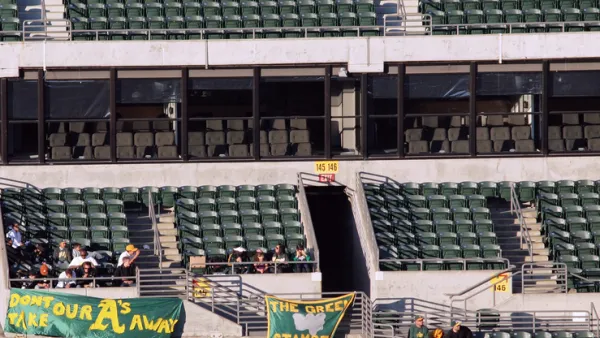
The Least Popular Planning Articles of 2019
An unscientific dip into Planetizen traffic data for the first three months of 2019 reveals the planning stories readers couldn't care less about.

Vancouver Considering Lowering Speed Limits for Pedestrian Safety
Vancouver wants to rein in traffic speeds as collisions take a rising toll on drivers and pedestrians in the city.
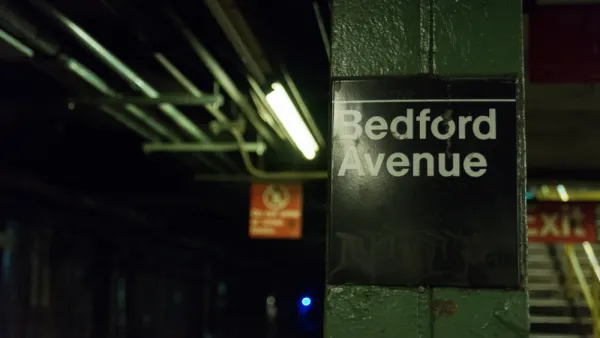
First Weekend of L Train Slowdown Could Have Been Worse
The long awaited repair work on the L Train between Brooklyn and Manhattan launched over the weekend.
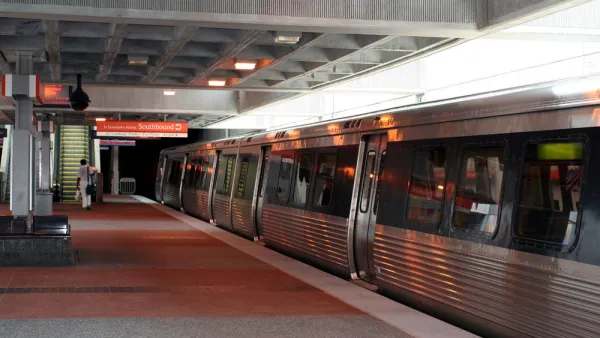
Younger, Low Income, Minority Voters Favored Transit in MARTA Referendum
New maps show demographic trends in voting after a March special election to expand MARTA in the Atlanta region.
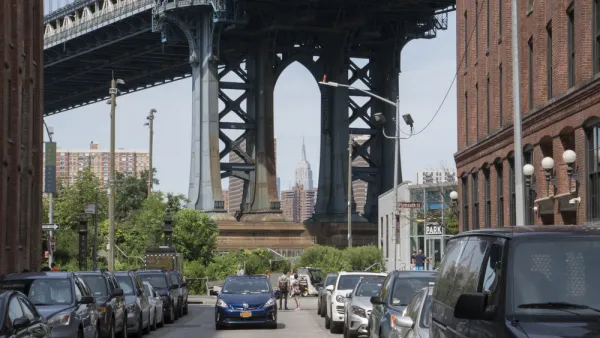
New Regulations Grind Hiring to a Halt for Uber and Lyft
The New York City set standards for transportation network companies, and now those companies are being a lot more selective about who they hire as drivers.
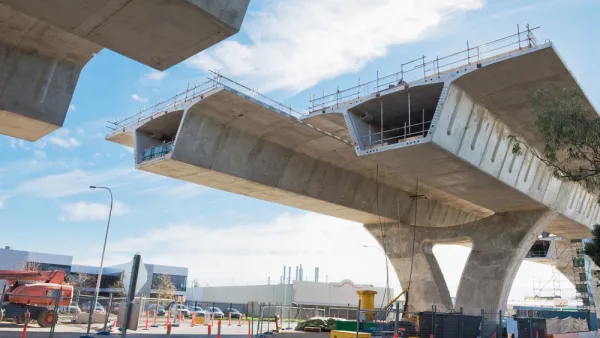
Analysis of U.S. DOT BUILD Grants Raises Critical Issues About Spending Priorities
Transportation for America is crunching the numbers on how the Trump administration has shifted transportation funding programs since it took over the TIGER grant program and made it into the BUILD grant program.

Public Input to Help Plan New Nature Trails
Reno officials hope to protect public green space in the Truckee Meadows before potential new development arrives.
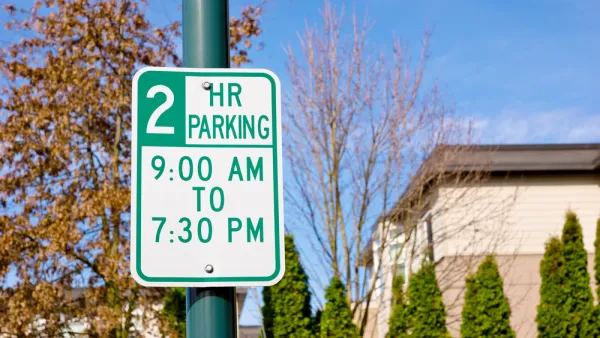
Court Ruling: Chalking Tires Amounts to Unconstitutional Search of Vehicle
A unanimous ruling by a three-judge panel of the U.S. Sixth Circuit Court of Appeals on April 22 found that the chalking of tires by parking enforcement officers on public streets is a violation of the Fourth Amendment.
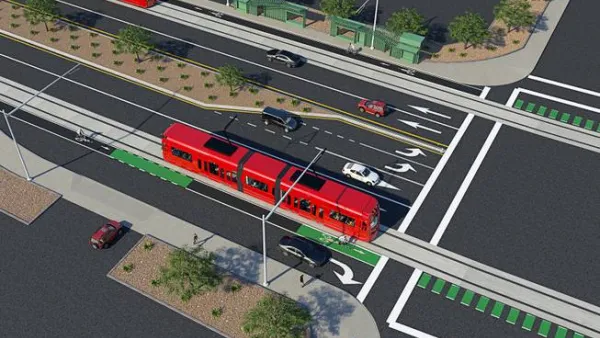
The Public Wants Light Rail; They'll Probably Get a Bus
A regional transportation planning authority, comprised of local representatives that tilt representation away from the urban core, rejected a voter-approved proposal for light rail in Southern Nevada.
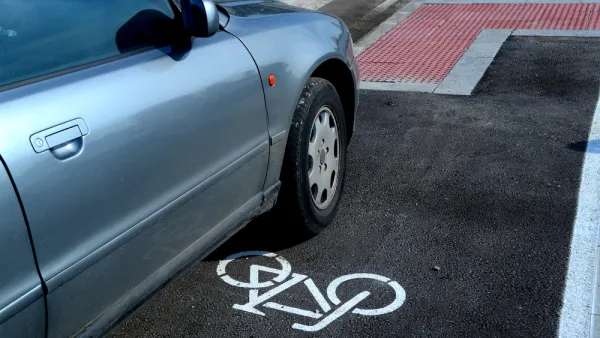
'Red Cup Project' Gains Viral Attention for Bike Infrastructure Safety
Internet observers noticed lots of videos of red Solo cups lining painted bike lanes in cities all over the country on Friday, April 26.
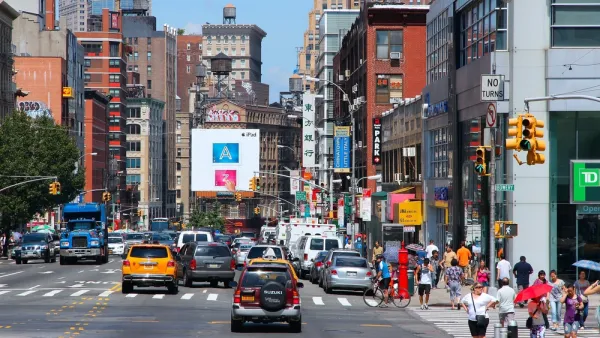
Congestion Pricing to Balance Out Mobility Systems
The goal of transportation networks should be to provide integrated and efficient services, which requires looking beyond particular modes.
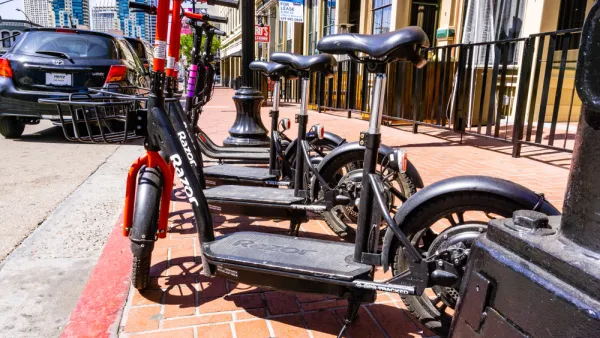
A Local's Guide to Micromobility
Local governments struggling to keep up with the fast-paced innovations of the micromobility industry can make use of a new report from the National league of Cities.

FREE Course: Walkable City 1: Why Walkability?
After describing his path towards focusing on walkability as the essence of good planning, Jeff Speck marches through his five principal reasons for making more walkable places.
Reinventing Malls: Planning Alchemy—Turning Gray Fields Into Gold
The course focuses on the opportunities and imperatives that shape reinvention of mall sites.

City of Rosemead
Rutgers University, Edward J. Bloustein School of Planning and Public Policy
One Hundred Miles
University of Michigan School for Environment and Sustainability (SEAS)
Hunter College, City University of New York (CUNY)
The Architects Foundation
City of Cambridge
The Pocatello Development Authority
The Urban Renewal Agency of the City of Pocatello









