Vancouver wants to rein in traffic speeds as collisions take a rising toll on drivers and pedestrians in the city.


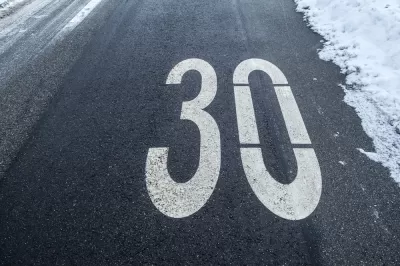
Wanyee Li reports from Vancouver, British Columbia, where the city is considering a proposal that would lower speed limits on local roads to 30 km/h. The proposal responds to worsening traffic safety, including pedestrian safety, in Canada.
"The latest data from Transport Canada shows 284 pedestrians died after being struck by a vehicle in 2017," according to Li. "The problem appears to be getting worse: A report issued last year by the Office of Economic Co-operation and Development found the number of pedestrians killed in Canada increased by 10.5 per cent between 2010 to 2016."
The problem is also acute in Vancouver, where "there were 565 motor vehicle collisions involving pedestrians in 2017, according to the Insurance Corporation of British Columbia (ICBC)."
Li's also provides details of the political debate surrounding the proposal—some believe the law would be unenforceable. Others believe the city also needs to make improvements at high-risk intersections. The idea that the proposed speed limits don't go far enough is explored in more detail in another article written by Adrienne Tanner.
Read the full story: Vancouver contemplates 30 km/h speed limit to save lives on residential streets


Chicago Could Join Other Cities in Lowering Speed Limits
Lowering speed limits by just 10 miles per hour can have a major impact on traffic safety.

Philly Speed Camera Program Cuts Fatalities in Half
Excessive speeding along dangerous segments of Roosevelt Boulevard dropped by 90 percent after the city installed automated enforcement cameras.
New York’s Deadliest Neighborhoods for Pedestrians
Pedestrian deaths rose last year, but remain below pre-2020 levels.

Planetizen Federal Action Tracker
A weekly monitor of how Trump’s orders and actions are impacting planners and planning in America.

The state-sanctioned urbicide of Austin
People don’t kill cities. Freeways do.

US to reduce Colorado River water deliveries to Mexico
A new Colorado Treaty amendment reduces Mexico’s Colorado River water allocation by 250,000 acre feet.

Nation's most wind-powered state turns to coal as data centers increase energy demand
For the first time in decades, Iowa has increased its generation of coal power.

NYC cools commuters with city's first rain garden above a bus stop
New York City officials say the plants in the rain garden can absorb 16 gallons of rainwater during heavy storms.

Brightline West’s future may rely on $6 billion federal loan
The company has until Nov. 2 to make a $400 million equity investment into its proposed high-speed rail line.

FREE Course: Walkable City 1: Why Walkability?
After describing his path towards focusing on walkability as the essence of good planning, Jeff Speck marches through his five principal reasons for making more walkable places.
Reinventing Malls: Planning Alchemy—Turning Gray Fields Into Gold
The course focuses on the opportunities and imperatives that shape reinvention of mall sites.

Eagle County Government
Harvard University Graduate School of Design
Nashville Planning Department
The Architects Foundation
University of Cincinnati Online
The Pocatello Development Authority
The Urban Renewal Agency of the City of Pocatello
Journal of the American Planning Association