Smart Cities

Are Asia's Planned Cities a New Colonialism?
While they look clean and green on the drawing board, Asia's planned developments might be nothing more than cloned commercialism set in concrete. By undermining local culture, this 'smart city' approach may also prove unsustainable.
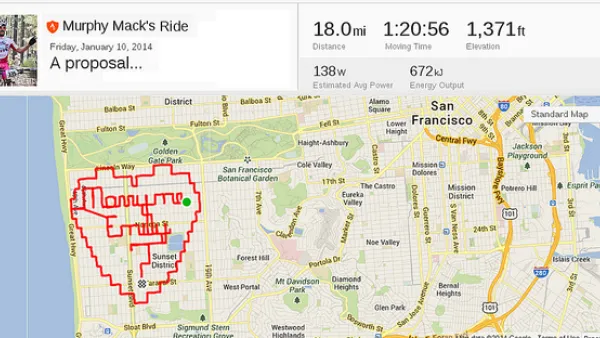
Fitness Apps Are the New Planning Tool
Many smartphone users have a fitness app that they use to track their routes and progress on fitness goals. The data in these apps is a gold mine for planners, helping lead to better infrastructure investments.
A History of 'Urban Dashboards' and their Impact on City Governance
Welcome to the age of "Dashboard Governance"—when a good user interface offers the potential for performance advantages to city management.

Tel Aviv Named World's Smartest City
The Smart City Expo and World Congress, held this year in Barcelona, announced its 2014 World Smart Cities Awards. This year the top award went to Tel Aviv, Israel.

A Dissenting Take on Smart Cities from Rem Koolhaas
A post on the European Commission website provides an edited transcript of a presentation by Rem Koolhaas in which the starchitect and author offers a scathing take on the ill effects of smart cities.
Mining Data from the World for Big Profits
The Wall Street Journal examines a pair of businesses as examples of how new sources of data can be collected and sold. Orbital Insight, Inc, for instance, interprets the shadows cast by buildings.
Why Smart Cities Must be Sharing Cities
Julian Agyeman and Duncan McLaren make the case that the only smart city is a shareable city.
The Power of Public-Private Partnerships: Mobile Phone Apps and Municipalities
Private, crowdsourced mobile phone applications addressing urban mobility collect troves of data on how cities flow. So how can municipalities tap into these databases to accurately understand the movement of their citizens?
The New Era of 'Cities 3.0': Just Add Infrastructure
Any vision for a "City 3.0"—or an untethered, technology-enabled city—is dependent on next generation infrastructure for Internet, energy, water, and more.
Does the 'Playable City' Improve the 'Smart City'?
Conceived as a counterpoint to the "smart city," the "playable city" would think beyond efficiency and utility in applying technology to the urban experience.
Interfacing Urban Intelligence
Shannon Mattern argues that as we enter the era of so-called “smart” cities, we need to consider the point of engagement where citizens interface with the city’s operating system.
For Sale: Data on 90 Million Bike Rides and 20 Million Runs
The same week that the New York Police Department released a boat load of data about traffic collisions comes news that exercise app Strava will sell its data on the how, where, and when bikers and runners use streets.
The Hudson Yards 'Quantified Community' Experiment
Undergirding the massive mix of uses and investments called Hudson Yards is an ambitious plan to gather and analyze data provided by the 65,000 people a day who make use of the facility.
Policy First; Then Technology
Civic leaders chime in on how policy should guide technology and smart cities initiatives.

Big Data’s Victory Over Anonymity
A writer laments the advances made by data collection in cities—once a location where people could maintain or seek anonymity.
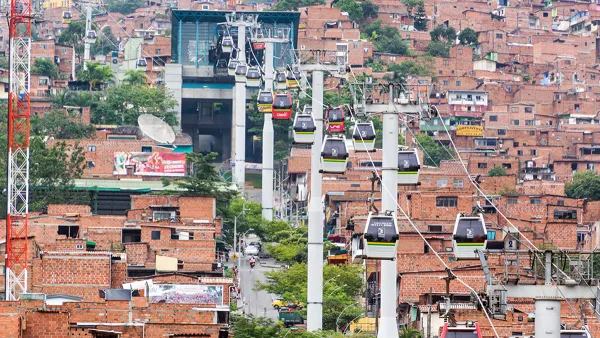
3 Reasons We Should Pay Attention to Medellín
Medellín has been called the most innovative city in the world, and recently hosted the World Urban Forum WUF7 to huge acclaim. It has taken back the city's public realm, found simple solutions to complex problems, and emphasized a "City for Life."
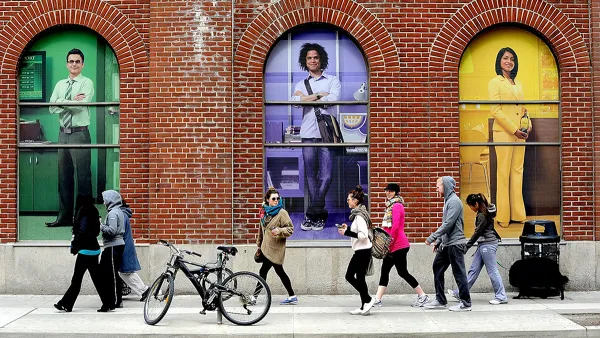
The Technology of Walkability
A recent article explores the promise—and potential pitfalls—of new technology to support the growing popularity of urban pedestrianism.
Boston Mayor Plugs Into Big Data
New Boston Mayor Martin J. Walsh has installed a large data dashboard in his office to track the performance of everything from city services, hot line call volume, and social media sentiment.
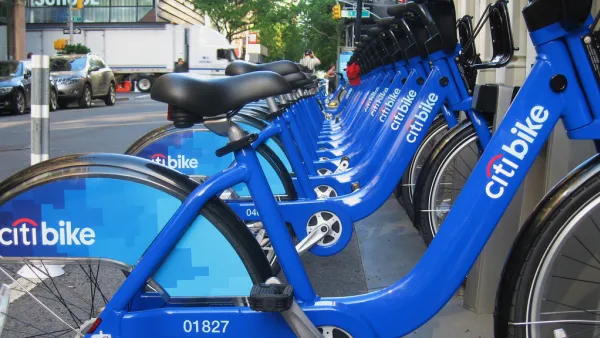
How Smart Cities Encourage Citizen Engagement
The extent to which cities will build data collection systems into the infrastructure—or how much we’ll voluntarily gather and share information from our smartphones—has yet to be determined. Here is a survey of what some cities have launched so far.
The Dark Side of Big Data
In a long read for Metropolis Magazine, Alex Marshall describes the implications of the “Smart City” movement, including the risk of turning over massive data collection operations to large corporations.

FREE Course: Walkable City 1: Why Walkability?
After describing his path towards focusing on walkability as the essence of good planning, Jeff Speck marches through his five principal reasons for making more walkable places.
Reinventing Malls: Planning Alchemy—Turning Gray Fields Into Gold
The course focuses on the opportunities and imperatives that shape reinvention of mall sites.

City of Charlotte
City of Rosemead
Rutgers University, Edward J. Bloustein School of Planning and Public Policy
University of Michigan School for Environment and Sustainability (SEAS)
Hunter College, City University of New York (CUNY)
The Architects Foundation
University District Partnership









