Lyft
Does Ride-Hailing Complement Public Transit—Or Vice Versa?
Thanks to technology-enabled ride-hailing services, more households have the ability to go car-lite now than in preceding generations, according to a new study prepared for the American Public Transportation Association.
Los Angeles Metro and Lyft Considering a Data Sharing Partnership
Metro, the transit agency for Los Angeles County, could be the first to peak under the hood at trip data generated by Lyft.
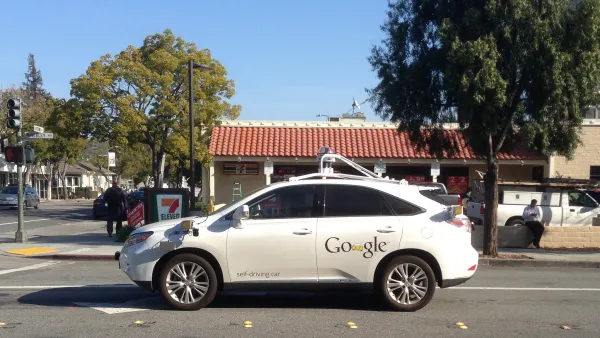
Time to Take the Self-Driving Car Seriously?
So far, only a small minority of major cities have considered self-driving cars in their long-range transportation plans. The question is, should policymakers embrace them or stand in their way?
New Study Underway: Do Ride-Hailing Services Reduce Car Ownership?
The University of California, Berkeley and NRDC will team-up to verify whether Uber and Lyft reduce car ownership and are thus good for the environment. Such data already exists for a sister form of shared mobility: car-share.
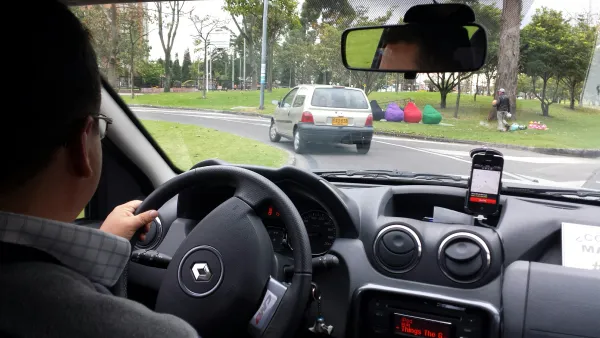
The Ride-Share Revolution
"If the 20th century was devoted to building the infrastructure to service the personal automobile, then perhaps the 21st century will be devoted to undoing most of it."
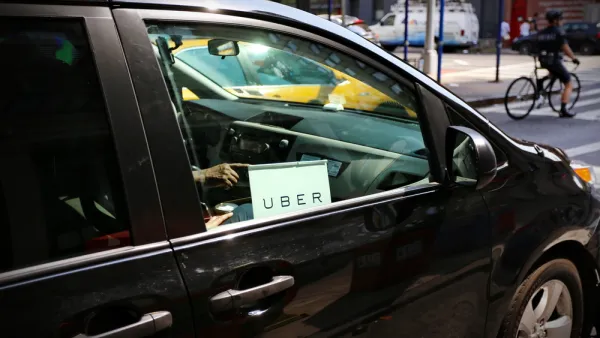
Uber's Stumble Into Urban Design
As companies like Uber, Lyft, and Bridj expand to small scale transit options, they are setting the stage for a new kind of small scale transit oriented development where the new station is the sidewalk.
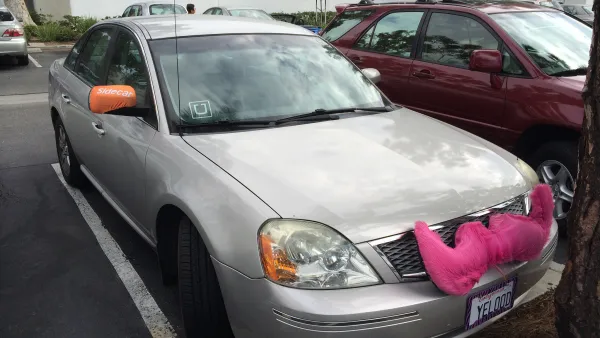
Op-Ed: Rideshare Beats Streetcars for Short Trips
Especially for parties with more than one passenger, summoning a car can make more sense, according to a recent op-ed. Transit still wins out for longer trips, but streetcars might just not be worth it downtown.
Suburbs Jump on Ride-Hailing Bandwagon
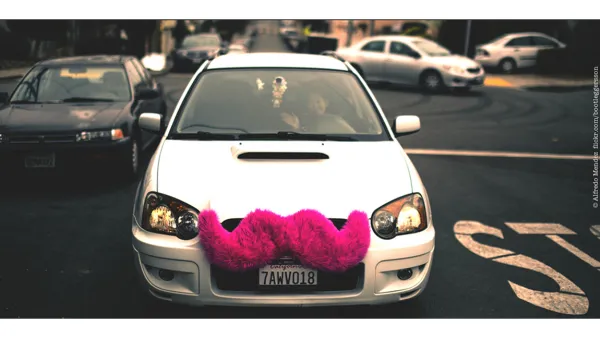
Ride-hailing services have already conquered center cities, with companies like Uber and Lyft changing the landscape for commuters, visitors, and late-night revelers alike. The next challenge: solving the suburban-to-urban commute.
Report: Transportation Network Companies Would Benefit St. Louis
According to a Deloitte report, St. Louis commuters could save upwards of $220 million a year, with an additional $493 million in regional road construction savings. All the city needs to do is lift restrictions on rideshare.
How Cities Are Regulating the Sharing Economy
Compiled from interviews conducted with city officials, this National League of Cities report gives us a regulator's-eye-view of the sharing economy. Among the topics discussed are equity, taxation, and data transparency.
Transportation Start-up Fails for Being Too Public-Minded
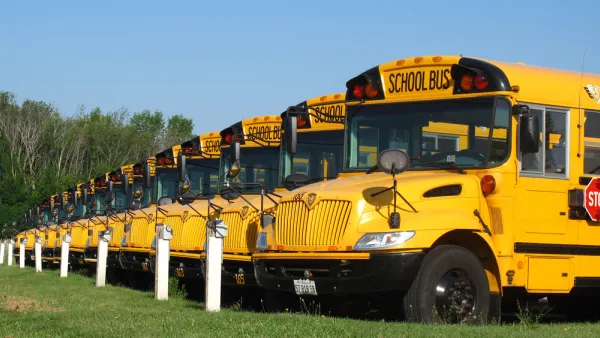
Night School, planning to use school bus fleets to supplement late-night Bay Area transit, lost the regulatory fights Uber and Lyft handily won.

Auto Use Holds Steady in San Francisco
Even as innovations like ridesharing take hold in tech-friendly San Francisco, the percentage of trips taken by personal auto is stuck at just under 50 percent.
Massachusetts Approves Initial Regulations for Transportation Network Companies
Transportation network companies like Uber and Lyft took a major step toward legal recognition in Massachusetts.

Uber and Lyft Are Dragging Traditional Taxi Companies Into the 21st Century
Rideshares like Uber and Lyft have been under attack for their brash approach to local regulations and laissez-faire pricing schemes, but they've also pushed traditional taxis to dramatically improve their service in a very short span of time.
Cities Passing Up Opportunity to Amass Uber's Valuable Data
The legalization (or illegalization) process of Uber throughout the country allows city governments to leverage a data exchange with the company, but too many municipalities are passing up this momentous opportunity.
Economists Give Uber and Lyft a Resounding Thumbs Up
A recent survey of the Initiative on Global Markets Economic Experts Panel found clear and broad support for the economic benefits of transportation network companies.
How to Make the Sharing Economy Work for Governments
Gabe Klein discusses some of the merits and challenges of forging private-public partnerships between disruptive companies and government entities.
Lyft Line, UberPool: Carpooling Features to Compete with Mass Transit
A new tier of service for Lyft launched today, allowing customers traveling in the same direction to share a ride. The new product follows a similar release earlier this week by Uber.
Benefits of Uber in Philadelphia: Reduced Drunk Driving
While much of the concern of how to regulate transportation network companies like Uber, Lyft, and Sidecar comes down to questions about safety and access, recent findings show that the apps have reduced DUI arrests in the City of Brotherly Love.
Transportation Network Companies Struggling with ADA Compliance
Ted Trautman provides a thorough investigation of the actions (or lack thereof) of transportation network companies to provide access for customers with special needs.

FREE Course: Walkable City 1: Why Walkability?
After describing his path towards focusing on walkability as the essence of good planning, Jeff Speck marches through his five principal reasons for making more walkable places.
Reinventing Malls: Planning Alchemy—Turning Gray Fields Into Gold
The course focuses on the opportunities and imperatives that shape reinvention of mall sites.

KFH Group Inc.
Greater Baltimore Committee
Eagle County Government
The Architects Foundation
University of Cincinnati Online
The Pocatello Development Authority
The Urban Renewal Agency of the City of Pocatello