Economic Mobility
How Equitable Infrastructure Investments Benefit Everyone
A call for the country to focus its infrastructure investments to the most vulnerable and neglected populations—and watch the benefits compound.
Study: Land Use Regulation Slows Economic Growth
Pro-development advocates have a new study to back up their cause.
Is a Meritocracy Really What We Want?
At first glance, a meritocratic vision is morally compelling, but upon closer scrutiny, its pursuit ends up legitimizing—and thus reinforcing—the very social and economic inequality it purports to rectify.
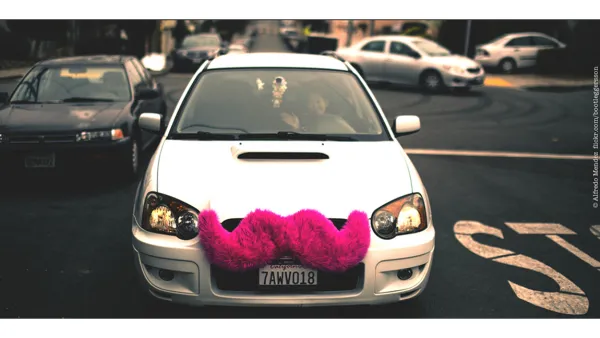
Should Governments Subsidize Uber and Lyft Connections to Transit?
According to a new report from the Center for American Progress, technology network companies like Uber and Lyft offer a unique opportunity for low-income users to connect with transit routes and on to greater economic opportunities.
On the Suburban South's Troubling Poverty
Land use and transportation planning decisions provide a framework on which other social policies have created particularly isolating and intractable poverty in the South.
Moving Forward in Ferguson with Better Transit
The Ferguson Commission report includes recommendations for combating racial inequity in the Saint Louis region with better-funded, more expansive transit access.

The Key to Escaping Poverty: Transportation
A recent study that connected place to opportunity also includes findings about the factor most likely to influence economic success: access to transportation.
Study Finds New Evidence that Place Determines Income Mobility
A new study by Harvard economists provides the best evidence yet that where children grow up matters to the outcomes of their lives.

More Evidence of the 'Neighborhood Effect'
Two recent studies find evidence of a powerful "neighborhood effect" for economic mobility—especially on the incomes of blue collar and service workers as compared to knowledge and creative workers.
Study Compares Job Access by Transit in 46 U.S. Metropolitan Areas
The Center for Transportation Studies at the University of Minnesota has released the Access Across America: Transit 2014 report.
Social Mobility in America: Reality or Dream?
Richard Reeves explains the factors that limit or assist social mobility for people born into the lowest economic quintile in American society.
Explaining the Connections between Physical Mobility and Economic Mobility
A new post by Danielle Kurtzleben explains the complicated mix of infrastructure considerations that must be in place for transportation to benefit economic mobility.
Arguing for Cars, Not Transit, as a Poverty Solution
Data show that cars are more effective than transit in providing poor people to jobs and economic opportunity. But does that mean transit systems are fundamentally inadequate or just currently inadequate?
New Study Changes the Narrative on Slums
Researchers are building a more complete archive of life in slums, home to one-third of the urban population of developing countries. A new study from the Massachusetts Institute of Technology (MIT) rejects assumptions about the benefits of slums.
Why New York's Inequality Is a Good Thing
Though he may not find a lot of agreement among the 750,000 residents who voted for Bill de Blasio, Ed Glaeser argues that New York City's extreme inequality is a sign of its economic diversity and success, and is nothing to be ashamed about.
Size of A City's Middle Class Predicts Poor's Economic Mobility
Researchers find that among the largest 100 metro regions in the U.S. , those with a larger middle class, provide higher economic mobility.
Class is (Most Likely) Destiny in the United States
Richard Florida reports on why America ranks second to last among first world nations for economic mobility; the Northeast remains the most mobile region of the country.

FREE Course: Walkable City 1: Why Walkability?
After describing his path towards focusing on walkability as the essence of good planning, Jeff Speck marches through his five principal reasons for making more walkable places.
Reinventing Malls: Planning Alchemy—Turning Gray Fields Into Gold
The course focuses on the opportunities and imperatives that shape reinvention of mall sites.

City of Rosemead
Rutgers University, Edward J. Bloustein School of Planning and Public Policy
One Hundred Miles
Hunter College, City University of New York (CUNY)
The Architects Foundation
University of Cincinnati Online
City of Cambridge
Montrose County
The Pocatello Development Authority









