A call for the country to focus its infrastructure investments to the most vulnerable and neglected populations—and watch the benefits compound.


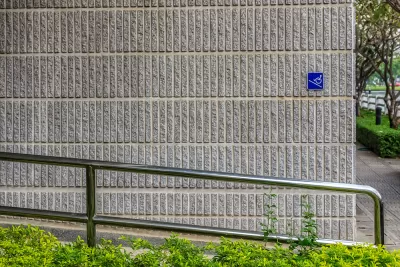
Angela Glover Blackwell writes of the "Curb-Cut Effect"—the benefits to the general welfare as an effect of laws and programs designed to benefit vulnerable populations.
The article starts with an anecdote about a guerilla mobility action in Berkeley in the early 1970s, when Michael Pachovas and a few friends "poured cement into the form of a crude ramp" as a political action to support the mobility of the disabled community. The action later became referred to as "the slab of concrete heard 'round the world," paving the way for the adoption of the Americans with Disabilities Act.
The curb cuts required by the ADA, however, precipitated a new era of mobility for the larger population as well. "When the wall of exclusion came down, everybody benefited—not only people in wheelchairs. Parents pushing strollers headed straight for curb cuts. So did workers pushing heavy carts, business travelers wheeling luggage, even runners and skateboarders," writes Glover Blackwell.
From that example from the physical environment Glover Blackwell expands the argument to the demographic realm, noting that "[p]olicymakers tend to overlook the ways in which focusing on one group might help all groups and strengthen the whole nation." More examples and arguments focusing on the physical environment, like bike lanes and bus service, follow later in the article.
Read the full story: The Curb-Cut Effect

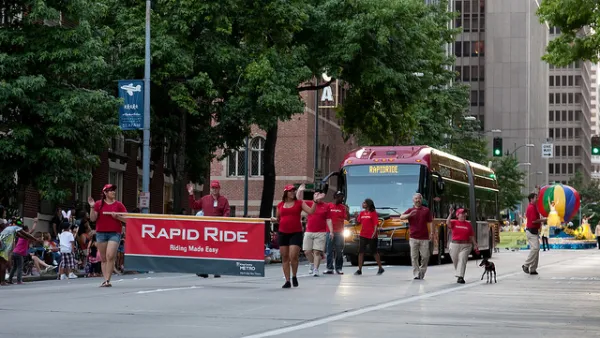
Giving Thanks for Public Transit
When going around the Thanksgiving table today, giving thanks for our friends and family to hear, don't forget to mention the environmental, social, and economic benefits of public transit.
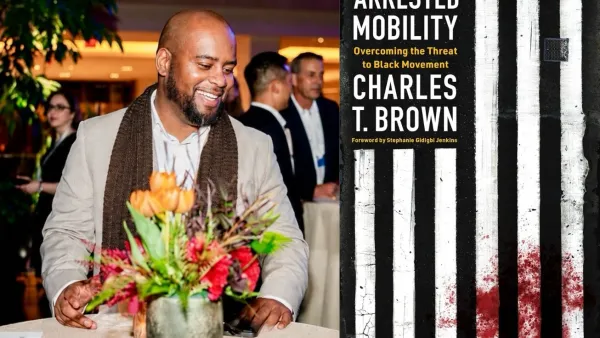
'Arrested mobility' and the fight for Black movement
Author Charles T. Brown explains how his experience growing up in rural Mississippi shaped his worldview and his current work for equitable transportation.
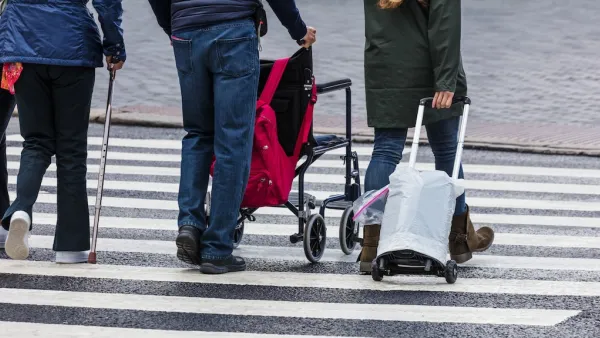
‘Week Without Driving’ Highlights Needs of Non-Drivers
The event encourages public officials to use their local public transit and engage with the people who rely on it every day.

Planetizen Federal Action Tracker
A weekly monitor of how Trump’s orders and actions are impacting planners and planning in America.

The state-sanctioned urbicide of Austin
People don’t kill cities. Freeways do.

US to reduce Colorado River water deliveries to Mexico
A new Colorado Treaty amendment reduces Mexico’s Colorado River water allocation by 250,000 acre feet.

Nation's most wind-powered state turns to coal as data centers increase energy demand
For the first time in decades, Iowa has increased its generation of coal power.

NYC cools commuters with city's first rain garden above a bus stop
New York City officials say the plants in the rain garden can absorb 16 gallons of rainwater during heavy storms.

Brightline West’s future may rely on $6 billion federal loan
The company has until Nov. 2 to make a $400 million equity investment into its proposed high-speed rail line.

FREE Course: Walkable City 1: Why Walkability?
After describing his path towards focusing on walkability as the essence of good planning, Jeff Speck marches through his five principal reasons for making more walkable places.
Reinventing Malls: Planning Alchemy—Turning Gray Fields Into Gold
The course focuses on the opportunities and imperatives that shape reinvention of mall sites.

Greater Baltimore Committee
Eagle County Government
Harvard University Graduate School of Design
The Architects Foundation
University of Cincinnati Online
The Pocatello Development Authority
The Urban Renewal Agency of the City of Pocatello
Journal of the American Planning Association