Community
Community Ties in the Era of Isolation
Connectivity may form the bedrock of what we call "resilience" but we're just not all that neighborly these days. Can we become more competitive and lasting by restitching our threadbare community fabric?

Measuring Well-Being in Santa Monica
The beachfront town known for its surfers and celebrities is collecting data that dig deeper than traditional measures of economic prosperity, and the results may be surprising.
Reading Cities Cover to Cover, and Why
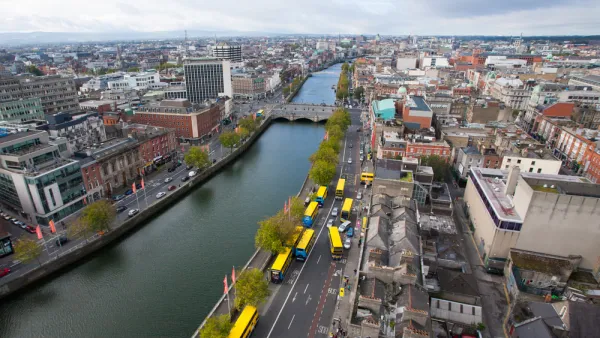
Chuck Wolfe underscores the importance of a holistic view of urban places, referencing themes of common experience, aesthetics, feelings of happiness, safety, or security—a basic narrative of the city that often goes beyond first impressions.
Foreclosures Are Making People Sick
Seven years after the housing bust began, millions of Americans are still suffering. And suffering is the operative word—because both foreclosures and economic inequality impact people’s health.
The Death of Neighborhoods
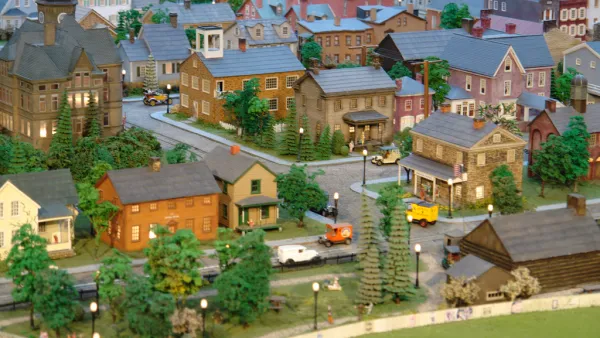
In the same vein that Robert Putnam explored decaying community and social capital in American in his work, Bowling Alone, Brian Bethune discusses how the decay of Western communities shapes our health and political realms.
An Appeal for Churches to Embrace Multi-Modalism
As a result of the dominant development patterns and transportation practices of the 20th century, churches have receded in their role as an anchors for neighborhoods and broader communities.
How Public Surveys Aid the Planning Process
When planners are looking to find out what kind of developments residents like, one way is to ask them to weigh in. Planner Clement Lau shares key lessons learned about conducting and creating surveys as part of the planning process.
Stayin’ Alive: The life and death prospects of community ties
Connected communities aren't just about fun and frolic. When the goin' gets rough, they can make the difference between life and death.
Why the Titans of Tech Must Become Better Urbanists
Technology companies are increasing their presence in cities, adopting the language of planners, and seeking to create communities. Yet, according to Allison Arieff, the sector does a uniformly poor job of contributing to urban vitality.
What is a "Community"?
As communities based on proximate and personal relationships decline, the application of term "community" multiplies. Anand Giridharadas looks at the hijacking of the word and what its new applications say about our contemporary culture.
Building Resilience Through Reconnected Communities
What has the United States lost in its journey from a nation of communities to a nation of individuals? Resilience, for one, says Scott Doyon, who suggests how we can utilize community design and planning processes to regrow social ties.
Atlanta Artist Paints Suburban Ennui
Today's suburbs have discarded the human-scaled patterns they once promised. This newly resurfaced series of paintings from Atlanta artist Meg Aubrey will leave you longing for the world we neglected to build.
Haiti Update: Reshaping Ravines
Haiti has seen improvements since the 2010 earthquake. However, persistent challenges remain. Dave Hampton, architect and international development consultant for natural and built environment integration, writes about one in particular: ravines.
Connections, Community, and the Science of Loneliness
Can urban form help address the loneliness that so often accompanies aging? In a new blog post, Hazel Borys examines some remedies for severed connections.
Does Transit Build Stronger Communities?
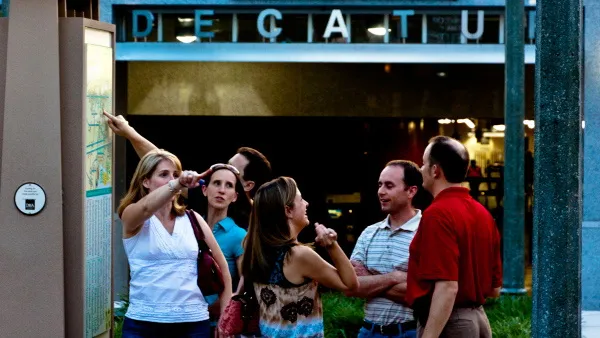
The results of a new poll conducted for The Atlanta Journal-Constitution show that even in a notoriously sprawling metro (and perhaps more so), transit riders have a stronger connection to their neighborhoods and the larger region.
Communities Are People, Not Just Places
Richard Florida speaks with sociologist Zachary Neal, author of The Connected City, a new book that examines the essential role that social networks play in defining community.
LocalData: An App for Grassroots Planning
A free digital toolkit allowing communities to collect, analyze, and share their own data will be launched nationally at the end of the year.
Seven Social Capital Building Blocks
In the triple bottom line of profits, planet, and people, it's people that tend to get the shaft. Scott Doyon lays out seven ways to change that.
New Study Shows the Suburbs at the Cutting Edge of Racial Diversity in America
Diverse suburban neighborhoods now outnumber their central city counterparts two to one. How will increasing (or decreasing) diversity change America's suburban stereotype?
Urban Revitalization: Baby Steps or the Magic Bullet?
Writer Tara Sturm explores the merits of incremental urbanism on revitalization efforts with the help of L.A. architect Alan Pullman, highlighting grassroots, community-driven economic development.

FREE Course: Walkable City 1: Why Walkability?
After describing his path towards focusing on walkability as the essence of good planning, Jeff Speck marches through his five principal reasons for making more walkable places.
Reinventing Malls: Planning Alchemy—Turning Gray Fields Into Gold
The course focuses on the opportunities and imperatives that shape reinvention of mall sites.

City of Rosemead
Rutgers University, Edward J. Bloustein School of Planning and Public Policy
One Hundred Miles
Hunter College, City University of New York (CUNY)
The Architects Foundation
University of Cincinnati Online
City of Cambridge
Montrose County
The Pocatello Development Authority









