Carless
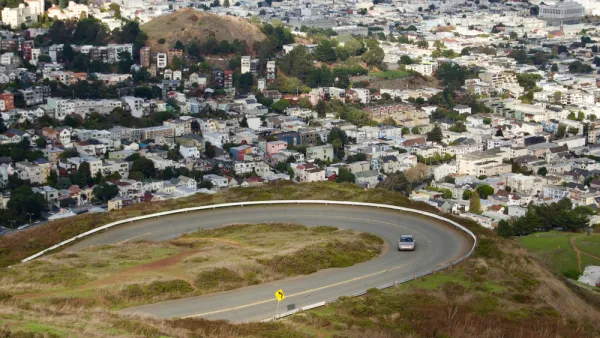
Economic Independence or Auto Dependency?
A new study calls for "universal auto access" to combat poverty. It recommends subsidizing auto ownership or access for those who are economically unable to afford the high cost of owning, maintaining, and operating a personal motor vehicle.
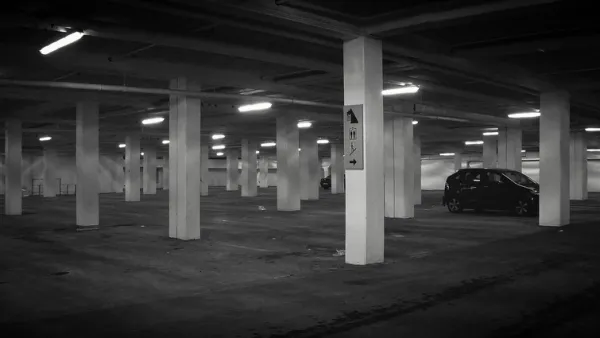
What Happens If Parking Structures Become Obsolete?
An architect makes the case for future-proofing new parking garages so they can easily shift to other uses in a future with fewer cars.
Carless Renters Still Get Stuck With a $440 Million Bill
A new study provides evidence of how the incredibly high costs of parking get spread around—even to people who don't have cars.
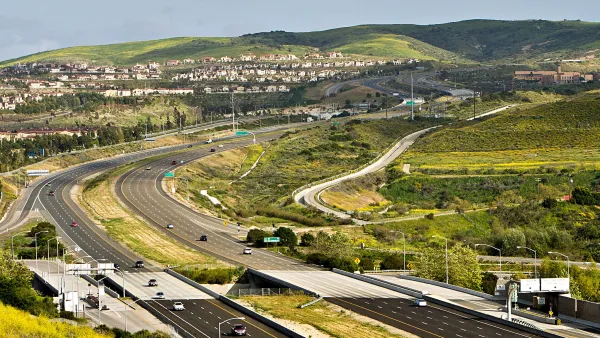
A Pedestrian's Perspective on Sprawling Orange County
Southern California's Orange County isn't exactly known for its walkability. Frank H. Wu decided to test that notion on a recent carless visit.
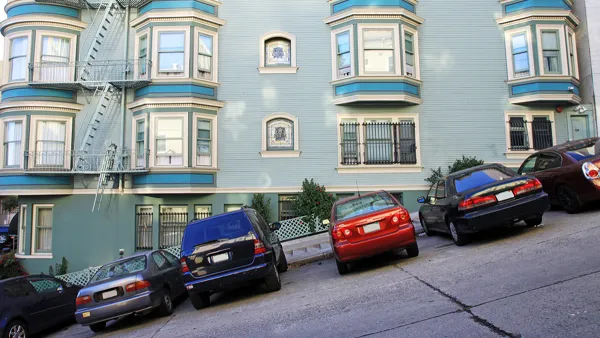
San Francisco's Housing Craze: More People Fewer Cars
Something strange is taking place in the City by the Bay. It's not just experiencing a growth in carless households—carless households are actually replacing those with cars.
The Car-Free Share, and Hail, Their Rides
Ben Adler considers the availability of car-sharing and cab services in maintaining a car-free population.
The "College-Dense and Car-Light" Theory
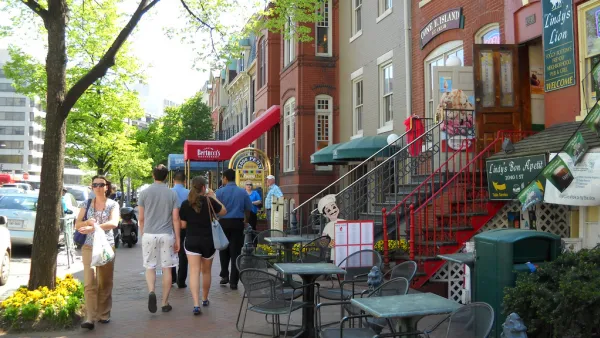
Is there a relationship between carless households and density of college graduates? Derek Thompson of The Atlantic connected the dots using Michael Sivak's latest 'peak car' study and saw a relationship between the two variables.
Seeking an Automotive Balance in Philly
The city continues to grapple with the practical implications of local planning legend Edmund Bacon's prescriptions for carless streets.
Could Carless Cities Be On the Horizon?
As plans to pedestrianize UK city centers gain steam, Lord Richard Rogers, architect of the Pompidou Centre and advisor on urbanism issues to successive London mayors, has predicted a widespread ban on cars in London within 20 years.
From Peak Car to Peak Parking?
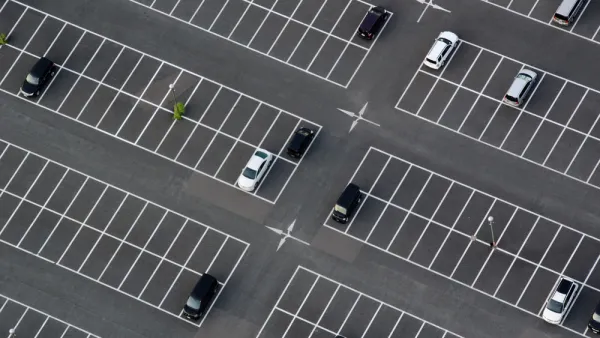
Fewer cars on the road, less driving, why not fewer parking spots? Cities like D.C., L.A., Denver, Philadelphia are responding by reducing or eliminating parking minimums, while Portland, which had already eliminated them, are bringing them back.
What Would Happen if an American Town Went Carless?
For a possible answer, look to Mackinac Island, Michigan, where cars have been banned for 115 years. Does chaos ensue when the island's population grows to 15,000 during the summer tourist season? Not quite, says Stephen Messenger.

FREE Course: Walkable City 1: Why Walkability?
After describing his path towards focusing on walkability as the essence of good planning, Jeff Speck marches through his five principal reasons for making more walkable places.
Reinventing Malls: Planning Alchemy—Turning Gray Fields Into Gold
The course focuses on the opportunities and imperatives that shape reinvention of mall sites.

Harvard University Graduate School of Design
KFH Group Inc.
Greater Baltimore Committee
The Architects Foundation
University of Cincinnati Online
The Pocatello Development Authority
The Urban Renewal Agency of the City of Pocatello