Adaptive Reuse
Building on Assets Creates a Better Buffalo
Low interest rates and incentives from the state are helping Buffalo, NY to leverage its waterfront and extraordinary architecture to create a vibrant downtown, with historic preservation and adaptive reuse projects at center stage.
14 Ways San Francisco Has Given New Life to Its Historic Assets
In the current feature story from its 'Urbanist' magazine, the Bay Area planning think tank SPUR looks at 14 efforts to preserve the soul of San Francisco through the adaptive reuse, incorporation and juxtaposition of the city's historic buildings.
Can St. Louis Keep Its Unique Heritage from Crumbling?
As the back-to-the-city movement takes hold, cities are turning old industrial buildings into distinctive spaces prized as offices and lofts. St. Louis is trying to figure out how to preserve their legacy assets from crumbling as they await new life.
Data Centers: The Next Trend in Adaptive Reuse?
Sears is planning to convert a number of its shuttered buildings into data centers. Could this become a trend for the reuse of vacant buildings nationwide?
Urban Ruins and the High Line Next Door
Chuck Wolfe suggests we all have the inspiration within us to envision how to remake our cities--from the conjecture of a Seattle restauranteur about Seattle's monorail to neighborhood examples of "we used this before, let's use it again".
Mill Makeover a Model for Discarded Manufacturing Relics
C.J. Hughes looks at the $40 million conversion of the historic Loray Mill in Gastonia, North Carolina into a mixed-use retail and residential complex. Federal and state tax credits are providing the incentives for investors to back the project.
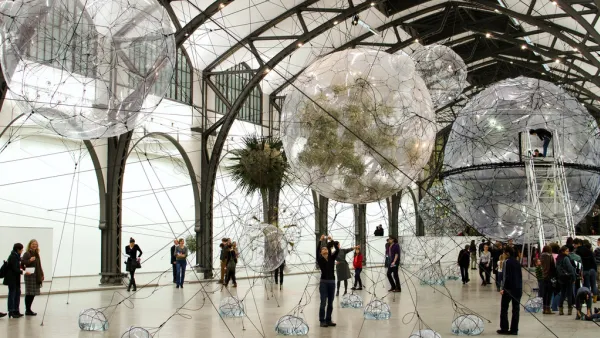
10 Rail Stations on the Road to Recovery
As golden age of train travel came to an end, the fate of the world's train stations became unclear. But by utilizing their grand, flexible spaces, creative designers have found a variety of ways to keep the relics relevant.
A Model for How to Transform a Cherished Sports Landmark
The decade-long transformation of Toronto's historic Maple Leaf Gardens into a new centerpiece for its neighborhood may serve as a model for one of the trickiest types of adaptive reuse, reports Mark Byrnes.
From Housing Planes to People: Repurposing Success Stories
As cities across the world look to convert aging and obsolete airfields to new uses, a growing body of repurposing success stories show "how problematic properties can be successfully converted," reports Christine Negroni.
Detroit Struggles to Slake Thirst for Urban Living
In Detroit's downtown and midtown neighborhoods, 96 percent of rental apartments are occupied by young professionals, students and empty nesters. The city now faces the problem of meeting the high demand for urban living, reports Susan Stellin.
Unlocking Ideas for Re-Purposing America's Prisons
The good news - America is closing its prisons. The bad news - America is closing its prisons. Emily Badger asks how "all these empty, peculiar and often isolated buildings" can be reused.
'Block-Killing Blight' Remains a Stubborn Presence in Downtown L.A.
Despite the progress downtown L.A. has made over the last decade in becoming a vibrant, day-night, mixed-use community, "block-killing blight" remains a stubborn presence in the area's landscape. Ryan Vaillancourt calls out the worst offenders.
An Idea to Help Spur L.A.’s Cleantech Revolution
City officials and leaders are considering an adaptive reuse ordinance for industrial buildings, modeled on the one that helped spark downtown L.A.’s residential boom, to help push forward the sputtering vision of a "CleanTech Corridor."
Downtown LA Sees Signs of a Development Boom
Carol Schatz, President and CEO of the Central City Association (CCA) of Los Angeles, discusses Downtown LA's reemergence as one of the hot development and rental markets in Southern California, reflecting a national trend as the economy recovers.
Chicago Neighborhoods Consider Life After Coal
Chris Bentley reports on the complex discussions centered around what to do with the sites of two massive coal plants closing this month in Chicago. As Bentley notes, "what happens to these 132 acres in Chicago could have nationwide implications."
Chicago Preservationists Fight to Reuse Iconic Building
Steven Yaccino reports on the ongoing controversy over the proposed demolition of Prentice Women's Hospital, designed by famed Chicago architect Bertrand Goldberg, as officials continue to skirt the issue.
Adaptive Reuse Coming to Struggling Airports
As airlines cut service to small and mid-sized cities, once bustling airports now find whole terminals vacated, and are looking to find new revenue models for the vacated space, reports Jane L. Levere.
Brooklyn Armory Gets a Second Chance at Life
An armory built for the National Guard at the turn of the century may see a second life as Crown Point's newest community-oriented, multi-use complex, Raanan Geberer, reports.
Revitalization's Best Friend
Marissa Gluck attributes downtown L.A.'s resurgence to some unlikely community development partners - our four-legged friends.
Savvy Retail and Restaurant Reuse Mark Next Phase of Dowtown LA Revival
In a feature for The Architect's Newspaper, Marissa Gluck profiles the "retro-chic makeovers" transforming downtown Los Angeles.

FREE Course: Walkable City 1: Why Walkability?
After describing his path towards focusing on walkability as the essence of good planning, Jeff Speck marches through his five principal reasons for making more walkable places.
Reinventing Malls: Planning Alchemy—Turning Gray Fields Into Gold
The course focuses on the opportunities and imperatives that shape reinvention of mall sites.

City of Wisconsin Rapids
Harvard University Graduate School of Design
KFH Group Inc.
The Architects Foundation
University of Cincinnati Online
The Pocatello Development Authority
The Urban Renewal Agency of the City of Pocatello