As cities across the world look to convert aging and obsolete airfields to new uses, a growing body of repurposing success stories show "how problematic properties can be successfully converted," reports Christine Negroni.


The conversion of Denver's Stapleton Airport is perhaps the best known (and likely the first) example of the successful transformation of an urban airport into a mixed-use community. But over the past decades, similar projects in Austin, Hong Kong, and Malmo, Sweden demonstrate the potential for such projects to the urban airports across the world that are contemplating their futures.
“Airport repurposing is a rare event driven by unique local circumstances,” said Chris Oswald, vice president for safety and regulatory affairs for Airports Council International. "The common thread for all these projects is the availability of an alternative airport with greater capability."
“The availability of such sites is very rare, and the combined political and financial will to make use of them is even rarer,” he said.
"The land developers behind the Denver and Austin projects agree, says Negroni. "For all the unique problems with turning highly specialized industrial property into a place people can call home, they could not have succeeded without cooperation from a multitude of entities, including politicians, bureaucrats and residents."
Read the full story: Idled City Airports Are Finding a Second Life as Housing


Learning loss and urban schools, part 2
Did test scores in progressive cities drop more post-COVID than test scores in moderate ones?
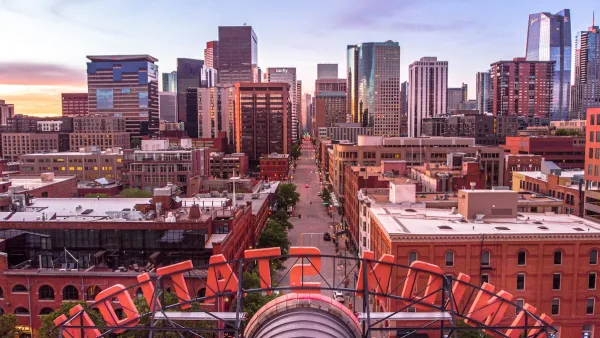
Denver Voters Approve Downtown Revitalization Bonds
The city wants to bring new projects and residents to the downtown core, where 13 million feet of vacant office and retail space await new tenants.
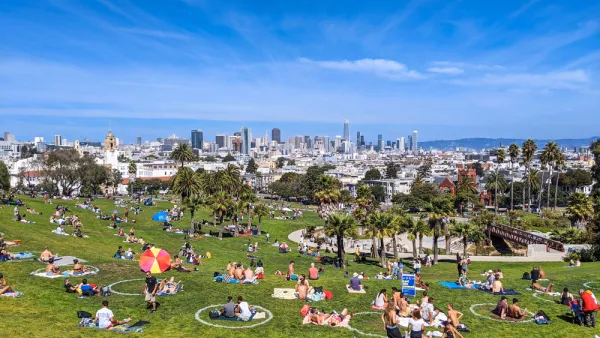
Austin Scores Highest on Pandemic Recovery; Bay Area and Baltimore Lowest
The Bay Area Council and CBRE created an economic tracker to measure how well the nation's 25 largest metropolitan areas have recovered from the public health restrictions imposed on their regions at the onset of the pandemic.

Planetizen Federal Action Tracker
A weekly monitor of how Trump’s orders and actions are impacting planners and planning in America.

Chicago breaks ground on $3 billion megadevelopment
The new neighborhood, titled Foundry Park, will one day host 3,700 residences.

This MA town is drowning in its own sewage — and residents like it that way
Susan Murcott, a waste water expert, said if Carlisle didn't address their leaking sewage, the problem could turn “deadly.”

To power data centers, Google seeks autonomous control of thousands of homes’ electricity
The tech company has signed a deal to indirectly pay Mid-Atlantic residents to reduce their power demand when the grid is strained.

From robotaxis to robotrains: LA, DC weigh driverless transit
If approved, the projects will take years to implement and face financial and technical hurdles.

Dallas suburbs are turning their downtowns into small towns
Four Texas towns are embracing walkability and density in their downtowns.

FREE Course: Walkable City 1: Why Walkability?
After describing his path towards focusing on walkability as the essence of good planning, Jeff Speck marches through his five principal reasons for making more walkable places.
Reinventing Malls: Planning Alchemy—Turning Gray Fields Into Gold
The course focuses on the opportunities and imperatives that shape reinvention of mall sites.

City of Rosemead
Rutgers University, Edward J. Bloustein School of Planning and Public Policy
One Hundred Miles
The Architects Foundation
University of Cincinnati Online
Montrose County
The Pocatello Development Authority
The Urban Renewal Agency of the City of Pocatello