Accessibility
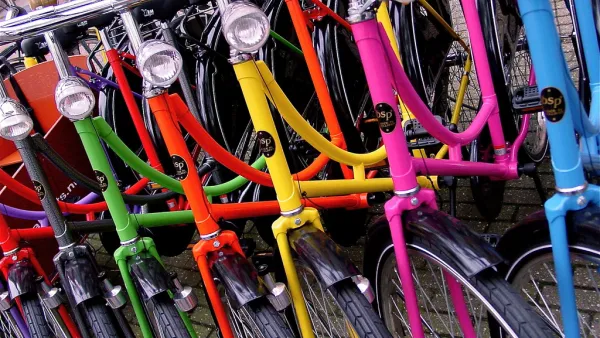
Different Spokes for Different Folks
Bike sharing and rental systems are becoming more inclusive, considering the needs of those with disabilities and children. And systems are expanding based different uses people have for different types of bicycles.
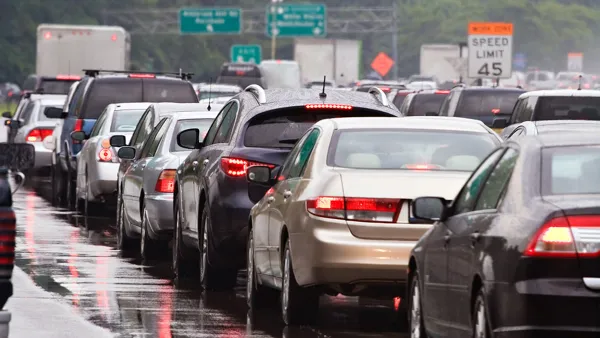
End These 5 Transportation Planning 'Rule of Thumbs'
An op-ed calls for an end to five examples of them planning status quo, and recommends four new "rule of thumbs" that can provide a better model for the transportation planning of the future.

New Mapping Tools Shows How to Access Activities by Various Modes
The Urban Accessibility Explorer is an easy-to-use mapping system that measures the number of activities that can be reached by residents of specified neighborhoods within a given amount of travel time, by a particular mode and time of day.

Welcome To Our Neighborhood: A Manifesto for Inclusivity
Housing policy is not just about houses, it is also about people, and the determination of who may live in a community. We challenge communities to proclaim, “Yes in our backyard! We welcome new neighbors. We favor more diversity.”
What's Missing for Capital Bikeshare?
In a recent piece, Kristine Johnston reviews Washington D.C.'s Capital Bikeshare program and its accessibility for low-income, non-white populations.
An Unflattering Look at Transit Accessibility
A newly released series of animated GIFs provides a powerful visualization of how paltry even the most robust transit systems in the world look to those with special needs.
Toronto Transit Mulls Reducing Stops Along Routes
In a move to increase speed, the Toronto Transit Commission (TTC) is looking to cut some stops from its streetcar and bus routes, rousing debate over whether less is really more - particularly in consideration of elderly and disabled riders.
What Does It Mean to Design a City for Women?
Vienna's two-decade-old quest to better balance access to city resources for men and women - called gender mainstreaming - has resulted in more than sixty pilot projects that are reshaping the Austrian capital.
What Would an Elderly-Friendly City Look Like?
London-based Transport for All bemoans the inaccessibility of our urban environs for older residents. In this article, they ask designer Neil Chambers how he would design a city to 'facilitate an active and flexible lifestyle for the elderly.'
Critiquing the "Urban Mobility Report"
The "Urban Mobility Report" produces widely-cited congestion cost estimates. It is biased in various ways that exaggerate congestion costs and roadway expansion benefits. Few users of these cost estimates seem aware of these problems.
Inaccessible Transit Turns NYC Into a Tribulation
In a short film for The New York Times, Jason DaSilva documents how New York's famed public transit system, which serves millions of riders every day, fails the city's disabled residents.
Proximity Trumps Mobility: Smart Growth Maximizes Accessibility
The increased proximity provided by more compact and centralized development is about ten times more influential than vehicle traffic speed on the number of destinations that people can reach within a given travel time.
7 Visions for the Accessible City of the Future
With the portion of American's living in cities set to rise to 90 percent by 2050, a new set of accessibility issues will confront the nation's disabled and aging. Metropolis invited 7 teams of designers to develop solutions to meet this challenge.
Toward More Comprehensive Understanding of Traffic Congestion
Conventional planning tends to consider traffic congestion asignificant cost and roadway expansion the preferred solution. It evaluates transport system performance based on indicators such as roadway Level of Service (LOS) and peak-period traffic
Aging Boomers Changing the Shape of Cities Across America
It's not just the Sun Cities of America that are planning for how to meet the needs of the country's coming bulge in its over-65 population. Ryan Holeywell highlights how some cities are adapting their built environments for an aging population.
New Understanding of Traffic Congestion
Congratulations to this year's high school, college and university graduates! The current crop includes our son, who was recruited by a major corporation. The location of his new job will affect his travel patterns and therefore the transportation costs he bears and imposes for the next few years: until now he could get around fine by walking, cycling and public transport, but his new worksite is outside the city center, difficult to access except by automobile. As a result he will spend a significant portion of his new income to purchase and operate a car, and contribute to traffic congestion, parking costs and pollution. This is an example of how land use decisions, such as where corporations locate their offices, affects regional transport patterns and costs.
WSJ Asks "Why Should Museums Be Stuck in Cities?"
The Crystal Bridges Museum of American Art opens next Friday in Bentonville, Arkansas, and Holly Finn says "sophisticates" who gripe that the collection should be less remote and more accessible are elitist.
A Neighborhood of Stairs
The La Independencia neighborhood in Medellin, Colombia sprawls up a hillside, leaving the inhabitants to walk up to 10 flights of stairs every day. An ambitious development program is considering building an outdoor network of escalators.
L.A. Second-Best When it Comes to Transit
Honolulu has the most accessible public transit in the U.S., but apparently the same state with the worst traffic in the nation has the 2nd-most convenient transit.
Wayfinding Symbols Across the World
Metro stations, train stations and streetcar systems have distinct ways of showing how to get from one area to another. TheCityFix's Jonna McKone looks at mass transit systems from Mexico City to Paris and the visual representations used in each one.

FREE Course: Walkable City 1: Why Walkability?
After describing his path towards focusing on walkability as the essence of good planning, Jeff Speck marches through his five principal reasons for making more walkable places.
Reinventing Malls: Planning Alchemy—Turning Gray Fields Into Gold
The course focuses on the opportunities and imperatives that shape reinvention of mall sites.

City of Rosemead
Rutgers University, Edward J. Bloustein School of Planning and Public Policy
One Hundred Miles
University of Michigan School for Environment and Sustainability (SEAS)
Hunter College, City University of New York (CUNY)
The Architects Foundation
City of Cambridge
Montrose County
The Pocatello Development Authority









