In a short film for The New York Times, Jason DaSilva documents how New York's famed public transit system, which serves millions of riders every day, fails the city's disabled residents.


"While New York prides itself on being forward-thinking, I’m surprised that it lags behind other cities in accommodating its disabled population," says Brooklyn resident Jason DaSilva, who has multiple sclerosis. "I’ve traveled to London, Vancouver, Toronto, San Francisco and Washington, and basked in their accessibility options. Ramps! Wheelchair taxis! Accessible trains! Fully accessible buildings! Oh, the luxury! Then, back to New York, where, although public buses are accessible, most transportation for me ranges from difficult (like the East River Ferry, which runs at different intervals, depending on the time of day) to feeling as if we’re in the Dark Ages."
In the documentary he produced for the times, DaSilva examines the challenges that New York's disabled face in trying to navigate the city. He compares the journey from his home in Williamsburg to a coffee shop in Manhattan for someone using a wheelchair and someone able-bodied. DaSilva's friend, without wheelchair, completes the trip in 13 minutes. By wheelchair, the same trip takes 1:43 via a jumble of transfers and modes.
"Of course," writes DaSilva, "upgrading facilities or taxis is expensive, and change takes time, but the question is, how much time? How long do we have to wait? People with disabilities should enjoy the freedoms that everyone in society deserves. This is a human rights issue."
Read the full story: ‘The Long Wait’
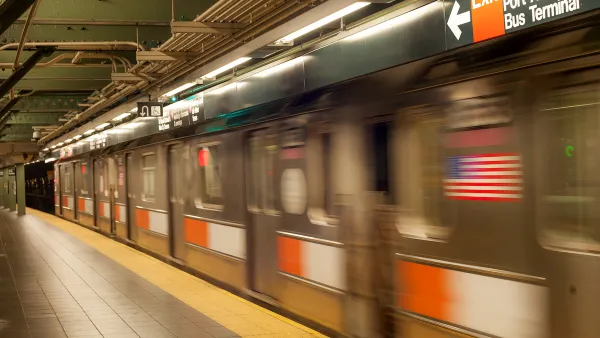
Report: NYC Transit Accessibility Depends on Congestion Pricing Revenue
The ability of the MTA to complete its accessibility upgrades relies on funding from the upcoming congestion pricing program.
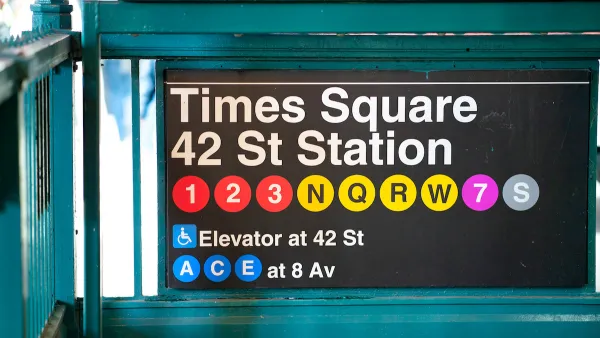
Report: NYC Transit Falling Behind on Accessibility
The city is lagging on meeting its pledge to improve accessibility across the system.
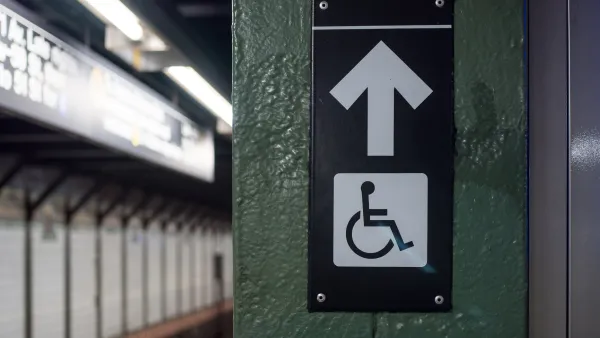
New York Must Make Almost All Subway Stations Accessible by 2055, Judge Rules
Another recent ruling is forcing the agency to accelerate its efforts to make all New York subway stations accessible to people with disabilities and mobility issues.

Planetizen Federal Action Tracker
A weekly monitor of how Trump’s orders and actions are impacting planners and planning in America.

Eastern Nebraska is running out of electricity
Data centers and electrification are straining eastern Nebraska’s grid, throttling economic development.

Study reveals best places in the U.S. for cycling, walking
New research from Streetlight Data examines bicycle and pedestrian miles per capita in the 100 largest U.S. cities by population.

DSA members accuse Mamdani of 'abandoning values' over housing redevelopment
New York City's mayor plans to replace about 2,000 units of public housing with private, mixed-income housing.

All sides of BRT debate unhappy with CDOT’s most recent move
The Colorado Department of Transportation is no longer considering center-running bus lanes for Colorado Boulevard.

Massachusetts bogs generate both power, and cranberries
Putting solar panels above farmland is one way Massachusetts is advancing toward its goal of net-zero carbon emissions by 2050.

FREE Course: Walkable City 1: Why Walkability?
After describing his path towards focusing on walkability as the essence of good planning, Jeff Speck marches through his five principal reasons for making more walkable places.
Reinventing Malls: Planning Alchemy—Turning Gray Fields Into Gold
The course focuses on the opportunities and imperatives that shape reinvention of mall sites.

City of Rosemead
Rutgers University, Edward J. Bloustein School of Planning and Public Policy
One Hundred Miles
University of Michigan School for Environment and Sustainability (SEAS)
Hunter College, City University of New York (CUNY)
The Architects Foundation
City of Cambridge
The Pocatello Development Authority
The Urban Renewal Agency of the City of Pocatello