Social / Demographics
Metro Areas Dominate National Population Growth
New Census data describes the country’s movement toward large metropolitan areas. Following the recent population growth in cities like Houston and New York, nearly one in three Americans reside in the country’s ten most populated cities.

Can Biking Be for Everyone?
Most bikers are white and have a college degree. A recent article examines the Baltimore Bike Experience as an example of the types of programs that could expand the use of biking into other parts of the city, among other benefits.
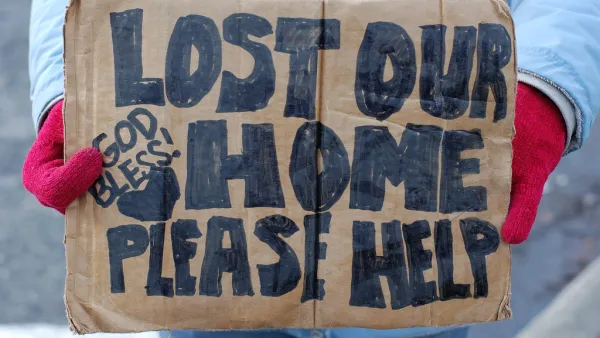
Which Cities Segregate Poverty Most Completely?
For the second installment in a five-part series on economic segregation in U.S. metros, Richard Florida examines the cities where poverty stays most hidden from "everyone else."

A Call for a Youth Movement in the Planning Process
Most millennials and Gen Xers are either too busy or too disengaged to realize how the future of their hometowns is being shaped by people much older than they.
Commuter Taxes: An Untapped Revenue Source?
For all those cities that double population during the work day, here's a revenue thought to consider. But why restrict it to in-bound commuters? What about residents who commute-out of the city? Is the commuter tax a legitimate revenue source?
What Do Urban Trends Mean for Banks?
A recent article describes the context of urbanization around the country before examining the implications of the trend for the decisions made by bankers—i.e., where and how to invest—especially given the realities of the post-recession economy.
The Mercados Project: Lessons for the Revival of Markets
Historically, central markets served as grand social and commercial hubs for U.S. cities. A period of 20th century decline interrupted the evolution of markets, but creative and diverse examples have precipitated a recovery around the country.

Hyper-Urbanization: China Plans for 100 Million New City Residents by 2020
China recently announced ambitious plans to move 100 million former farmers to urban environments—enough to bring the country's urban population to 60 percent of its total.

How Urban Design Begets Happiness
A new book by Charles Montgomery makes the case that many of the best possible outcomes for the built environment require human interaction—whether commuting to work or walking around residential neighborhoods.
Mapping Immigration’s Effect on Boston Neighborhoods
“A City of Neighborhoods,” a new exhibit at the Boston Public Library, uses maps to illustrate how waves of immigration shaped the city and its neighborhoods throughout the 20th century.
New Garden City Won't Solve London's Affordable-Housing Problem
London’s contemporary affordable-housing crisis has revived a century-old idea: the garden city.
Social Justice Through Tiny House Communities
Tiny houses aren’t just for eco-warriors. They can also be a means for homeless and mentally ill individuals to reenter mainstream society.
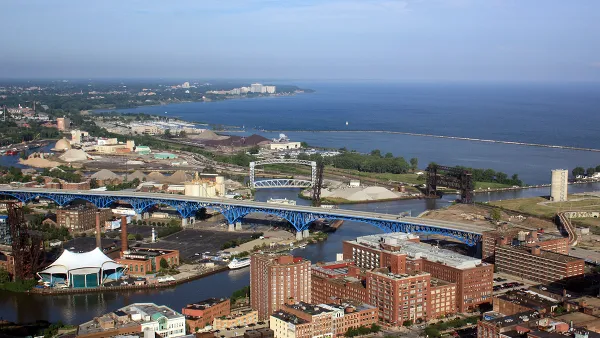
‘This is Cleveland’ Rebranding Appeals to Millennials, Hipsters
Positively Cleveland, Northeast Ohio’s tourism bureau, has launched a new campaign, “This is Cleveland,” that takes a new tack in selling the region not for its orchestra and the Rock and Roll Hall of Fame, but rather for its warts and all.

A Tale of Two Chicagos
Acknowledging that many neighborhoods in Chicago have seen dramatic improvements in livability and income levels, one writer could still identify two Chicagos: “Global Chicago” and “Rust Belt Chicago.”
Massive Public Housing Project Endangered in Los Angeles
The Housing Authority of the City of Los Angeles had been counting on a $30 million Choice Neighborhoods federal grant to help fund a massive makeover for Jordan Downs—one of the most downtrodden sections of Watts in South Los Angeles.
Discrimination Limits Sandy Recovery Efforts
Many New Jersey residents are waiting for state aid to help them rebuild after Hurricane Sandy. But not everyone is receiving a fair share of recovery funds. How will Governor Chris Christie respond?
Rural Responsibility or Ruin?
The 2015 federal budget proposes a $50 minimum rent on subsidized rural rental housing to encourage “financial responsibility.” Will this really help the rural poor?
Minority Groups Left Out of Housing Recovery
The same minority groups hit hardest by the housing bust are benefiting least during recovery.
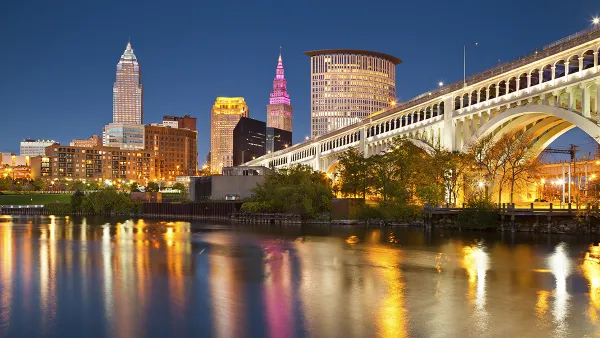
'Brain Drain' Surprise: Cleveland vs. Chicago
Comparing the demographic changes of Cleveland and Chicago, the results might surprise you: “Cleveland (Cuyahoga County) is experiencing brain gain. Chicago (Cook County) has brain drain.”

Friday Funny: Millennial MadLibs
Millennials are fascinating, that much is clear. But maybe the youngest generation isn't as easily generalized and described as some journalists and researchers would like to believe they are.

FREE Course: Walkable City 1: Why Walkability?
After describing his path towards focusing on walkability as the essence of good planning, Jeff Speck marches through his five principal reasons for making more walkable places.
Reinventing Malls: Planning Alchemy—Turning Gray Fields Into Gold
The course focuses on the opportunities and imperatives that shape reinvention of mall sites.

City of Charlotte
City of Rosemead
Rutgers University, Edward J. Bloustein School of Planning and Public Policy
University of Michigan School for Environment and Sustainability (SEAS)
Hunter College, City University of New York (CUNY)
The Architects Foundation
University District Partnership









