Social / Demographics
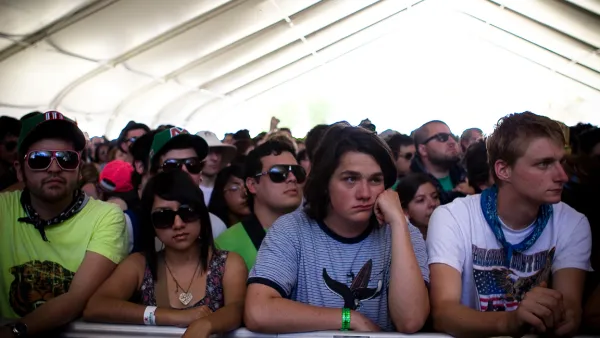
The 'Young and Restless' Choosing to Live in Cities
A report by new think tank City Observatory about where young college graduates are choosing to live inspired plenty of commentary this week.
How 'Just Green Enough' Adds the Equity to 'Green'
A Fast Co. Design article explains the "just green enough" concept as advanced by Jennifer Wolch, dean of the College of Environmental Design at the University of California, Berkeley.
Going Viral, but Not in a Good Way
Republicans and Democrats have connected failures to control spread of Ebola to the other guys’ actions. We’re requiring stressed-out bureaucracies to perform out-of-the-box with zero tolerance in arenas of mind-boggling complexity.
Fed Chair Janet Yellen Discusses Continuing Wealth Inequality in the United States
In a recent address to the Conference on Economic Opportunity and Inequality, chairwoman of the Federal Reserve Janet Yellen portrayed the stark inequalities growing within American society.
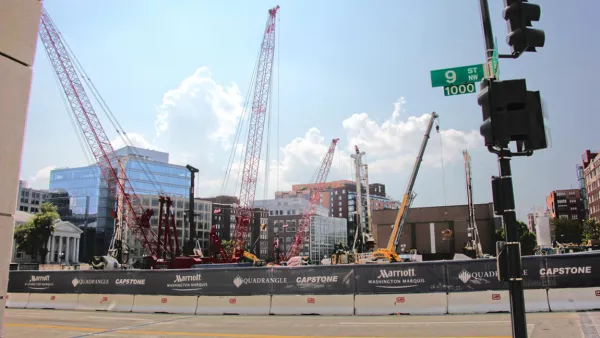
Is Urban Revitalization Possible Without Displacement and Gentrification?
Jared Green asks the billion dollar question for economic developers and planning agencies throughout the United States: is urban revitalization of neighborhoods possible without the subsequent gentrification and displacement of current residents?
Why Millennials Opt to Rent
Sandie Angulo Chen of Trulia discusses the reasons why Millennials prefer to rent homes or apartments instead of buying properties.
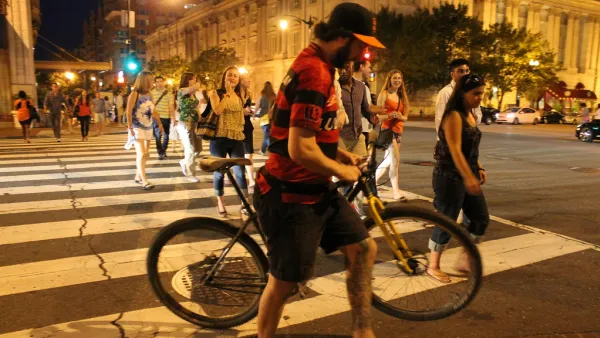
Why Millennials Drive Less: Many Possibilities, Few Answers
Millennials are less likely to get driver's licenses, they tend to take fewer, shorter car trips, and they use alternative modes of transportation more than their predecessors. The question for the ages is why.
Subprime Lending and the Great Recession Still Impacting Black Americans
Nathalie Baptiste examines the case of Prince George’s County in Maryland near Washington D.C. as a study in how the housing and real estate markets has unjustly attacked the wealth of Black Americans.
Things Millennials Say: 'Don't Call Me an Environmentalist!'
In its ongoing series on millennials, NPR visits a three-generation family; all are environmentally-oriented, but the youngest refuses to label herself as an environmentalist even though she got upset when her boyfriend's family did not compost.
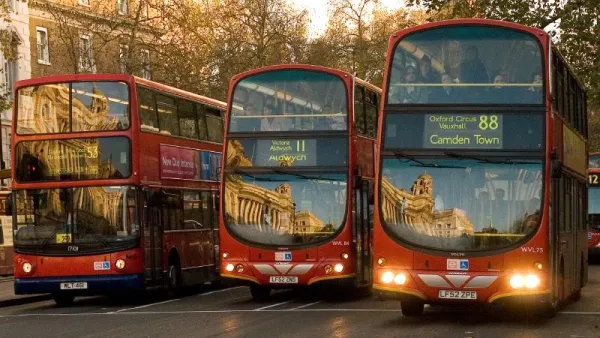
Can the Bus Be Sexy?
Transit agencies are increasingly turning to branding and advertising to improve their images. But can conservative bureaucracies embrace what it means to be "cool"? More importantly, can they attract riders?
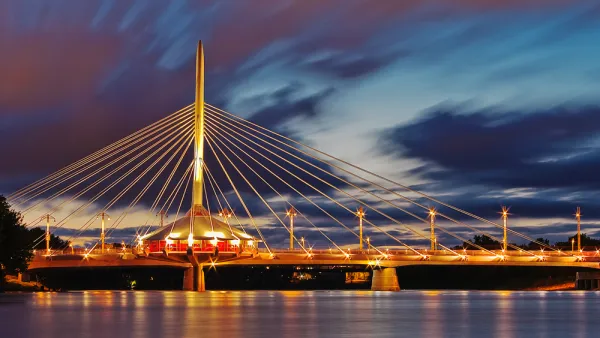
Creative Placemaking: Preserve, Repair, Intensify
Many cities have long been investing in art and culture, marrying it to placemaking, and generating extraordinary local transformations. Hazel Borys offers up a little inspiration from an art opening this week, and a few pointers for urbanists.
Study: 'Leaky Pipeline' Diminishes the Role of Women in Architecture
Although more women are studying architecture, equal footing is quickly lost as they progress through their careers according to a new study by the Association of Collegiate Schools of Architecture.
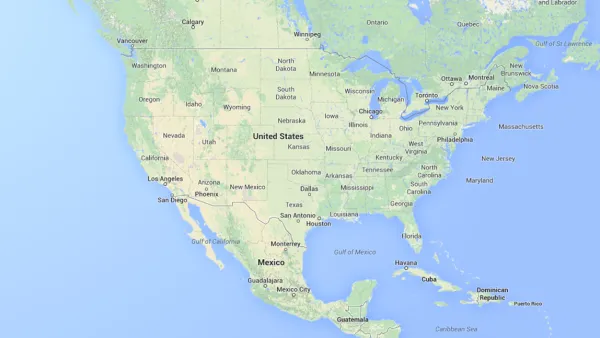
Mapping Lifestyle, Age, Income, and Population Density by ZIP Code
Esri offers a new product called Tapestry Segmentation, which overlays geography with U.S. Census and marketing data.
Latest American Community Survey: Continued Growth for (Some) Cities
According to the latest figures from the U.S. Census 2013 American Community Survey (ACS), Americans continue to move into cities en masse over suburbs, but certain cities are attracting larger crowds than others.
Millennials in Government
A new report on millennials working in the federal government was released earlier this week by the U.S. Office of Personnel Management, detailing the trends associated with this young generation of employees.
Exploring the 'Finesse of the Avenue'
In his fourth "place-decoding" essay from France, Chuck Wolfe illustrates how a traditional placemaking intervention is especially powerful when underlying urban fundamentals align.
Survey Illuminates American Mayors' Priorities
A new study conducted by former Boston Mayor Tom Menino and the Initiative on Cities at Boston University surveyed 70 mayors on their challenges, policy agendas, and relationships.
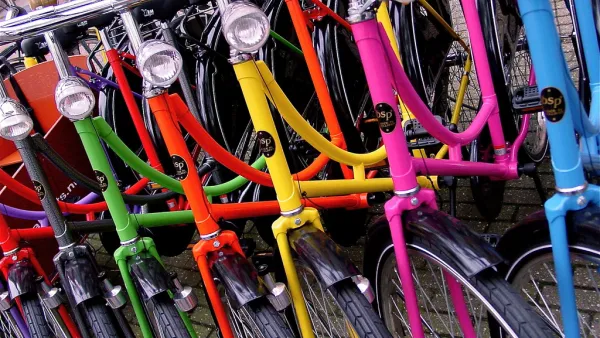
Shifting the Message to Attract More Bike Riders
In a speech to the Arlington County Commuter Services, Veronica O. Davis argues for bicycle advocates to shift from focusing solely on commuter riders.
Like the Old Days: Average Fuel Economy Declines in the United States
A recent study at the University of Michigan Transportation Research Institute showed that September saw the largest decline in average fuel economy, from 25.8 mpg to 25.3 mpg, since December 2011.
A New Buzzword for Changing Cities: 'Trust'
Christopher Swope writes of the emergence of the word "trust" in the buzzy lexicon of urbanism.

FREE Course: Walkable City 1: Why Walkability?
After describing his path towards focusing on walkability as the essence of good planning, Jeff Speck marches through his five principal reasons for making more walkable places.
Reinventing Malls: Planning Alchemy—Turning Gray Fields Into Gold
The course focuses on the opportunities and imperatives that shape reinvention of mall sites.

City of Charlotte
City of Rosemead
Rutgers University, Edward J. Bloustein School of Planning and Public Policy
University of Michigan School for Environment and Sustainability (SEAS)
Hunter College, City University of New York (CUNY)
The Architects Foundation
University District Partnership









