Joe Eaton reports from Bainville, Montana, which is suffering the effects of the Bakken oil boom, although the majority of the Bakken wells, and its corresponding tax revenue, are in North Dakota.


"At the edge of a farmer's wheat field outside the prairie town of Bainville, Montana, Justin and Mandy Tolbert's 36-foot camper sat in a rented lot," reports Eaton. "For more than 20 months, the Tolberts lived in the camper with their six children, ages 5 to 12, and Justin's adult cousin."
That sounds like a fairly typical tale fo pverty in America, except that the Tolbert's are not poor: "Justin makes more than $200,000 a year as an oil pipeline welder in the Bakken oil field. The family owns a two-story home with an in-ground pool in Tulsa, Oklahoma. They drive a $50,000 four-wheel-drive van."
Joe Eaton cites the Tolberts as an anecdote of growing pains of the communities on the fringes of the shale oil boom. "Although only a small fraction of Bakken wells are in Montana, where oil production peaked in 2006, nearby oil industry development and an influx of workers have maxed out the town's water system, destroyed roads, and introduced drugs and violent crimes unheard of by generations of farmers and ranchers."
Eaton also discusses the difficulties towns like Bainville are having in hiring public sector employees, maintaining roads, keeping housing in the price range of teachers, and responding to increasing crime.
Read the full story: Bakken Oil Boom Brings Growing Pains to Small Montana Town

Fracking's Formidable Foe
The worthy foe is not environmental regulations nor the the government or public demanding fracking moratoriums and bans. It is the falling global price of oil. Two radio reports explore how the global glut of oil affects U.S. shale oil production.
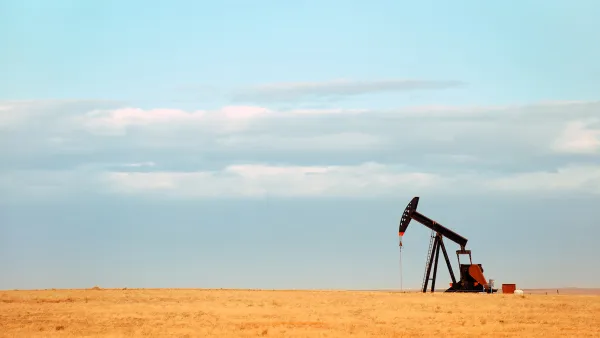
Do Environmentalists Confuse Oil Production With Oil Demand?
Samantha Gross, the director of the Energy Security and Climate Initiative at the Brookings Institution, argues that the key to reducing emissions is to do the hard work of reducing oil demand rather than focusing on ending U.S. oil drilling.
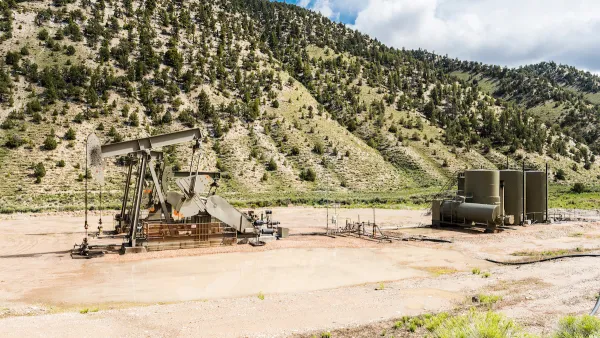
Utah Oil Shale Extraction Dealt Major Setback
The Surface Transportation Board's approval in 2021 of a proposed 85-mile Uinta Basin Railway in Utah that would have enabled increased extraction of the world's largest source of oil shale was partially vacated by a federal appeals court last month.

Planetizen Federal Action Tracker
A weekly monitor of how Trump’s orders and actions are impacting planners and planning in America.

‘Going backwards:’ Baltimore mayor, students rally against state's transit funding plan
Maryland's proposed six-year plan provides no funding for Baltimore’s BMORE bus program and reduces its road maintenance funding.

Detroit to transform waterfront with $2.2 billion investment
Developers will convert about 18 acres of unused parking lot space into civic spaces.

HUD, USDA agree on framework to simplify housing environmental review standards
Their agreement is a requirement of the 21st Century ROAD to Housing Act.

Cost of water rising at a faster pace than inflation, median household income
California and Maryland residents have seen their water bills grow especially high.

NYC building owners overwhelmingly comply with new emissions limits
The New York City Department of Buildings is fining owners who did not file emissions reports.

FREE Course: Walkable City 1: Why Walkability?
After describing his path towards focusing on walkability as the essence of good planning, Jeff Speck marches through his five principal reasons for making more walkable places.
Reinventing Malls: Planning Alchemy—Turning Gray Fields Into Gold
The course focuses on the opportunities and imperatives that shape reinvention of mall sites.

planning NEXT
City of Thousand Oaks
City of Wisconsin Rapids
The Architects Foundation
University of Cincinnati Online
Northern Illinois Transit Authority (NITA)
The Pocatello Development Authority
The Urban Renewal Agency of the City of Pocatello