Philadelphia Inquirer Architecture Critic Inga Saffron writes of a possible political awakening among Millennials in Philadelphia in response to the old guard's efforts to stifle progressive parking and zoning decisions.


According to Saffron, "paradigm-shifting trends often start with minor events, and the recent awakening of the Graduate Hospital neighborhood's silent millennials might just be the first smoke signals of change. Frustrated by the political elite's car-centric vision, a group of twenty- and thirty-something professionals fielded a slate of 23 candidates in the May primary for the most grassroots of political offices, the Democratic City Committee, in the 30th Ward."
"What makes this an architecture story is that the challenge was precipitated by several zoning cases that highlighted the city's widening generational divide on urbanist issues such as density, parking, bike lanes, and outdoor dining."
"The breaking point came in April after the zoning board rejected what seemed like an inoffensive building proposal for a surface lot at 23d and South, an 18-unit apartment house designed by Plumbob's Howard Steinberg. The proposal revealed a clash of cultures between Graduate Hospital's two main civic groups. While the apartment building received a ringing endorsement from the millennial-dominated South of South Neighborhood Association, it was fiercely opposed by the older, more established South Street West Civic Association, which mostly sticks to the area's western end."
Millennials, of course, have only themselves to blame for their lack of voice in the political process that drives placemaking in Philadelphia. Less than eight percent of millennials turn out to vote, according to Kellan White, 28, a former Graduate Hospital area resident who runs the New Leaders Council and is quoted in the story.
The article also includes a lot more detail about the project in question, as well as other recently contested project proposals and the political climate of the neighborhood.
Read the full story: Changing Skyline: A generational divide in Graduate Hospital neighborhood
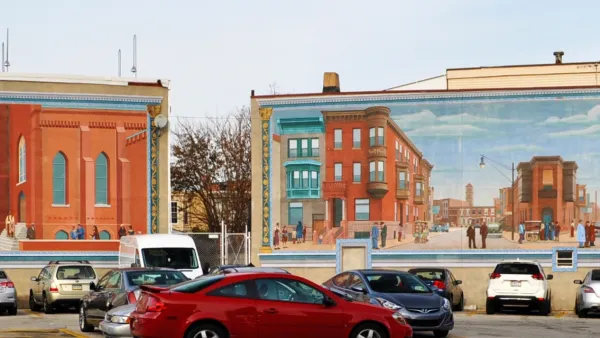
Philadelphia's downtown parking lots are a 'valuable, untapped resource'
Over two dozen city-owned parking lots could be developed into housing or other uses.

Examining Philadelphia’s Zoning Overlay Districts
A decades-old policy allowing hyperlocal zoning exemptions and restrictions creates a confusing patchwork of zoning regulations across the city.
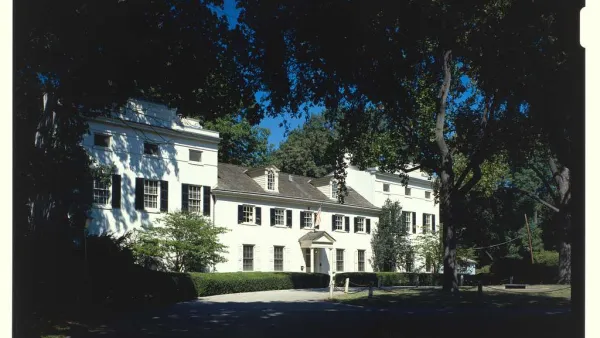
Philadelphia Neighborhoods Leverage Zoning Overlays for Local Control
Overlay districts provide a tool for guiding the future of development and environmental controls at the neighborhood level.

Planetizen Federal Action Tracker
A weekly monitor of how Trump’s orders and actions are impacting planners and planning in America.

California plans to bury El Niño’s downpour
If the state plays its cards right, it may be able to store a billion acre-feet of El Niño’s water in aquifers.

Desperate measures: Advocates weigh draining Lake Powell to fill Colorado River
Draining the reservoir could reduce evaporation losses by a couple hundred thousand acre-feet.

Mamdani’s pied-à-terre tax survives legal challenge
A panel of judges found that the plaintiffs failed to demonstrate injury as a result of New York City's implementation of the tax.

Eastern Nebraska is running out of electricity
Data centers and electrification are straining eastern Nebraska’s grid, throttling economic development.

Seattle passes record-breaking transit services expansion
Proposition 1 will double the city’s transit tax to add 95,000 more bus trips and preserve 180,000 bus trips annually.

FREE Course: Walkable City 1: Why Walkability?
After describing his path towards focusing on walkability as the essence of good planning, Jeff Speck marches through his five principal reasons for making more walkable places.
Reinventing Malls: Planning Alchemy—Turning Gray Fields Into Gold
The course focuses on the opportunities and imperatives that shape reinvention of mall sites.

City of Rosemead
Rutgers University, Edward J. Bloustein School of Planning and Public Policy
One Hundred Miles
University of Michigan School for Environment and Sustainability (SEAS)
Hunter College, City University of New York (CUNY)
The Architects Foundation
City of Cambridge
Montrose County
The Pocatello Development Authority