It seems like Vision Zero never had a chance.


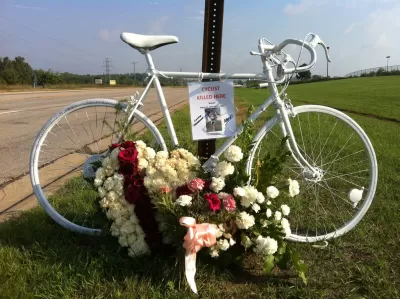
David Cranor writes that Vision Zero in Washington, D.C. was dead on arrival. Not only does Vision Zero set an unrealistic goal, "but DC isn't making a good faith effort to achieve it either."
Cranor recently attended the District's second annual Vision Zero Summit, and while it "was encouraging to see so much energy from the advocates in the room," it was also "discouraging to see how slowly things are progressing on the government side."
Cranor's point about Vision Zero setting an impossible standard, with a very short timeline, applies to more municipalities in the region than just Washington, D.C. "Other areas are similarly ambitious. Montgomery County has a Vision Zero goal, set last November, of 2030. Alexandria's goal, set in December, is 2028. They aren't going to make it either."
While Cranor spares no sympathy for the politicians who set the goals and then lament the lack of political will to get the work done, the article also digs into what realistic goals might have looked like.
Read the full story: We’re not going to make it to zero road deaths and serious accidents by 2024

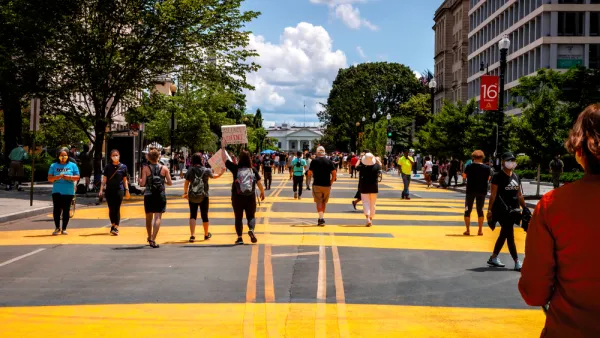
D.C. Revamps its Vision Zero Plan to Eliminate Traffic Fatalities
Washington, D.C. was an early adopter of Vision Zero in the United States, but eventually it became emblematic of the country's lack of progress in reducing traffic collisions.
Rebuilding From the Failures of Vision Zero
Vision Zero pledges in New York City and Washington, D.C. have failed to slow the carnage on streets and roads—traffic fatalities are only increasing. It's time to start over.
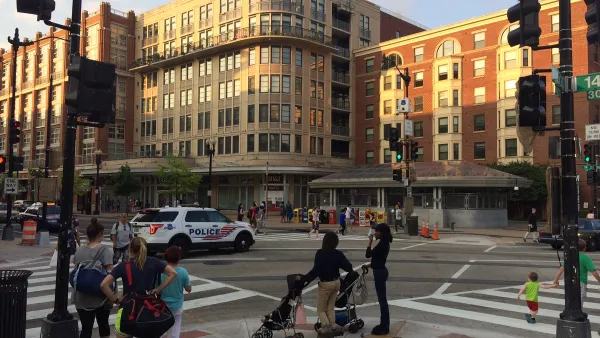
Vision Zero on the Streets of D.C.
Bike and pedestrian deaths have been on the rise in D.C. despite a Vision Zero commitment. New legislation will pave the way for new infrastructure and safety improvements.

Planetizen Federal Action Tracker
A weekly monitor of how Trump’s orders and actions are impacting planners and planning in America.

‘Going backwards:’ Baltimore mayor, students rally against state's transit funding plan
Maryland's proposed six-year plan provides no funding for Baltimore’s BMORE bus program and reduces its road maintenance funding.

Detroit to transform waterfront with $2.2 billion investment
Developers will convert about 18 acres of unused parking lot space into civic spaces.

Planned $2 billion courthouse in MA sparks tension with local government
Springfield owns an essential piece of the land developers intend to build on, and some city officials do not want to see the project come to fruition.

Californians can now transform balconies into power generators
Gov. Gavin Newsom has legalized plug-in solar technology, which allows residents to plug solar panels directly into their outlets

This 85-year-old ranch is Texas’ newest state park
The 650 acre ranch is one of the largest parcels of land along Lake Palestine.

FREE Course: Walkable City 1: Why Walkability?
After describing his path towards focusing on walkability as the essence of good planning, Jeff Speck marches through his five principal reasons for making more walkable places.
Reinventing Malls: Planning Alchemy—Turning Gray Fields Into Gold
The course focuses on the opportunities and imperatives that shape reinvention of mall sites.

City of Thousand Oaks
City of Wisconsin Rapids
Harvard University Graduate School of Design
The Architects Foundation
University of Cincinnati Online
Northern Illinois Transit Authority (NITA)
The Pocatello Development Authority
The Urban Renewal Agency of the City of Pocatello