The Seattle Department of Transportation is searching for ways to remove 3,000 cars from the roads every day.


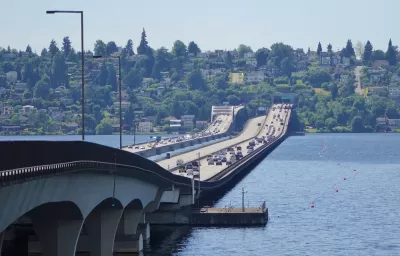
The number of solo car commuters dropped by 4,500 a day in Seattle between 2010 and 2017—a laudable accomplishment and the envy of many a gridlocked city. But the Seattle Department of Transportation has set a goal to remove an additional 3,000 cars from the roads, and a few upcoming construction projects have added some pressure to the timeline on that goal.
Josh Cohen reports that the Seattle Department of Transportation launched a microtransit pilot project earlier this year, but the City Council quickly shot the project down (it's not the only microtransit experiment in the country to fall short). Still, the city is looking for solutions, according to Cohen:
But the traffic problem is growing and the city needs a solution, even if it’s not going to be with private transit experiments. One idea – supported by advocates, bus drivers and some councilmembers – is to invest deeply to improve the bus system we already have. Mayor Jenny Durkan has floated a tax on private vehicles to discourage driving downtown. Seattle’s eastside neighbors think self-driving vehicles could solve their problems. Bike advocates remind us that bikes take up far less space than cars and could help, if only we make downtown a safe place to ride.
Throughout the remainder of the article, Cohen takes a closer look at these ideas, sifting through pros and cons and the current political and economic viability of each.
FULL STORY: 5 ways to make Seattle traffic less terrible

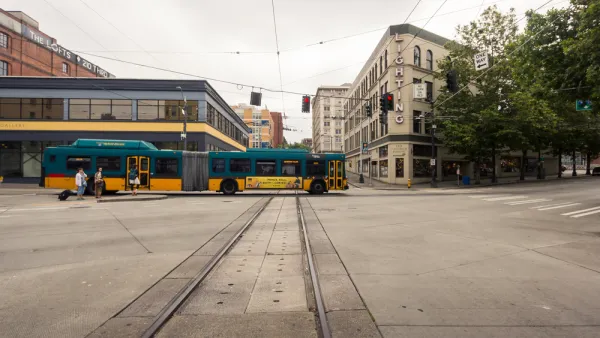
A ‘Playbook’ for Better Bus Service, From King County Metro
King County Metro operates one of the nation’s busiest transit systems—without running any trains. The agency recently released a playbook as a guide to transit service.
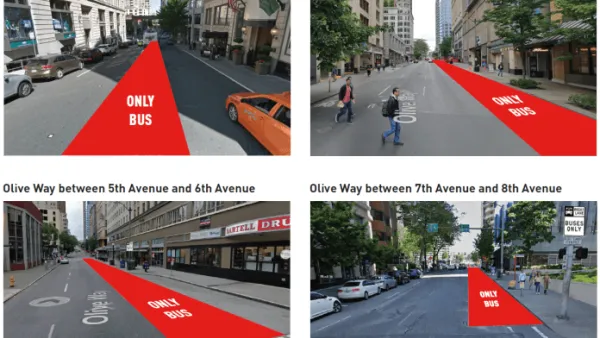
Seattle on a Roll With New Bus Lanes
A new plan to upgrade an existing bus lane in Seattle isn't the first and it probably won't be the last.
Bus Transit Service Increased in Seattle (Again)
The city of Seattle is improving transit service as the city grows.

Planetizen Federal Action Tracker
A weekly monitor of how Trump’s orders and actions are impacting planners and planning in America.

The state-sanctioned urbicide of Austin
People don’t kill cities. Freeways do.

US to reduce Colorado River water deliveries to Mexico
A new Colorado Treaty amendment reduces Mexico’s Colorado River water allocation by 250,000 acre feet.

Mamdani overhauls NYC's Vision Zero plan with 100 new policy goals
The overhaul aims to reduce traffic deaths and make streets safer for pedestrians, cyclists and drivers through lower speed limits, new safety infrastructure and more.

Amtrak not solely to blame for New Jersey commuter rail's unreliability, report finds
A new study from the Garden State Initiative found that NJ Transit’s budget grew 20% across a 4 year period, but reliability declined significantly over the same period.

EPA erases limits on planet-warming pollution from power plants
Under Monday’s plan, power plants would still have some limits on how much mercury, arsenic and other contaminants they can emit.

FREE Course: Walkable City 1: Why Walkability?
After describing his path towards focusing on walkability as the essence of good planning, Jeff Speck marches through his five principal reasons for making more walkable places.
Reinventing Malls: Planning Alchemy—Turning Gray Fields Into Gold
The course focuses on the opportunities and imperatives that shape reinvention of mall sites.

Eagle County Government
Harvard University Graduate School of Design
Nashville Planning Department
The Architects Foundation
University of Cincinnati Online
The Pocatello Development Authority
The Urban Renewal Agency of the City of Pocatello
Journal of the American Planning Association