Driving an electric ride-hailing vehicle may be good for the planet but costly for the driver who may have to limit the distance of rides and search for fast-chargers. Uber is trying to help out.



"It’s hard to drive an electric vehicle for Uber today,” said Adam Gromis, Uber global head of sustainability.
Carolyn Said for the San Francisco Chronicle on June 19. Strategies include financial incentives and technological perks to inform drivers in eight cities when to turn down rides due to trip length.
In California, transitioning to zero-emission ride-hailing vehicles may not be a voluntary matter if legislation by Sen. Nancy Skinner (D-Berkeley) becomes law.
SB 1014 requires the California Public Utilities Commission [CPUC], in regulating transportation network companies [TNCs], to establish “clean mile” targets. By 2023, at least 20 percent of miles traveled by ride-hail company cars must be zero emission, and 50 percent by 2026. By 2030, all ride-hail vehicles must be zero-emission vehicle or ZEV.
Is there a need for the CPUC to initiate regulatory changes by exercising its jurisdiction over TNCs in order to reduce greenhouse gas (GHG) emissions through increased use of electric vehicles (EVs)...? If so, what types of regulatory tools might the CPUC consider?
Lyft opposes the legislation, "saying that it would hurt lower-income drivers who can’t afford the pricey electric models. Uber is neutral on the bill," adds Said.
Uber hopes to do more to boost electric-vehicle drivers by engaging in advocacy through membership in Veloz.org, a new California nonprofit seeking to accelerate the shift toward electric cars. Both Gromis and Lyft’s Sam Arons are on its board, along with people from utilities, car companies and nonprofits such as the NextGen Policy Center and the Sierra Club.
FULL STORY: Uber’s new plan to woo drivers: It’s electric

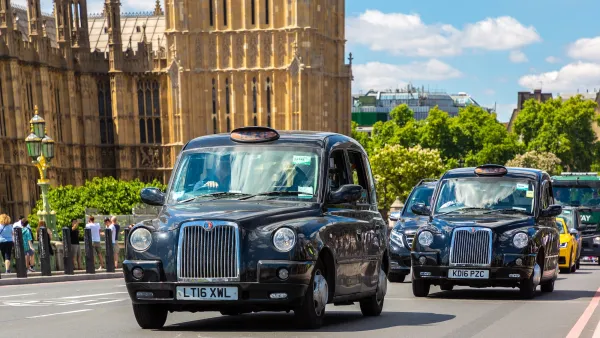
Can Robotaxis Handle London's Famously Tangled Streets?
Black Cab drivers say autonomous cars won’t be able to handle London’s unique conditions.
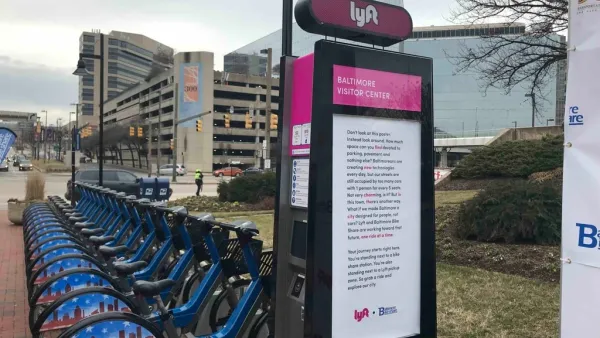
Uber and Lyft: A Tale of Two Companies
After years of resisting efforts by cities to regulate their business and constant—but unprofitable—growth, Uber and Lyft are homing in on their unique strengths.
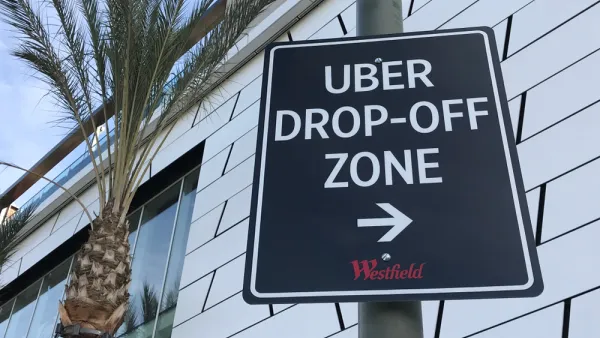
Study: Uber and Lyft Trips Cost the Planet More Than Trips in Personal Vehicles
The cost of 'deadheading'–the time ride-hailing drivers spend looking for fares–offsets any environmental benefits created by the industry, despite early claims that the apps would reduce congestion and air pollution.

The state-sanctioned urbicide of Austin
People don’t kill cities. Freeways do.

US to reduce Colorado River water deliveries to Mexico
A new Colorado Treaty amendment reduces Mexico’s Colorado River water allocation by 250,000 acre feet.

New Jersey’s second-largest city bans standalone data centers
Jersey City will continue to allow co-location facilities, such as those meant for research institutions that store their own data.

Amtrak not solely to blame for New Jersey commuter rail's unreliability, report finds
A new study from the Garden State Initiative found that NJ Transit’s budget grew 20% across a 4 year period, but reliability declined significantly over the same period.

EPA erases limits on planet-warming pollution from power plants
Under Monday’s plan, power plants would still have some limits on how much mercury, arsenic and other contaminants they can emit.

Phoenix announces new on-demand transit service, more frequent RAPID buses
Both new services will launch in October, and are part of Phoenix's Project Effective Access Solutions for Easing Congestion.

FREE Course: Walkable City 1: Why Walkability?
After describing his path towards focusing on walkability as the essence of good planning, Jeff Speck marches through his five principal reasons for making more walkable places.
Reinventing Malls: Planning Alchemy—Turning Gray Fields Into Gold
The course focuses on the opportunities and imperatives that shape reinvention of mall sites.

Eagle County Government
Harvard University Graduate School of Design
Nashville Planning Department
The Architects Foundation
University of Cincinnati Online
The Pocatello Development Authority
The Urban Renewal Agency of the City of Pocatello
Journal of the American Planning Association