There's something about potholes that produces strange headlines along with billions of dollars with of auto repair money every year.


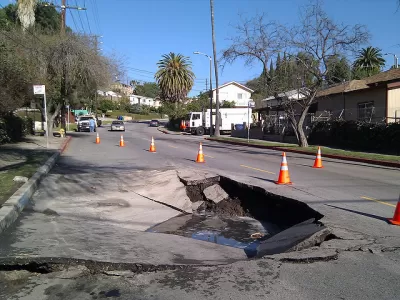
"Domino’s Pizza is filling in potholes in towns across the U.S. with a new 'Paving for Pizza' initiative," reports Aarthi Swaminathan.
"The American pizza chain announced on Monday that it will help 'smooth the ride home' for deliveries by making pothole repairs in towns nominated by their customers," writes, Swaminathan, providing some of the badly needed explanation for this development.
Potholes are perhaps the smallest but most widespread manifestation of the decline in U.S. infrastructure, but this story might take home the prize for the most bizarre response to the pothole plague. Previous bizarre responses include cities unpaving streets entirely and a group of anarchists repairing potholes illegally (anarchy in the streets never smoothed things out so well).
"Domino’s has already been working with four municipalities to help repair potholes on roads, including Bartonville, Texas, Milford, Delaware, Athens, Georgia, and Burbank, California," reports Swaminathan. The repaired potholes emblazoned with a Domino's logo above the phrase "Oh Yes We Did."
Read the full story: Domino's Pizza unveils U.S. infrastructure project filling potholes Yahoo Finance
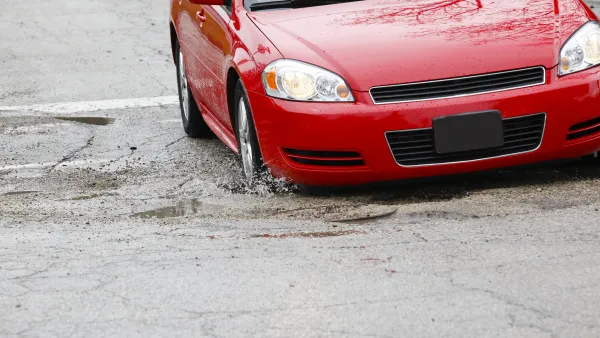
In Omaha, 'Reclaiming' Potholed Streets Means Unpaving Them
The euphemism refers to a cost-saving measure that's happening even in central districts, to the chagrin of residents. This reversion to gravel roads is one manifestation of a looming local infrastructure deficit.
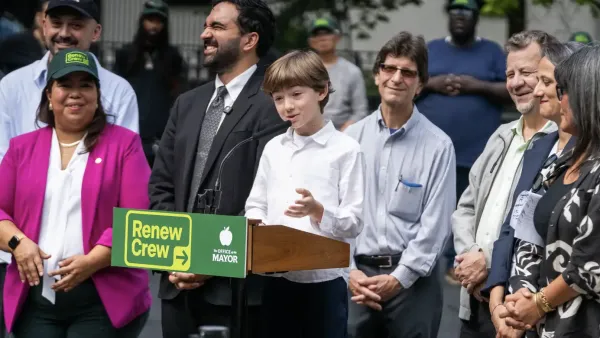
NYC residents are using TikTok to alert Mandami of city infrastructure problems — and it’s working
The format went viral after a NYC resident posted a video of two potholes and found them paved within hours.
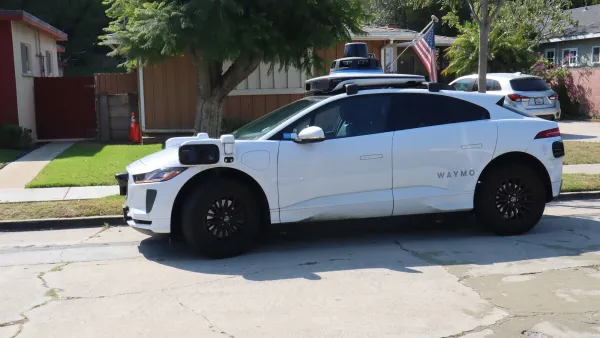
Waymo robotaxis are now finding potholes
The cars use their onboard technology to identify potholes and send the data to city officials and Waze users.

Desperate measures: Advocates weigh draining Lake Powell to fill Colorado River
Draining the reservoir could reduce evaporation losses by a couple hundred thousand acre-feet.

Eastern Nebraska is running out of electricity
Data centers and electrification are straining eastern Nebraska’s grid, throttling economic development.

Malls are becoming the midtowns of the future
Mall and office park redevelopments are a generational opportunity to create new nodes of urbanity.

NYC breaks ground on anti-flooding infrastructure project
New York City's new system will reduce stormwater flows to local sewers by 90%.

One Kentucky town’s secret to affordable housing
The Smoketown Community Land Trust has already built seven affordable homes for community members.

Houston gains petal-shaped cooling infrastructure to make streets more ‘delightful’
The city has installed the pavilions along 15 blocks in Houston.

FREE Course: Walkable City 1: Why Walkability?
After describing his path towards focusing on walkability as the essence of good planning, Jeff Speck marches through his five principal reasons for making more walkable places.
Reinventing Malls: Planning Alchemy—Turning Gray Fields Into Gold
The course focuses on the opportunities and imperatives that shape reinvention of mall sites.

City of Rosemead
Rutgers University, Edward J. Bloustein School of Planning and Public Policy
One Hundred Miles
University of Michigan School for Environment and Sustainability (SEAS)
Hunter College, City University of New York (CUNY)
The Architects Foundation
City of Cambridge
Montrose County
The Pocatello Development Authority