The "Loop" is the latest manifestation of Elon Musk's transportation fantasies, offering "personal rapid transit" to and from anywhere in Los Angeles without any congestion or cost.


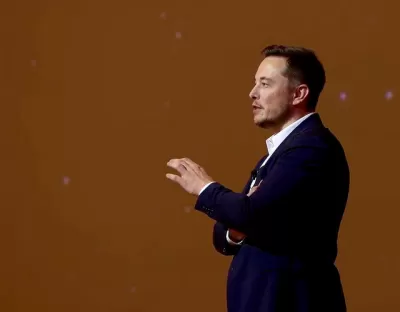
Earlier in May, Elon Musk threw a party, of sorts, to showcase his ideas for tunneling his way out of traffic in Los Angeles. The idea is now called Loop—and it's a little bit Boring Company and a little bit Hyperloop. It promises $1 rides for everyone and ten minute rides from LAX to Dodger Stadium. Musk has already built a prototype tunnel.
An opinion piece by David Dayen does a thorough job of dismantling the fantasy that Elon Musk has discovered a solution to congestion. The headline of the article compares a transportation future designed by Musk to the lines at Disneyland.
But first, you'd have to get your car into the tunnel. Musk's design fails to solve that fundamental challenge of all PRT systems — which is why practically none have been built. Worse, Musk wants to cripple the already gridlocked above-ground network, also known as roads, in service to his subterranean fantasy.
Then there's the obvious self-interest in the proposed network.
If the Loop has too few stops, the result is an inefficient, relatively useless subway. Musk's initial map of 60 miles of tunnels had only 23 stops and seemed to mainly be designed for his personal comfort. It conveniently includes his own commute from Bel-Air to Hawthorne, a few sports venues, a couple airports for when he has to fly, and pretty much nowhere that the bulk of the city lives or works.
Then comes a warning, couched in an appeal for expertise and collaboration to run the show:
This kind of boondoggle is what you get when a libertarian billionaire tries to solve a problem that requires collective action and shared rides.
Another article by Adam Popescu is less pointed in its criticisms, but focuses on the Loop reveal event and the actions of Musk, the Boring Company, and the city of Los Angeles in circumventing environmental review and public engagement.
FULL STORY: Enjoy the lines at Disneyland? You'll love Elon Musk's idea for transit

Two Boring Co. Projects Appear to Bite the Dust
References to the Dugout Loop, in Los Angeles, and the Baltimore-to-Washington Loop have been removed from the Boring Company's website.
Early Reviews of Elon Musk's Boring Co. Tunnel
Take a tour of Elon Musk's idea for fixing Los Angeles congestion.
Musk's Boring Co. Drops Westside L.A. Tunnel Plans
A lawsuit by a pair of Westside L.A. neighborhood groups has killed the Boring Company's plans to drill a tunnel below Sepulveda Boulevard.

Planetizen Federal Action Tracker
A weekly monitor of how Trump’s orders and actions are impacting planners and planning in America.

The state-sanctioned urbicide of Austin
People don’t kill cities. Freeways do.

US to reduce Colorado River water deliveries to Mexico
A new Colorado Treaty amendment reduces Mexico’s Colorado River water allocation by 250,000 acre feet.

5 New England states march closer to 800 megawatt wind energy project
Securing federal approval for the project may be complicated under the Trump administration, which has historically been hostile towards domestic wind power.

Baltimore to break ground on $50 million Transit Priority Project
The project will bring faster bus trips, safer streets and better bike connections to Baltimore.

Airbnb launches $250 million 'last-dollar financing' housing accelerator, makes first investment in Austin
The company will put $6.4 million towards affordable housing development in Texas’ capital.

FREE Course: Walkable City 1: Why Walkability?
After describing his path towards focusing on walkability as the essence of good planning, Jeff Speck marches through his five principal reasons for making more walkable places.
Reinventing Malls: Planning Alchemy—Turning Gray Fields Into Gold
The course focuses on the opportunities and imperatives that shape reinvention of mall sites.

Eagle County Government
Harvard University Graduate School of Design
Nashville Planning Department
The Architects Foundation
University of Cincinnati Online
The Pocatello Development Authority
The Urban Renewal Agency of the City of Pocatello
Journal of the American Planning Association