The sprawling, asphalt communities of U.S. cities, built as a result of mid-20th century planning, will meet terrible consequences during the extreme weather events of climate change.


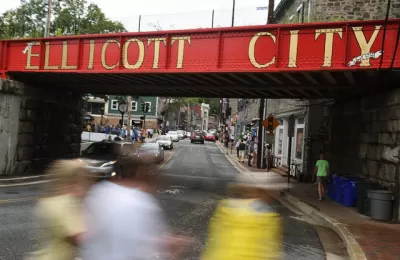
"Two years ago, Ellicott City, Maryland, was hit by a debilitating flash flood that turned the town’s historic Main Street into a raging muddy river. Scientists said the July 2016 rainstorm was a once-in-a-thousand-year event," writes Henry Grabar while building up to a surprise twist.
But on Sunday it happened again: 7 to 9 inches of rain fell in the area, 10 miles west of Baltimore, and another torrent swept cars and trees through town. More than 1,000 911 calls were recorded on Sunday afternoon, more than 300 residents were evacuated, and a National Guard sergeant died trying to rescue someone.
The headline of the story says the second thousand-year flood event in two years in Ellicott City is a warning of heavy rains to come—a sign of climate change that will strike river towns with regularity years and decades before the seas have risen to inundate coastal communities.
There is another angle to this story as well, according to Grabar: "But climate change isn’t the only reason these disasters aren’t quite natural. Unchecked sprawl has built a concrete funnel around Ellicott City."
FULL STORY: The Maryland Flooding Is a Warning

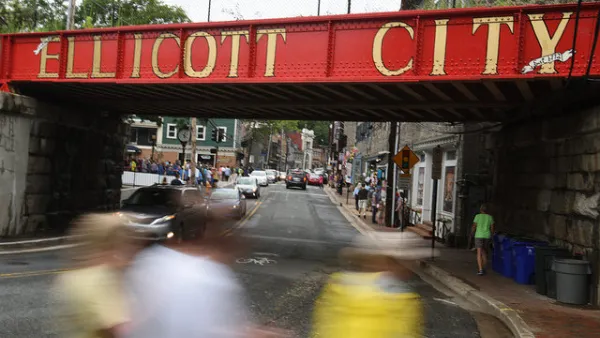
When the Floodwaters Receded in Ellicott City
Ellicott City, Maryland, a suburb located 12-miles from Baltimore with a historic Main Street that has experienced catastrophic flooding twice since 2016, offers a case study of the complementary effects of sprawl and climate change.
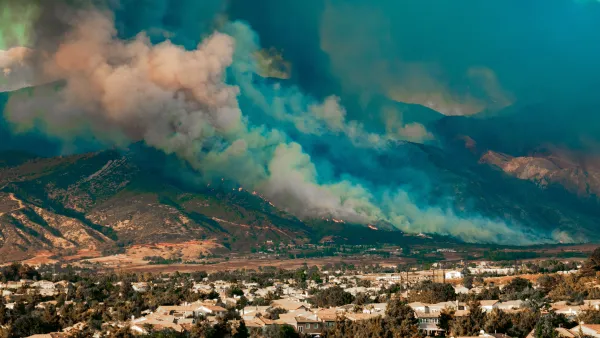
Home Insurers Are Fleeing California
Homeowners in the state are finding it increasingly difficult to secure insurance policies thanks to the growing risks of wildfire, drought, and other climate threats.
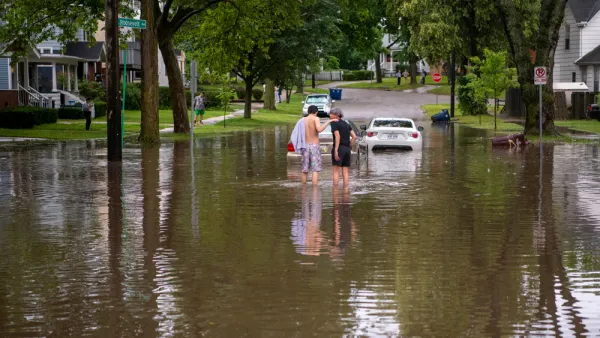
A Natural Approach to Stormwater Proposed in Michigan
The realities of climate change have been on full display in Michigan this summer, and a crusading drain commissioner is pushing for stormwater infrastructure that uses natural features to capture and reuse water during extreme weather.

Planetizen Federal Action Tracker
A weekly monitor of how Trump’s orders and actions are impacting planners and planning in America.

The state-sanctioned urbicide of Austin
People don’t kill cities. Freeways do.

US to reduce Colorado River water deliveries to Mexico
A new Colorado Treaty amendment reduces Mexico’s Colorado River water allocation by 250,000 acre feet.

5 New England states march closer to 800 megawatt wind energy project
Securing federal approval for the project may be complicated under the Trump administration, which has historically been hostile towards domestic wind power.

Baltimore to break ground on $50 million Transit Priority Project
The project will bring faster bus trips, safer streets and better bike connections to Baltimore.

Airbnb launches $250 million 'last-dollar financing' housing accelerator, makes first investment in Austin
The company will put $6.4 million towards affordable housing development in Texas’ capital.

FREE Course: Walkable City 1: Why Walkability?
After describing his path towards focusing on walkability as the essence of good planning, Jeff Speck marches through his five principal reasons for making more walkable places.
Reinventing Malls: Planning Alchemy—Turning Gray Fields Into Gold
The course focuses on the opportunities and imperatives that shape reinvention of mall sites.

Eagle County Government
Harvard University Graduate School of Design
Nashville Planning Department
The Architects Foundation
University of Cincinnati Online
The Pocatello Development Authority
The Urban Renewal Agency of the City of Pocatello
Journal of the American Planning Association