A new book on urban ecology shows how quickly wild species living in cities can adapt to their surroundings.



At National Geographic, Simon Worrel interviews Menno Schilthuizan, an evolutionary biologist in field of urban ecology whose most recent book, Darwin Goes to Town, is about why and how natural selection of wild species occurs more rapidly inside of cities than outside of them.
“This is what we call HIREC, or human-induced rapid evolutionary change. We see that in cities and also in other environments where humans create a new habitat or ecological situation. In those places you see very, very fast evolutionary adaptations, which can take place in the space of decades or even years.”
The piece covers mosquitoes in the London Underground, bobcats in Los Angeles and plants in Montpellier, France, all of which are species that have evolved very quickly and in very discrete populations (like north and south of the 101) to better survive urban environments.
Read the full story: In Cities, Wildlife Evolves Astonishingly Fast

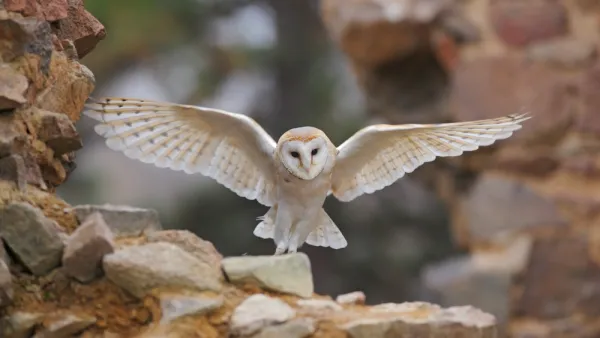
How Built Environments Hyper-Activate Evolution
Welcome to a post-human era of biological evolution. Strap on your seat belts.

Once a year, Maine roads become highways for amphibians
The 'Big Night' brings out volunteers to help frogs, salamanders, and other migrating amphibians cross roads to reach their breeding grounds.

San Diego Sues DHS, DOD Over Razor Wire Near Mexico Border
The city says U.S. Marines trespassed on city land to install fencing that damages sensitive habitat in an area designated as conservation land.

Planetizen Federal Action Tracker
A weekly monitor of how Trump’s orders and actions are impacting planners and planning in America.

Amtrak, CN end decades-long dispute with eight-year agreement
The new operating agreement establishes an updated framework for the companies to work together, including processes to resolve disputes.

Judges permit Denver to divert 77,000 acre feet from the Colorado River for reservoir expansion
Overuse and climate change have caused the Colorado River’s water levels to plummet.

Maryland local governments examine if they should have more power to raise property taxes
Maryland’s housing market is out of reach for the majority of moderate-income residents.

Northwest rail fans eager for Sept. 30 debut of Amtrak’s Airo fleet
Get ready for that new train smell and more seats. But they won’t go faster or run more frequently on the Cascades route in Washington and Oregon.

NYC DOT wants faster, more permanent street upgrades
The city is examining ways to build more concrete infrastructure without getting entangled in 'decades-long' projects.

FREE Course: Walkable City 1: Why Walkability?
After describing his path towards focusing on walkability as the essence of good planning, Jeff Speck marches through his five principal reasons for making more walkable places.
Reinventing Malls: Planning Alchemy—Turning Gray Fields Into Gold
The course focuses on the opportunities and imperatives that shape reinvention of mall sites.

Harvard University Graduate School of Design
KFH Group Inc.
Greater Baltimore Committee
The Architects Foundation
University of Cincinnati Online
The Pocatello Development Authority
The Urban Renewal Agency of the City of Pocatello