Marijuana production comes down to a question of the availability of industrial zoning. Denver is the poster child, but other cities are seeing similar trends.



"As one of the first states to legalize recreational marijuana in 2012, Colorado has become a laboratory for the regulation and licensing of the cannabis industry," according to an article by Charlotte West. "Due to industrial zoning requirements, most of Denver's grow operations have been concentrated in low-income, predominantly minority neighborhoods."
The result of this consolidation of marijuana uses in low-income, minority neighborhoods hasn't been a spike in crime, as many legalization opponents feared. Rather, the effect has been a spike in commercial rents.
The phenomenon has not been limited to Colorado. From California to Maine, the marijuana industry has fueled a boom in the commercial real estate market. Property owners have been able to charge above-market rates for tenants operating in a grey area between state and federal law. As a result, property values—and property taxes—in surrounding areas have soared.
The article includes more details about the neighborhoods in Denver where these effects are most pronounced. West also describes the industrial zoning that enables the trend. Reports of marijuana business locating in Denver's minority neighborhoods date back to 2016, much sooner after legalization became law.
FULL STORY: POT WAREHOUSES IN DENVER ARE BOOMING—AT THE DETRIMENT OF LOW-INCOME NEIGHBORHOODS

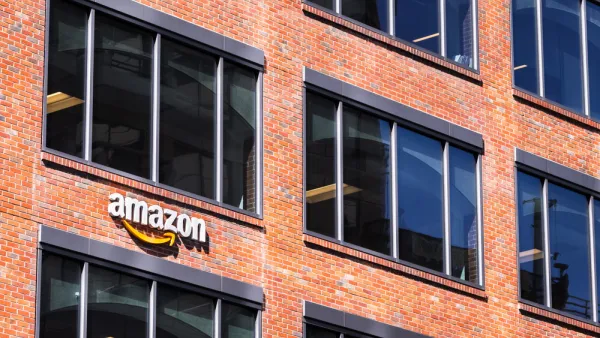
Industrial Zoning a Foothold for Amazon Distribution Centers in San Francisco
Locals aren't happy about Amazon's numerous new distribution facilities in San Francisco, but all of the new facilities are all perfectly legal under the city's zoning code—much more legal than housing, for example.
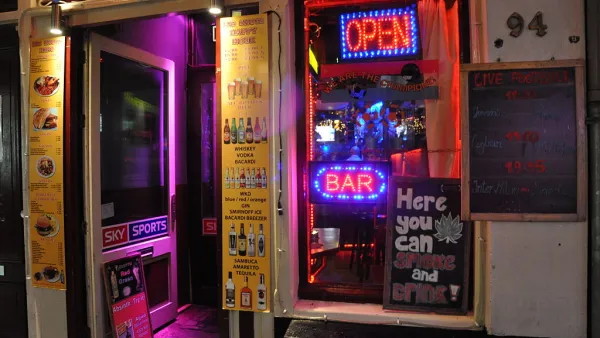
Nation's First Social Marijuana Use Permitted
It's 4:20 somewhere, and that somewhere is Denver.
Marijuana Manufacturing Sets Up Shop in Denver's Communities of Color
Advocates are concerned that too many of Denver's new retail marijuana business are locating in neighborhoods with mostly minority and low-income residents.

Planetizen Federal Action Tracker
A weekly monitor of how Trump’s orders and actions are impacting planners and planning in America.

The state-sanctioned urbicide of Austin
People don’t kill cities. Freeways do.

US to reduce Colorado River water deliveries to Mexico
A new Colorado Treaty amendment reduces Mexico’s Colorado River water allocation by 250,000 acre feet.

5 New England states march closer to 800 megawatt wind energy project
Securing federal approval for the project may be complicated under the Trump administration, which has historically been hostile towards domestic wind power.

Baltimore to break ground on $50 million Transit Priority Project
The project will bring faster bus trips, safer streets and better bike connections to Baltimore.

Airbnb launches $250 million 'last-dollar financing' housing accelerator, makes first investment in Austin
The company will put $6.4 million towards affordable housing development in Texas’ capital.

FREE Course: Walkable City 1: Why Walkability?
After describing his path towards focusing on walkability as the essence of good planning, Jeff Speck marches through his five principal reasons for making more walkable places.
Reinventing Malls: Planning Alchemy—Turning Gray Fields Into Gold
The course focuses on the opportunities and imperatives that shape reinvention of mall sites.

Eagle County Government
Harvard University Graduate School of Design
Nashville Planning Department
The Architects Foundation
University of Cincinnati Online
The Pocatello Development Authority
The Urban Renewal Agency of the City of Pocatello
Journal of the American Planning Association