The Federal Transit Administration cannot award funds to states that don’t have federally approved safety-monitoring programs in place. On Monday, the agency warned a number of states that they needed prove they've undertaken these programs.


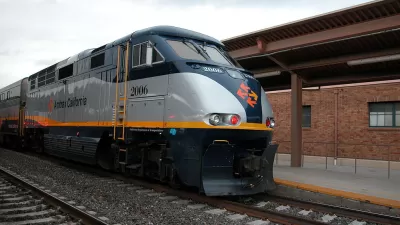
California may not receive $1.4 billion in federal train money if it cannot prove it has undertaken the necessary programs to promote train safety in the state. "The Federal Transit Administration took the unusual step Monday of issuing a public warning to California and several dozen other states of a looming deadline for those states to prove they have complete programs to oversee and promote rail safety," Tony Bizjak reports.
California and New York receive the most transit funding from FTA and losing this money would have a big effect on the state's budget. "States are required to create a system safety program standard for local rail agencies to follow, and to do safety inspections of rail programs every three years, as well as investigate crashes and hazardous conditions, and oversee corrective action when incidents occur," Bizjak writes.
FULL STORY: California risks losing $1.4 billion in federal train funds. Safety is the issue

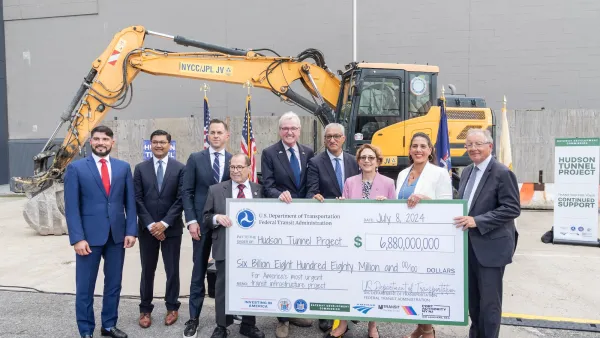
Trump administration is withholding over $7B in transit grants
Congress allocated $7.7 billion to the Capital Investment Grants program. The Federal Transit Administration has yet to sign a single agreement.

FTA Offers $100 Million in Transit Grants to World Cup Host Cities
Championship soccer games will be held in 11 U.S. cities this summer as part of the 2026 FIFA World Cup.
Trump DOT Wants to Ban Free Buses
The department wants to prevent cities that receive funds from the Federal Transit Administration from offering free transit fares.

Planetizen Federal Action Tracker
A weekly monitor of how Trump’s orders and actions are impacting planners and planning in America.

The state-sanctioned urbicide of Austin
People don’t kill cities. Freeways do.

US to reduce Colorado River water deliveries to Mexico
A new Colorado Treaty amendment reduces Mexico’s Colorado River water allocation by 250,000 acre feet.

5 New England states march closer to 800 megawatt wind energy project
Securing federal approval for the project may be complicated under the Trump administration, which has historically been hostile towards domestic wind power.

Baltimore to break ground on $50 million Transit Priority Project
The project will bring faster bus trips, safer streets and better bike connections to Baltimore.

Airbnb launches $250 million 'last-dollar financing' housing accelerator, makes first investment in Austin
The company will put $6.4 million towards affordable housing development in Texas’ capital.

FREE Course: Walkable City 1: Why Walkability?
After describing his path towards focusing on walkability as the essence of good planning, Jeff Speck marches through his five principal reasons for making more walkable places.
Reinventing Malls: Planning Alchemy—Turning Gray Fields Into Gold
The course focuses on the opportunities and imperatives that shape reinvention of mall sites.


Eagle County Government
Harvard University Graduate School of Design
Nashville Planning Department
The Architects Foundation
University of Cincinnati Online
The Pocatello Development Authority
The Urban Renewal Agency of the City of Pocatello
Journal of the American Planning Association