State officials say they need around $15 billion to mitigate the impacts of rising seas.


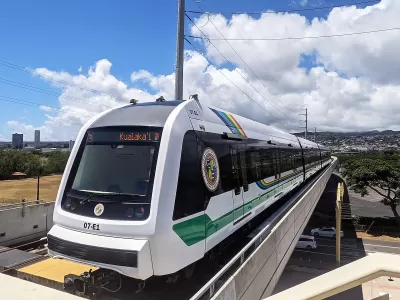
In a visit to Hawai’i, Transportation Secretary Pete Buttigieg expressed strong support for Honolulu’s partially opened Skyline rail line, reports Marcel Honore in Honolulu Civil Beat.
“But U.S. Transportation Secretary Pete Buttigieg said it remains unclear whether the rail, which has seen its costs more than double since 2012 to about $10 billion, would ever get more federal dollars on top of the $1.55 billion that his agency has already committed to getting it done,” Honore adds. Buttigieg gave no timeline for when Federal Transit funds, withheld since 2014, will be released, but the signing of a key agreement unlocks roughly $744 million.
Buttigieg also visited a coastal roadway slated for relocation to ensure safer evacuations, acknowledging that many more coastal roads need similar work, and “the site of the future Kapalama Container Terminal, a project that’s been in the works for at least three decades to expand port operations at Honolulu Harbor” that is using a $40 million federal grant to fund zero-emissions cranes and a solar microgrid.
FULL STORY: Feds Are Confident Honolulu Rail Is Finally Moving In The Right Direction

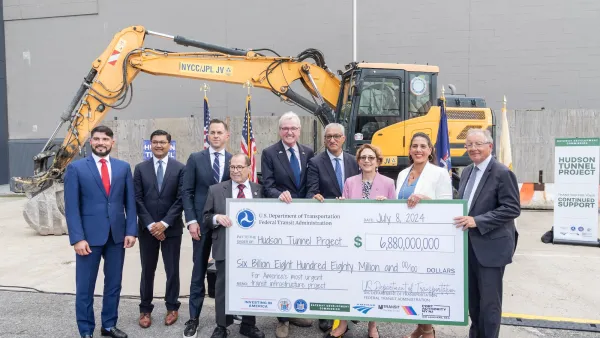
Trump administration is withholding over $7B in transit grants
Congress allocated $7.7 billion to the Capital Investment Grants program. The Federal Transit Administration has yet to sign a single agreement.
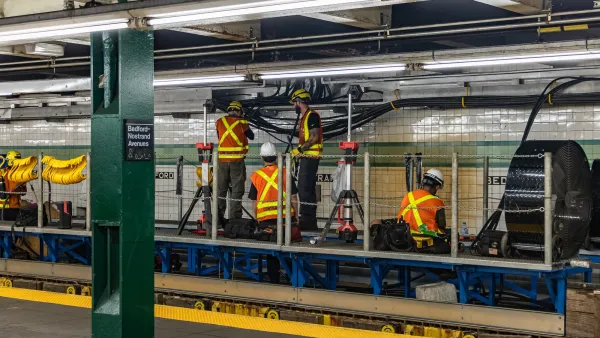
Report: BUILD Act would strip over $2B in transit projects from California and New York alone
The proposed federal transportation bill would eliminate billions in funding from the Federal Transit Administration, the Federal Railroad Administration and other federal agencies that fund transit and multimodal transportation programs.
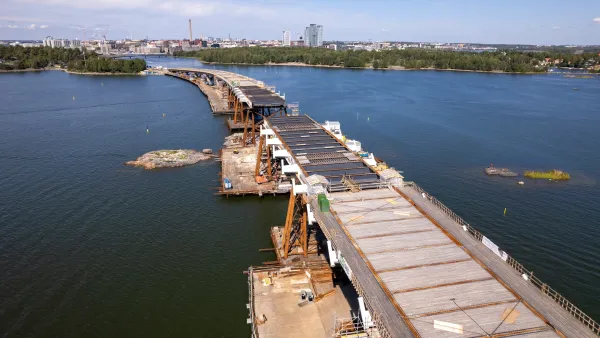
April must-reads: Top 10 articles from last month
The world's longest car-free bridge opens in Finland, Amtrak's new Mardi Gras line shatters ridership predictions, and Bay Area commuters could lose a third of Caltrain stations.

The state-sanctioned urbicide of Austin
People don’t kill cities. Freeways do.

US to reduce Colorado River water deliveries to Mexico
A new Colorado Treaty amendment reduces Mexico’s Colorado River water allocation by 250,000 acre feet.

New Jersey’s second-largest city bans standalone data centers
Jersey City will continue to allow co-location facilities, such as those meant for research institutions that store their own data.

Amtrak not solely to blame for New Jersey commuter rail's unreliability, report finds
A new study from the Garden State Initiative found that NJ Transit’s budget grew 20% across a 4 year period, but reliability declined significantly over the same period.

EPA erases limits on planet-warming pollution from power plants
Under Monday’s plan, power plants would still have some limits on how much mercury, arsenic and other contaminants they can emit.

Phoenix announces new on-demand transit service, more frequent RAPID buses
Both new services will launch in October, and are part of Phoenix's Project Effective Access Solutions for Easing Congestion.

FREE Course: Walkable City 1: Why Walkability?
After describing his path towards focusing on walkability as the essence of good planning, Jeff Speck marches through his five principal reasons for making more walkable places.
Reinventing Malls: Planning Alchemy—Turning Gray Fields Into Gold
The course focuses on the opportunities and imperatives that shape reinvention of mall sites.


Eagle County Government
Harvard University Graduate School of Design
Nashville Planning Department
The Architects Foundation
University of Cincinnati Online
The Pocatello Development Authority
The Urban Renewal Agency of the City of Pocatello
Journal of the American Planning Association